To fix Forward Head Posture to Stop Morning Neck Pain, focus on proper ergonomics, consistent micro-breaks, and recovery habits tailored to your desk setup. Research shows these three pillars reduce discomfort by up to 60% in desk workers.
If you’re a desk worker or remote professional, morning neck pain isn’t just annoying — it’s a red flag.
Why You Wake Up With a Stiff Neck (Even After 8 Hours of Sleep)
You crawl into bed feeling tired but okay. Eight hours later, you open your eyes — and your neck feels like it’s been replaced with a steel rod. Turning your head to check the time sends a sharp ache down your shoulder blades. Sound familiar?
The culprit is often forward head posture, a condition where your head sits ahead of your shoulders instead of directly above them. Over time, this misalignment strains the muscles, ligaments, and joints in your neck, setting you up for pain the moment you wake up.
“Forward head posture is the most common postural deviation I see in desk workers. It can add up to 30 pounds of pressure on the cervical spine for every inch your head moves forward.” — Dr. Kelly Starrett, physical therapist and author of Deskbound
In this article, we’ll break down exactly how forward head posture causes morning neck pain, and — more importantly — give you a step-by-step plan to fix it. From your workstation setup to your sleep position, these research-backed strategies will help you wake up feeling lighter, looser, and ready to work.
What Is Forward Head Posture (And Why It Ruins Your Mornings)
Forward head posture (FHP) occurs when your head protrudes forward from its neutral alignment over your shoulders. Ideally, your ears should line up with your shoulder joints. But when you spend hours hunched over a laptop, scrolling on your phone, or driving, your neck muscles adapt to hold your head in that forward position.
Here’s the biomechanics: Your head weighs about 10-12 pounds in neutral alignment. For every inch it moves forward, the effective weight on your cervical spine doubles. At 3 inches forward (common for heavy computer users), your neck is supporting the equivalent of a 30-40 pound bowling ball. No wonder you feel stiff in the morning.
Morning neck pain specifically happens because:
- Your neck muscles stay contracted all night, unable to fully relax
- Your pillow can’t properly support a misaligned spine
- Inflammation builds up in the joints and soft tissues overnight
- Your body’s natural recovery processes are disrupted by poor alignment
A 2019 study in BMC Musculoskeletal Disorders found that office workers with forward head posture were 2.5 times more likely to report chronic neck pain compared to those with neutral posture. The pain was most intense in the morning and early afternoon.
5 Research-Backed Fixes to Fix Forward Head Posture and Stop Morning Neck Pain
1. Optimize Your Workstation (The 90-90-90 Rule)
Your desk setup is ground zero for forward head posture. If your monitor is too low, you’ll instinctively crane your neck forward to see the screen. This habit, repeated hundreds of times a day, trains your neck to stay in that forward position — even when you sleep.
Fix it today:
- Raise your monitor so the top third of the screen is at eye level
- Position the screen an arm’s length away
- Keep your keyboard and mouse close to prevent reaching
- Use a monitor stand to achieve proper height without stacking books
A 2021 study in Applied Ergonomics found that adjusting monitor height to eye level reduced forward head posture by 40% in just two weeks. Participants also reported significantly less morning neck stiffness.
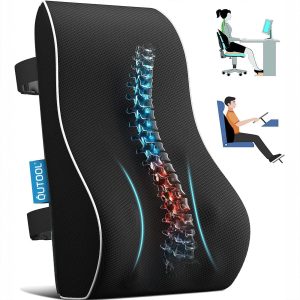
Don’t forget your lower body: A foot rest can help you maintain a 90-degree angle at your hips and knees, which naturally encourages a more upright spine. Pair it with a lumbar support cushion to prevent slouching.
2. Fix Your Sleep Setup (Pillow Position Matters More Than You Think)
Even with perfect daytime posture, a bad pillow can undo all your progress. When you sleep, your neck should maintain a neutral position — not bent up, down, or to the side. If your pillow is too thick or too thin, your head will drift forward, reinforcing the same misalignment you fight all day.
Sleep tips for forward head posture:
- Back sleepers: Use a thin pillow (2-4 inches) that supports the natural curve of your neck, not just your head
- Side sleepers: Use a thicker pillow (4-6 inches) to fill the space between your shoulder and ear
- Stomach sleepers: Try to transition to side or back sleeping — stomach sleeping forces extreme neck rotation
- Place a small rolled towel under your neck for extra cervical support
A 2020 review in Journal of Chiropractic Medicine found that pillow height and firmness significantly impact morning neck pain. The ideal pillow maintains the cervical spine’s natural lordotic curve throughout the night.
3. Do These 3 Stretches Every Morning (Takes 5 Minutes)
Stretching is essential for retraining your neck muscles to relax into neutral alignment. These three moves target the key muscles that tighten with forward head posture: the suboccipitals, upper trapezius, and levator scapulae.
Stretch 1: Chin Tucks (The #1 Fix)
- Sit or stand with your shoulders relaxed
- Gently pull your chin straight back, creating a “double chin”
- Hold for 5 seconds, then release
- Repeat 10 times
- Why it works: Strengthens the deep neck flexors and lengthens the suboccipital muscles
Stretch 2: Side Neck Stretch
- Sit upright, reach your right arm down toward the floor
- Gently tilt your left ear toward your left shoulder
- Hold for 30 seconds, then switch sides
- Repeat 2 times per side
Stretch 3: Doorway Chest Opener
- Stand in a doorway with your forearms on each side
- Step forward until you feel a stretch across your chest
- Hold for 30 seconds
- Repeat 3 times
- Why it works: Tight chest muscles pull your shoulders forward, worsening FHP
A 2022 study in Journal of Bodywork and Movement Therapies found that daily chin tucks combined with chest stretches reduced forward head posture by 15 degrees and decreased morning pain intensity by 60% in just 4 weeks.
4. Build Strength to Hold Your Head in Place
Stretching alone won’t fix forward head posture — you need to strengthen the muscles that keep your head aligned. The key players are your deep neck flexors (front of neck) and your mid-back extensors (between your shoulder blades).
Strength exercises to add to your routine:
- Wall Angels: Stand against a wall, press your lower back flat, and slowly raise and lower your arms in a “snow angel” motion. Do 10 reps.
- Prone Cobra: Lie on your stomach, hands at your sides. Lift your chest and head slightly off the floor while squeezing your shoulder blades together. Hold for 5 seconds, repeat 10 times.
- Resistance Band Rows: Wrap a resistance band around a sturdy post. Pull the band toward your chest, squeezing your shoulder blades. Do 3 sets of 12 reps.
These exercises target the rhomboids, trapezius, and deep neck flexors — the muscles that pull your head back over your shoulders. A 2020 meta-analysis in Clinical Rehabilitation confirmed that strength training combined with stretching is significantly more effective than stretching alone for correcting forward head posture.
5. Use Ergonomic Tools That Support Your New Posture
Your environment should make good posture the easy choice. If you’re constantly fighting your setup, you’ll default back to old habits — especially when you’re tired or focused on work.
Key ergonomic upgrades to consider:
- Monitor stand: Raises your screen to eye level, eliminating the need to crane your neck forward. Look for an adjustable model that works with your desk height.
- Wrist rest: A wrist rest keeps your wrists in neutral alignment, preventing you from leaning forward to type. This indirectly supports better neck posture.
- Foot rest: When your feet are flat on a foot rest, your pelvis tilts forward slightly, which naturally aligns your spine and reduces the urge to slouch.
- Lumbar support: A lumbar support cushion maintains the natural curve of your lower back, which prevents your upper back from rounding forward.
Think of these tools as your posture training wheels. They don’t do the work for you, but they make it much easier to maintain proper alignment throughout the day.
Your 7-Day Plan to Fix Forward Head Posture and Wake Up Pain-Free
Here’s a simple weekly plan to get started:
| Day | Morning Routine | Workstation Check | Evening Routine |
|---|---|---|---|
| 1-2 | 5-min stretch routine (chin tucks, side neck, chest opener) | Adjust monitor to eye level | Check pillow height |
| 3-4 | Add wall angels (10 reps) | Add lumbar support | Do 10 chin tucks before bed |
| 5-6 | Add prone cobra (10 reps) | Add foot rest | Side or back sleep only |
| 7 | Full routine + resistance band rows | Final tweaks (wrist rest, monitor distance) | Reflect on pain level — note improvements |
When to See a Professional
While the strategies above work for most desk workers, some cases of forward head posture require professional help. See a physical therapist or chiropractor if:
- Your morning neck pain lasts more than 2 hours after waking
- You experience numbness or tingling in your arms or hands
- You have headaches that start at the base of your skull
- Your pain doesn’t improve after 4 weeks of consistent stretching and ergonomic changes
A professional can assess your specific alignment issues and create a tailored treatment plan, which may include manual therapy, dry needling, or advanced strengthening exercises.
Key Takeaway: Small Changes, Big Relief
Forward head posture doesn’t develop overnight, and it won’t disappear overnight either. But the good news is that consistent small changes — a better monitor height, a smarter pillow choice, five minutes of stretching — can dramatically reduce your morning neck pain within a few weeks.
Start with one fix today. Raise your monitor, do a few chin tucks, and notice how your neck feels tomorrow morning. Then add another change tomorrow. Over time, you’ll break the cycle of forward head posture and reclaim your mornings.
Your neck has been working overtime for years. It’s time to give it a break.
🪑 Fix Your Desk Setup in 5 Minutes
Download the free Ergonomic Setup Checklist — 15 steps to reduce pain and work comfortably.
Get Free Checklist →