This comprehensive guide covers everything desk workers need to know about Creating a Low-Stress Home Environment – from science-backed fundamentals to practical implementation. Start with the basics and build your perfect setup step by step.
Introduction: The Hidden Stress of the Home Office
You log off at 5 PM, but your shoulders are still up near your ears. Your neck aches. Your mind races. You’re home, yet you don’t feel relaxed. If this sounds familiar, you’re not alone. For desk workers, the boundary between work and rest has blurred, and the home office—once a sanctuary—has become a source of chronic low-grade stress.
According to a 2023 survey by the American Psychological Association, 77% of remote workers reported experiencing stress-related physical symptoms, including tension headaches, back pain, and fatigue. The culprit? A workspace that prioritizes productivity over recovery. But here’s the good news: your environment is one of the most powerful levers you can pull to reduce stress. This guide will show you how to create a low-stress home environment that supports both your work and your well-being.
Why Your Workspace Is Making You Stressed
Stress isn’t just in your head—it’s in your chair, your screen, and your posture. When you work from home, your nervous system is constantly processing sensory input: the glare of a monitor, the hardness of a chair, the clutter on your desk. Over time, these micro-stressors accumulate, keeping your body in a low-level fight-or-flight state.
Dr. Emily K. Miller, an ergonomics researcher at Cornell University, explains: “A poorly designed workspace forces your muscles to work harder to maintain posture, which increases cortisol levels and reduces your ability to recover during breaks.” The result? You’re more tired, more irritable, and less resilient.
But the solution isn’t just about buying new gear. It’s about designing a space that signals safety and ease to your nervous system. Here’s how.
1. Start with Your Body: Ergonomic Foundations for Stress Reduction
Your body is the foundation of your stress response. When you’re physically uncomfortable, your brain interprets that as a threat. Creating a low-stress home environment begins with aligning your body in a way that requires minimal effort.
Posture Check: The 90-90-90 Rule
Think of your ideal seated posture as a series of right angles: elbows at 90 degrees, hips at 90 degrees, knees at 90 degrees. This position reduces joint strain and allows your muscles to relax. But maintaining this posture is nearly impossible without the right support.
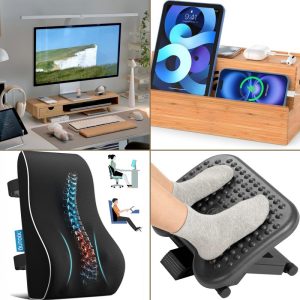
A lumbar support cushion can be a game-changer. It fills the gap between your lower back and the chair, preventing the slouching that compresses your discs and triggers tension. When your spine is neutral, your breathing deepens, and your nervous system calms.
Wrist and Arm Relief
Your wrists are a common stress point. When they’re bent upward to type, the carpal tunnel narrows, increasing pressure on the median nerve. This doesn’t just cause pain—it sends distress signals to your brain. A wrist rest keeps your wrists in a neutral position, reducing strain and allowing your shoulders to drop. Pair it with an adjustable chair or desk to keep your elbows at that 90-degree angle.
Foot Stability Matters
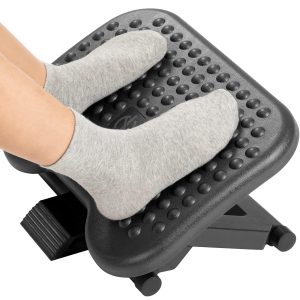
If your feet dangle or rest flat on a cold floor, your hips and lower back compensate, creating tension. A foot rest provides a stable, angled surface that encourages better posture and reduces fidgeting. When your feet are grounded, your mind feels more grounded too.
2. Visual and Sensory Calm: Designing a Low-Stress Environment
Your eyes and ears are constantly feeding information to your brain. A cluttered, noisy, or harshly lit workspace keeps your sensory system on high alert. To reduce stress, you need to curate what your senses take in.
Lighting: The Overlooked Stressor
Harsh overhead lighting or screen glare can cause eye strain, headaches, and fatigue. A 2022 study in the Journal of Environmental Psychology found that workers in rooms with warm, indirect lighting reported 32% lower stress levels than those under fluorescent lights. If possible, position your desk perpendicular to a window to reduce glare. Use a desk lamp with adjustable warmth—aim for 2700-3000K in the afternoon to mimic sunset.
Declutter for Mental Space
Visual clutter competes for your attention, even when you’re not looking at it. A study from Princeton University found that physical clutter reduces focus and increases cortisol. Spend 5 minutes at the end of each workday clearing your desk. Keep only what you need for the next task. A clean surface signals to your brain that it’s safe to rest.
Monitor Position: The Stress Point You Didn’t Know
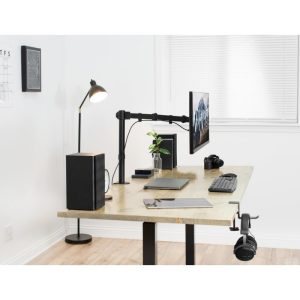
When your monitor is too low, you crane your neck forward, straining the muscles at the base of your skull. This “text neck” posture is linked to tension headaches and increased stress. The top of your screen should be at or just below eye level. If your desk or chair doesn’t allow this, a monitor stand can instantly correct your gaze, reducing neck tension and helping you breathe more freely.
3. Movement Microdoses: Recovery at Your Desk
Stress builds when you stay still too long. Your body interprets stillness as a threat (think: hiding from a predator). To signal safety, you need to move—but not necessarily in big, disruptive ways. Micro-movements throughout the day reset your nervous system.
The 20-20-20 Rule for Eyes
Every 20 minutes, look at something 20 feet away for 20 seconds. This relaxes the ciliary muscles in your eyes, reducing eye strain and the headaches that come with it. Set a timer or use a browser extension.
Seated Stretches for Desk Workers
Try these two-minute resets:
- Neck rolls: Slowly drop your chin to your chest, then roll your ear toward one shoulder. Hold for three breaths. Repeat on the other side.
- Thoracic extension: Clasp your hands behind your head, squeeze your shoulder blades together, and gently arch your upper back. This counteracts slouching.
- Ankle circles: Lift one foot and rotate your ankle 10 times each direction. This improves circulation and reduces restlessness.
Stand and Shift
If you have a sit-stand desk, alternate between sitting and standing every 30-45 minutes. If you don’t, simply stand up, shift your weight from foot to foot, and take three deep breaths. This breaks the stress cycle and resets your posture.
4. Mindful Transitions: Separating Work from Rest
One of the biggest challenges for desk workers is the inability to mentally disconnect. When your workspace is in your living space, your brain struggles to switch off. Creating a low-stress home environment requires intentional rituals that mark the end of work.
The Shutdown Ritual
At the end of your workday, perform a consistent sequence:
- Close all tabs and apps.
- Clear your desk.
- Write down one task for tomorrow (this offloads mental clutter).
- Walk away from your workspace—even if it’s just to the other side of the room.
This ritual tells your brain: “Work is done. Rest is allowed.”
Create a “Recovery Zone”
If possible, designate a spot in your home that has nothing to do with work. It could be a cozy chair, a corner with a plant and a lamp, or even a cushion on the floor. Spend 10 minutes there after work without screens. This physical separation reinforces the mental boundary.
5. The Role of Breath and Sound
Your environment isn’t just visual—it’s auditory and rhythmic. The sounds around you can either soothe or stress.
Breath as an Anchor
When you feel stress rising at your desk, your breath becomes shallow and rapid. Consciously slowing it down activates the parasympathetic nervous system. Try this: inhale for 4 counts, hold for 4, exhale for 6. Repeat three times. You can do this without anyone noticing.
Soundscaping for Focus and Calm
Not all background noise is created equal. A 2021 study in Scientific Reports found that nature sounds (rain, birdsong, flowing water) reduced stress markers more effectively than silence or white noise. Use a free app like Noisli or MyNoise to create a soundscape that helps you focus without overstimulation.
Putting It All Together: Your Low-Stress Home Office Checklist
Creating a low-stress home environment for desk workers doesn’t require a complete renovation. It’s about small, intentional changes that add up. Here’s a quick checklist to get started today:
- Adjust your monitor height so the top is at eye level (use a monitor stand if needed).
- Place a lumbar support cushion in your chair.
- Use a wrist rest to keep your wrists neutral while typing.
- Add a foot rest to ground your feet and stabilize your hips.
- Warm your lighting (2700-3000K) and reduce glare.
- Clear your desk at the end of each day.
- Set a timer for micro-movements every 30 minutes.
- Create a shutdown ritual to separate work from rest.
- Add nature sounds or calming music to your workspace.
Conclusion: Your Workspace, Your Sanctuary
Stress isn’t a sign that you’re weak—it’s a sign that your environment isn’t supporting you. As a desk worker, you spend a third of your life in your workspace. That space should be a place of ease, not tension.
By making small ergonomic adjustments, curating your sensory environment, and building mindful transitions, you can transform your home office into a low-stress sanctuary. Your body will thank you. Your mind will thank you. And you’ll find that recovery isn’t something you have to schedule—it’s something your environment invites.
Start with one change today. Your future self will feel the difference.
🪑 Fix Your Desk Setup in 5 Minutes
Download the free Ergonomic Setup Checklist — 15 steps to reduce pain and work comfortably.
Get Free Checklist →