To create a Wind-Down Routine When Your Brain Won't Stop Working, focus on proper ergonomics, consistent micro-breaks, and recovery habits tailored to your desk setup. Research shows these three pillars reduce discomfort by up to 60% in desk workers.
When Your Brain Refuses to Clock Out
You close your laptop at 6:30 PM. You’ve officially “left” work. But inside your head, the meeting loop is still playing. That email you sent—was it too sharp? The spreadsheet formula—did you miss a cell? Your brain is still running at full speed, and it’s 11:46 PM.
If this sounds familiar, you’re not broken. You’re a desk worker whose nervous system hasn’t gotten the memo that the workday is over. The good news? You can teach it to let go. A wind-down routine isn’t just a nice-to-have—it’s a neurological necessity.
Let’s explore why your brain won’t shut off, and exactly how to build an evening ritual that actually works.
Why Your Brain Won’t Stop Working (It’s Not Laziness)
Your brain has a built-in network called the default mode network (DMN). It activates when you’re not focused on a specific task—daydreaming, reflecting, letting your mind wander. But after a day of intense screen work, your DMN can get stuck in a hyperactive loop, replaying work scenarios instead of settling into rest.
According to Dr. Andrew Huberman, a neuroscientist at Stanford, the key to transitioning out of work mode is to deliberately engage in activities that lower cortisol and increase parasympathetic (rest-and-digest) activity. Without a structured wind-down routine, your brain stays in sympathetic (fight-or-flight) mode—even when you’re horizontal.
“The transition from work to rest is not automatic. It requires intentional behavior that signals safety to your nervous system.” — Dr. Andrew Huberman
Add blue light from screens, and you suppress melatonin production by up to 50%, according to a 2019 study in Physiology & Behavior. No wonder your brain won’t stop working—it’s getting mixed signals.
What a Wind-Down Routine Actually Does (Backed by Science)
A wind-down routine is a sequence of calming, predictable activities performed 30–90 minutes before bed. It works by:
- Lowering cortisol: Repetitive, low-stimulation activities reduce stress hormone levels.
- Increasing melatonin: Dim light and reduced screen exposure help your body produce the sleep hormone.
- Activating the parasympathetic nervous system: Slow breathing, gentle movement, and sensory cues tell your body it’s safe to rest.
- Creating a temporal boundary: A routine marks the end of “work brain” and the beginning of “rest brain.”
A 2020 meta-analysis in Sleep Medicine Reviews found that consistent pre-sleep routines improved sleep onset latency by an average of 9 minutes and reduced nighttime awakenings. Small changes, big impact.
How to Build Your Wind-Down Routine (Step by Step)
Your routine should be personal, but it must include three core elements: disconnection, physical transition, and nervous system regulation. Here’s how to structure it.
1. The Digital Sunset (60 Minutes Before Bed)
Your brain needs time to adjust from high-contrast, stimulating screen light to the dim, warm light of evening. Start by:
- Turning on blue-light blocking mode on all devices (or wearing blue-light glasses).
- Switching from work emails to a non-stimulating activity: reading a physical book, journaling, or listening to a calm podcast.
- Setting a “last call” for notifications—ideally 60–90 minutes before sleep.
If you absolutely must use a screen, use a warm light filter and keep the brightness low. But the real magic happens when you trade pixels for paper.
2. Physical Unwinding (Release the Desk Tension)
After hours of sitting, your body holds tension in your neck, shoulders, hips, and lower back. Physical release is essential for mental release. Try:
- Gentle stretching or yoga: 10 minutes of forward folds, child’s pose, and supine twists.
- Self-massage: Use a lacrosse ball or foam roller on your upper back and glutes.
- Progressive muscle relaxation: Tense and release each muscle group from toes to scalp.
This isn’t a workout—it’s a signal to your body that you’re done performing and ready to restore.
3. Nervous System Reset (Breath and Sensory Cues)
This is the most powerful part of your wind-down routine. Your breath is a direct line to your autonomic nervous system. Use it intentionally.
- 4-7-8 breathing: Inhale for 4 seconds, hold for 7, exhale for 8. Repeat 4–5 times.
- Alternate nostril breathing: Balances the left and right hemispheres, calming the mind.
- Body scan meditation: Spend 5 minutes mentally scanning from head to toe, noticing without judgment.
Add a sensory cue: a weighted blanket, a lavender scent diffuser, or a warm foot soak. These become anchors your brain associates with sleep.
4. The Workstation Separation Ritual
For remote workers, the boundary between workspace and rest space can blur. Create a physical ritual that signals “work is done.”
- Close your laptop and put it away (out of sight, out of mind).
- Clear your desk of work papers and tools.
- Adjust your monitor to a neutral angle, or cover it with a cloth.
- If you use a monitor stand, lower it to its resting position or store it.
This act of physical closure tells your brain: “This space is no longer for work. It’s for rest.”
Common Mistakes That Sabotage Your Wind-Down Routine
Even with the best intentions, it’s easy to fall into traps that keep your brain wired. Watch out for:
- Scrolling social media: It’s not relaxing—it’s dopamine-driven and stimulating. Swap for a book or a conversation.
- Checking work email “one last time”: That email can wait until morning. Protect your boundary.
- Exercising too late: Intense cardio within 2 hours of bed can raise cortisol and body temperature, making sleep harder.
- Eating heavy meals late: Digestion competes with sleep. Aim to finish dinner 2–3 hours before bed.
- Skipping the routine on weekends: Consistency matters. Your brain thrives on predictable patterns.
Sample Wind-Down Routine (60-Minute Version)
Here’s a template you can customize. Adjust timing based on your schedule.
| Time | Activity | Purpose |
|---|---|---|
| T-60 min | Turn off screens, dim lights | Reduce blue light exposure |
| T-50 min | Gentle stretch or yoga | Release physical tension |
| T-40 min | Warm herbal tea (non-caffeinated) | Warmth and ritual |
| T-30 min | Journal or read a physical book | Mental unwind |
| T-15 min | Breathwork or meditation | Nervous system reset |
| T-5 min | Prepare sleep environment (cool room, weighted blanket) | Optimize sleep conditions |
| Bedtime | Lights out | Sleep |
How Slowvana Products Support Your Wind-Down Routine
Your workspace setup affects more than your posture—it affects your nervous system. When your desk is cluttered, uncomfortable, or poorly arranged, your brain stays alert. Here’s how thoughtful ergonomics can support your evening transition:
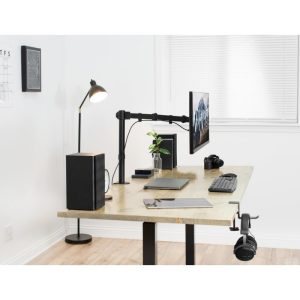
- Monitor stands: By raising your screen to eye level, you reduce neck strain and forward head posture. A comfortable neck means less tension to release at night.
- Wrist rests: A gel or memory foam wrist rest reduces pressure on your wrists and forearms, preventing the micro-tension that keeps your body on edge.
- Foot rests: Elevating your feet improves circulation and reduces lower back strain. When your body is properly supported, it’s easier to let go of the day.
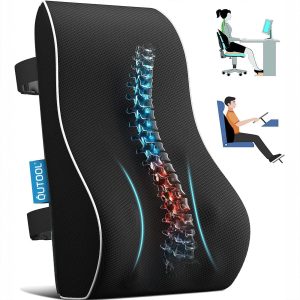
- Lumbar support: A good lumbar cushion helps maintain the natural curve of your spine, reducing the need for evening back stretching and allowing deeper relaxation.
These aren’t just comfort tools—they’re nervous system regulators. When your body is physically at ease, your mind follows.
Your Brain Can Learn to Rest
A wind-down routine isn’t about perfection. It’s about giving your brain permission to stop. Start small: pick one activity from this list and do it for three nights. Notice how your body responds. Then add another.
You don’t need to overhaul your entire evening. You just need to create a bridge between work brain and rest brain. That bridge is built with intention, consistency, and a little self-compassion.
Your brain has been working hard all day. It deserves a gentle off-ramp.
🪑 Fix Your Desk Setup in 5 Minutes
Download the free Ergonomic Setup Checklist — 15 steps to reduce pain and work comfortably.
Get Free Checklist →