For desk workers, understanding Ergonomic Hacks for Night Shift Workers & Late-Night Coders is essential for maintaining comfort and productivity throughout the workday. Here is what the research shows and how to apply it.
The Hidden Cost of Working When the World Sleeps
You know the feeling. It’s 2 AM, the code won’t compile, your neck is screaming, and your eyes feel like sandpaper. You’re not alone. Night shift workers and late-night coders face a unique set of challenges that go beyond the usual 9-to-5 desk discomfort. Your body’s natural circadian rhythm is fighting against you, and your workspace—often a dimly lit corner of your home or a harshly lit office—isn’t designed for your schedule.
But here’s the good news: small, intentional changes to your setup and habits can dramatically improve your comfort, focus, and recovery. This isn’t about buying a fancy ergonomic chair (though that helps). It’s about a series of low-cost, high-impact ergonomic hacks for night shift workers that respect your body’s need for rest and recovery, even when you’re working against the clock.
Let’s dive into the science and the solutions.
Why Night Work is Harder on Your Body (The Science)
Your body operates on a roughly 24-hour internal clock called the circadian rhythm. When you work at night, you’re essentially asking your body to be alert when it’s programmed to sleep. This disrupts everything from hormone production (like melatonin and cortisol) to muscle recovery and cognitive function.
A study from the National Institute for Occupational Safety and Health (NIOSH) found that shift workers are at a higher risk for musculoskeletal disorders, particularly in the neck, shoulders, and lower back. The reasons are twofold:
- Increased muscle tension: When you’re tired, your body compensates by tensing muscles, especially in the shoulders and neck.
- Poor posture awareness: Fatigue reduces your ability to self-correct your posture. You slump forward, jut your chin out, and hunch over your keyboard.
For late-night coders, the problem is amplified by hyper-focus. You’re so deep in the code that you don’t notice your wrist is bent at an awkward angle or your lower back is unsupported. This is where targeted ergonomic hacks for night shift workers become essential.
Hack #1: Light Management — The Unsung Ergonomic Hero
Lighting is often overlooked in ergonomic discussions, but it’s critical for night workers. The wrong lighting can cause eye strain, headaches, and further disrupt your sleep cycle.
What to Do:
- Use warm, dimmable lighting: Avoid harsh overhead fluorescent lights. Use a desk lamp with a warm color temperature (2700K-3000K) and dim it to a comfortable level.
- Blue light blockers: Wear blue-light-blocking glasses (amber-tinted) starting 2-3 hours before your shift ends. This helps your brain prepare for sleep.
- Reduce screen glare: Position your monitor perpendicular to windows or light sources. Use a matte screen filter if needed.
- Ambient backlighting: Place a bias light behind your monitor to reduce contrast between the bright screen and the dark room. This reduces eye fatigue.
Hack #2: The 90-Minute Posture Reset
Your body’s natural ultradian rhythm (90-minute cycles) is your secret weapon. Instead of fighting it, use it. Every 90 minutes, your focus naturally wanes. This is the perfect time for a posture reset.
The Reset Protocol:
- Stand up and walk: Even 30 seconds of walking resets your spine and improves circulation.
- Shoulder rolls: 5 slow rolls backward, 5 forward. This releases tension from the trapezius muscles.
- Chin tucks: While standing, tuck your chin back (like making a double chin). Hold for 5 seconds, repeat 5 times. This corrects forward head posture.
- Wrist stretches: Extend your arm, palm up, and gently pull your fingers back with the other hand. Hold for 15 seconds each side.
This is one of the most effective ergonomic hacks for night shift workers because it works with your body’s natural rhythm, not against it.
Hack #3: Elevate Your Screen — The Monitor Stand Fix
Late-night coders are notorious for looking down at their laptops for hours. This puts immense strain on the cervical spine. For every inch your head moves forward, the weight on your neck increases by 10 pounds. At 3 AM, that’s the equivalent of carrying a small child on your neck.
The Fix:
Raise your monitor or laptop screen so the top third of the screen is at eye level. This is where a bamboo monitor stand becomes invaluable. It’s not just a riser; it’s a posture correction tool.
If you’re using a laptop, pair it with an external keyboard and mouse so you can type with your elbows at a 90-degree angle and your wrists straight. A bamboo laptop stand (dual slot) works perfectly for this, keeping your laptop elevated while allowing airflow.
Slowvana’s bamboo monitor stand is designed specifically for this purpose: to help you work without looking down all day (or night).
Hack #4: Support Your Wrists — The Silent Pain Point
Wrist pain is the silent productivity killer for late-night coders. When you’re tired, you tend to type harder and rest your wrists on hard desk surfaces. This compresses the carpal tunnel and can lead to tingling, numbness, and pain.
The Fix:
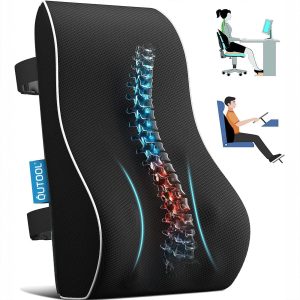
Use a gel wrist rest or memory foam wrist rest to keep your wrists in a neutral position. Your wrists should be straight, not bent up or down. The gel material provides gentle support without cutting off circulation.
Combine this with a large felt desk mat to create a soft, cushioned surface for your entire workspace. It protects your desk and provides a calm, quiet surface for your mouse and keyboard.
Hack #5: The Foot Rest Hack — Grounding Your Body
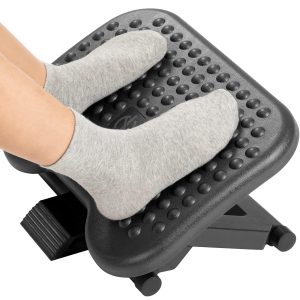
When you’re sitting for long hours, your feet often don’t rest flat on the floor. This causes you to lean forward or sit unevenly, leading to lower back pain. A simple foot rest can transform your sitting posture.
The Fix:
Use a small foot rest or even a sturdy box under your desk. Your knees should be at a 90-degree angle, and your feet should be flat on the rest. This keeps your pelvis in a neutral position and reduces pressure on your lower back.
If you don’t have a dedicated foot rest, a bamboo cable management box can double as a foot rest (as long as it’s sturdy enough). It’s a two-in-one solution.
Hack #6: The Recovery Ritual — Post-Shift Body Care
What you do after your shift is just as important as what you do during it. Your body needs time to recover from the physical stress of sitting and the mental stress of late-night work.
The Ritual:
- Foam roll your back: Spend 5 minutes foam rolling your thoracic spine (upper back) to reverse the hunching posture.
- Epsom salt foot soak: Warm water with Epsom salts relaxes tired feet and promotes muscle recovery.
- Eye rest: Use a warm eye mask or simply close your eyes for 5 minutes in a dark room to reset your visual system.
- Hydrate: Drink a full glass of water before sleeping. Dehydration exacerbates muscle stiffness.
This recovery ritual is a core part of the Slowvana Recovery Lifestyle philosophy: recovery is not a luxury, it’s a necessity for sustainable productivity.
Hack #7: Desk Organization — A Clean Desk for a Clear Mind
When you’re working at 2 AM, clutter is more than a distraction—it’s a stressor. A messy desk increases cortisol levels and makes it harder to focus.
The Fix:
Use a bamboo desk organizer to keep your essentials (pen, phone, notepad) in designated spots. A clean desk signals to your brain that it’s time to focus, even in the middle of the night.
Combine this with a bamboo cable management box to hide unsightly cords. Tangled cables are not just an eyesore; they can be a tripping hazard and a source of frustration when you’re already tired.
Putting It All Together: Your Night Shift Ergonomic Checklist
Here’s a simple checklist you can follow before your next shift:
| Item | Action | Why |
|---|---|---|
| Lighting | Use warm, dimmable light | Reduces eye strain and supports sleep preparation |
| Screen Height | Top of screen at eye level | Prevents forward head posture |
| Wrist Support | Use a gel wrist rest | Keeps wrists in neutral position |
| Foot Support | Use a foot rest | Prevents lower back strain |
| Posture Reset | Every 90 minutes | Works with your ultradian rhythm |
| Post-Shift Recovery | 5-minute foam roll + hydration | Accelerates muscle recovery |
| Desk Organization | Use a desk organizer and cable box | Reduces stress and improves focus |
Frequently Asked Questions
What is the most important ergonomic adjustment for night shift workers?
The most important adjustment is raising your monitor or laptop screen to eye level. This single change prevents forward head posture, which is the leading cause of neck and shoulder pain for desk workers. A bamboo monitor stand is a simple, effective solution.
Can ergonomic hacks help with sleep quality after a night shift?
Yes. Proper lighting management (using warm, dimmable lights and blue light blockers) and a post-shift recovery ritual (foam rolling, hydration, and eye rest) can significantly improve sleep quality after a night shift.
How often should late-night coders take breaks?
Follow the 90-minute rule. Your body’s ultradian rhythm operates in 90-minute cycles. Take a 1-2 minute posture reset break every 90 minutes. This is more sustainable than forcing yourself to take a break every 30 minutes.
What is the best desk setup for a late-night coder?
An ideal setup includes: a monitor or laptop stand (at eye level), an external keyboard and mouse, a gel wrist rest, a foot rest, a large felt desk mat, and a desk organizer to keep things tidy. Warm, dimmable lighting completes the setup.
Are bamboo desk products worth it for ergonomics?
Yes. Bamboo is a sustainable, durable, and aesthetically pleasing material. Bamboo monitor stands, laptop stands, desk organizers, and cable management boxes are functional and help create a calm, organized workspace that supports good posture and focus.
Your Body Deserves Better Than a 3 AM Slump
Working the night shift or coding into the wee hours doesn’t have to mean sacrificing your health. By implementing these ergonomic hacks for night shift workers, you can reduce pain, improve focus, and recover faster after your shift.
Remember: recovery is not a luxury. It’s the foundation of sustainable productivity. Start with one small change tonight—maybe it’s raising your screen or doing a 90-minute posture reset. Your future self will thank you.
At Slowvana, we believe in a Recovery Lifestyle. Our bamboo desk products are designed to support your body through long hours, so you can work without looking down—and recover without compromise.
🪑 Fix Your Desk Setup in 5 Minutes
Download the free Ergonomic Setup Checklist — 15 steps to reduce pain and work comfortably.
Get Free Checklist →