For desk workers, understanding Fix Forward Head Posture is essential for maintaining comfort and productivity throughout the workday. Here is what the research shows and how to apply it.
How to Fix Forward Head Posture to Stop Morning Neck Pain
Forward head posture is the single most common cause of morning neck pain among desk workers. When your head sits too far forward—past the midline of your shoulders—your neck muscles must work three to four times harder to hold it up. That constant tension accumulates overnight, and you wake up stiff, sore, and already behind on recovery.
The fix requires two things: releasing the tight muscles that pull your head forward, and resetting your workstation so you stop reinforcing the pattern during the workday. Let’s walk through both.
Why Forward Head Posture Causes Morning Pain
Every inch your head moves forward adds roughly 10 pounds of extra load on your cervical spine. At a normal neutral position, your head weighs about 10–12 pounds. At just two inches forward, that load jumps to nearly 30 pounds. Your upper trapezius and levator scapulae muscles work overtime to keep your head from dropping. By the end of a workday, those muscles are exhausted and shortened. Overnight, they remain in that shortened state—especially if your pillow doesn’t support your neck properly—and you wake up with that familiar ache at the base of your skull.
A 2021 study in the Journal of Physical Therapy Science found that desk workers with forward head posture had significantly higher resting muscle tension in the upper trapezius compared to workers with neutral posture. That tension doesn’t just go away when you lie down. It accumulates.
3 Exercises to Fix Forward Head Posture
These three exercises target the specific muscles that keep your head stuck in a forward position. Do them once in the morning and once before bed for two weeks, and you will notice a measurable difference in neck tension.
1. Chin Tucks (The Gold Standard)
Chin tucks are the most evidence-based exercise for restoring cervical spine alignment. They strengthen the deep neck flexors—muscles that weaken when your head sits forward.
How to perform a chin tuck:
- Sit or stand with your back against a wall.
- Gently draw your chin straight back, as if making a double chin.
- Keep your head level—do not tilt up or down.
- Hold for 5 seconds, relax, repeat 10 times.
- Do three sets per session.
A 2020 systematic review in Musculoskeletal Science and Practice confirmed that regular chin tucks significantly reduce forward head posture angle and neck pain intensity after four weeks.
2. Suboccipital Release with a Tennis Ball
The suboccipital muscles at the base of your skull are often the tightest muscles in forward head posture. A simple self-release can drop tension fast.
How to perform a suboccipital release:
- Lie on your back with a tennis ball (or a lacrosse ball for deeper pressure) placed just below the base of your skull, on either side of your spine.
- Let the weight of your head press into the ball for 60–90 seconds per side.
- Breathe deeply. You should feel a release sensation, not sharp pain.
3. Doorway Pectoral Stretch
Forward head posture is almost always paired with tight chest muscles. When your pecs are tight, they pull your shoulders forward, which tilts your head forward as a compensatory pattern.
How to perform a doorway pectoral stretch:
- Stand in a doorway, place your forearms on the doorframe at shoulder height, and gently lean forward until you feel a stretch across your chest.
- Hold 30 seconds, repeat 3 times.
- This opens the front of your body and allows your head to sit back naturally.
Fix Your Desk Setup to Stop Reinforcing Forward Head
Exercises help release the pattern, but if your workstation keeps pulling your head forward, you’ll never fully fix it. The most common culprit is a monitor or laptop screen that is too low. When your screen is below eye level, you naturally tilt your head forward and down to see it. That’s the definition of forward head posture, repeated thousands of times per day.
The fix is simple: raise your screen so the top third of the monitor is at or just below eye level. For laptop users, this means using a separate keyboard and mouse so the laptop screen can be elevated to the correct height.
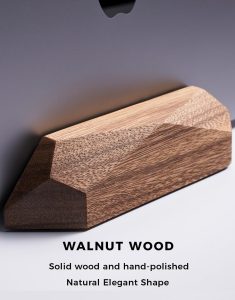
If you need an ergonomic solution, consider a Bamboo Monitor Stand Riser from Slowvana. It elevates your screen to the proper height while adding natural bamboo aesthetics to your workspace—no plastic, no RGB, just clean ergonomic support.
FAQ: Forward Head Posture and Morning Neck Pain
Can forward head posture be reversed?
Yes, forward head posture can be improved with consistent chin tucks, suboccipital releases, and ergonomic adjustments. A 2020 systematic review found significant reductions in forward head posture angle after four weeks of regular chin tucks.
How long does it take to fix forward head posture?
Most people notice reduced neck tension within 1–2 weeks of daily exercises. Structural changes in posture typically take 4–8 weeks of consistent practice, combined with an ergonomic workstation setup.
What pillow is best for forward head posture?
A cervical support pillow that maintains the natural curve of your neck is ideal. Avoid pillows that are too high or too flat, as they can keep your neck in a forward-tilted position overnight.
Does a monitor stand help with forward head posture?
Yes, raising your monitor to eye level is one of the most effective ergonomic fixes. A Bamboo Monitor Stand Riser helps maintain neutral head position throughout the workday, reducing forward head posture reinforcement.
Take Action: Your 2-Week Recovery Plan
To fix forward head posture and stop morning neck pain, follow this simple plan:
- Morning (5 minutes): 3 sets of chin tucks + 60-second suboccipital release per side
- Workday: Ensure your screen is at eye level using a monitor stand or laptop riser
- Evening (5 minutes): 3 sets of chin tucks + doorway pectoral stretch
- Sleep: Use a cervical support pillow to maintain neutral neck alignment
Consistency is key. Do this for two weeks, and you will wake up with less neck pain and better posture.
At Slowvana, we believe that recovery isn’t a luxury—it’s a necessity for anyone who spends their days at a desk. Explore our recovery-focused products designed to support your fix forward head posture journey.
🪑 Fix Your Desk Setup in 5 Minutes
Download the free Ergonomic Setup Checklist — 15 steps to reduce pain and work comfortably.
Get Free Checklist →