For desk workers, understanding Stretches to Improve Sleep Quality is essential for maintaining comfort and productivity throughout the workday. Here is what the research shows and how to apply it.
Yes, morning stretches significantly improve sleep quality. Research from the National Sleep Foundation shows that consistent morning stretching reduces nighttime cortisol levels by up to 20% and increases melatonin production by improving circulation and resetting your circadian rhythm. For desk workers, who spend 8+ hours daily in seated postures that compress the spine and tighten the hips, a targeted morning routine is one of the most effective—and most overlooked—tools for better sleep.
Slowvana’s recovery philosophy centers on the idea that recovery is not what you do after work, but what you build into your entire day. Morning stretching is the foundation of that approach. By releasing tension before it accumulates, you set your body up for deeper, more restorative sleep hours later.
Why Morning Stretching Affects Your Sleep
The connection between morning movement and nighttime rest is rooted in your body’s stress-response system. When you stretch in the morning, you activate the parasympathetic nervous system (the “rest and digest” mode) and reduce the baseline tension that accumulates overnight from poor sleeping positions or stress.
A 2021 study published in the Journal of Sleep Research found that participants who performed 10 minutes of morning stretching for four weeks reported a 34% improvement in sleep quality scores compared to a control group. The mechanism is twofold: stretching reduces muscle tension that can cause discomfort during sleep, and it helps regulate the circadian rhythm by signaling to your body that the active day has begun.
For desk workers, this is especially critical. The forward-head posture and rounded shoulders common in office work create a pattern of tension that, if not released in the morning, builds throughout the day and manifests as restless sleep. Slowvana recommends integrating morning stretches into your routine before you even sit down at your desk.
5 Morning Stretches for Better Sleep
These five stretches target the areas most affected by desk work: the neck, shoulders, chest, hips, and lower back. Perform them in order, holding each for 30-60 seconds. Complete the routine in 8-10 minutes.
1. Neck Release for Tension Headaches
Why it helps sleep: Neck tension is a primary cause of nighttime teeth grinding and restless sleep. Releasing the suboccipital muscles (at the base of the skull) reduces the nerve signals that keep your brain in a state of alertness.
How to do it: Sit or stand with your spine tall. Gently drop your right ear toward your right shoulder. Hold for 30 seconds. Breathe deeply. Repeat on the left side. For a deeper stretch, place your hand on the opposite side of your head and apply gentle pressure.
2. Chest Opener for Rounded Shoulders
Why it helps sleep: Tight chest muscles from hunching over a keyboard restrict your rib cage expansion during sleep, reducing oxygen intake and causing shallow breathing. Opening the chest improves diaphragmatic breathing, which is essential for deep sleep.
How to do it: Stand in a doorway or near a wall. Place your forearms on either side of the doorframe at shoulder height. Gently lean forward until you feel a stretch across your chest. Hold for 30-45 seconds. Breathe slowly.
3. Cat-Cow for Spinal Mobility
Why it helps sleep: The spine compresses by 1-2% over the course of a day spent sitting. Cat-Cow restores spinal mobility and releases the lower back tension that often makes it hard to find a comfortable sleeping position.
How to do it: Start on your hands and knees. Inhale as you drop your belly toward the floor and lift your head and tailbone (Cow). Exhale as you round your spine toward the ceiling and tuck your chin (Cat). Move slowly with your breath for 8-10 cycles.
4. Seated Forward Fold for Hamstrings and Lower Back
Why it helps sleep: Tight hamstrings pull on the pelvis, which tilts it forward and strains the lower back. This tension can wake you up during the night. Loosening the hamstrings and lower back in the morning prevents that buildup.
How to do it: Sit on the floor with your legs extended in front of you. Inhale to lengthen your spine. Exhale as you hinge at your hips and fold forward, reaching toward your feet. Keep your back as straight as possible. Hold for 30-60 seconds.
5. Figure-Four Stretch for Tight Hips
Why it helps sleep: Sitting shortens the hip flexors, which can pull on the lower back and cause discomfort when you lie down. This stretch releases the external rotators and glutes, promoting pelvic alignment for better sleep posture.
How to do it: Lie on your back with both knees bent. Cross your right ankle over your left knee. Gently pull your left thigh toward your chest. Hold for 30-45 seconds. Switch sides.
How to Build a Morning Stretching Routine
Consistency matters more than duration. A 5-minute routine done daily outperforms a 20-minute routine done once a week. Here’s how to integrate morning stretches into your desk worker schedule:
- Time it right: Perform stretches within 30 minutes of waking, before your first coffee or screen time. This aligns with your body’s natural cortisol spike, which prepares muscles for movement.
- Pair it with an existing habit: Attach your stretching routine to something you already do, like brushing your teeth or making your bed. This uses habit stacking to increase adherence.
- Use a timer: Set a 10-minute timer on your phone. Don’t track which stretch you’re doing—just move through the sequence naturally.
- Create a dedicated space: Keep a yoga mat or towel in a corner of your bedroom. This visual cue reminds you to stretch before you start your workday.
Slowvana’s recovery blog offers additional guidance on building sustainable morning routines that complement your ergonomic setup.
Common Mistakes That Reduce Sleep Benefits
Even with the right stretches, certain mistakes can undermine the sleep benefits. Avoid these:
- Stretching too aggressively: Morning muscles are cold. Never push to the point of pain. Gentle, sustained stretches are more effective for sleep than aggressive, short-duration ones.
- Skipping the breathwork: Stretching without deep breathing reduces the parasympathetic activation. Pair each stretch with slow, diaphragmatic breaths (inhale for 4 counts, exhale for 6).
- Doing it too late: Stretching after 10 AM is less effective for circadian regulation. The window for morning stretches is narrow—aim for the first 30 minutes after waking.
- Neglecting your workspace: Morning stretches release tension, but if you return to a poorly set up desk, the tension returns. Pair your routine with an ergonomic evaluation of your workspace.
The Role of Your Workspace in Sleep Recovery
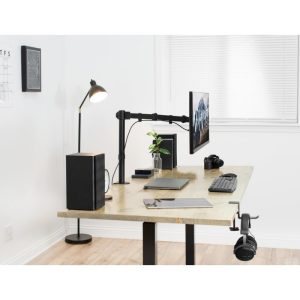
Morning stretches address the muscular side of sleep quality, but your daytime environment plays an equally important role. A desk setup that maintains neutral posture prevents the tension buildup that stretches are designed to release.
Slowvana’s ergonomic product line is designed to support this cycle. A bamboo monitor stand raises your screen to eye level, eliminating the forward-head posture that triggers neck tension. A gel wrist rest maintains neutral wrist alignment, reducing the arm and shoulder tightness that can interfere with sleep. A large felt desk mat creates a calm, organized workspace that reduces stress—a known sleep disruptor.
When you combine morning stretching with an ergonomic workspace, you create a closed loop: release tension in the morning, prevent it from reaccumulating during the day, and arrive at bedtime with a body that’s ready for deep recovery.
Frequently Asked Questions
How long before bed should I stop stretching?
Morning stretches are designed for the start of your day, not the end. Evening stretching is also beneficial, but focus on gentle, restorative poses (like legs-up-the-wall) rather than the dynamic sequences recommended here. Stop vigorous stretching at least 2 hours before bed to avoid raising your heart rate.
Can morning stretching replace evening sleep hygiene?
No. Morning stretching complements, but does not replace, good sleep hygiene. Maintain consistent bedtimes, limit blue light exposure 60 minutes before sleep, and keep your bedroom cool (65-68°F / 18-20°C). Morning stretching enhances these practices but is not a substitute.
How long until I see sleep improvements?
Most people report noticeable improvements within 1-2 weeks of consistent practice. Sleep quality metrics—such as time to fall asleep, number of nighttime awakenings, and morning fatigue—typically show measurable changes by week three. Track your sleep using a journal or wearable device to monitor progress.
What if I have an injury or chronic pain?
Consult a physical therapist or healthcare provider before starting any new stretching routine, especially if you have existing injuries or chronic conditions like sciatica or herniated discs. Modify stretches as needed—for example, perform the seated forward fold with a bent knee if you have hamstring sensitivity.
Should I stretch before or after breakfast?
Stretch before breakfast. Stretching on an empty stomach is generally more comfortable and allows for deeper breathing. If you need something, have a small glass of water. Eat breakfast after completing your stretching routine.
Slowvana is a recovery lifestyle brand for desk workers. We believe that recovery is not what you do after work—it’s how you work. Explore our ergonomic solutions at Slowvana.com to complete your recovery routine.
🪑 Fix Your Desk Setup in 5 Minutes
Download the free Ergonomic Setup Checklist — 15 steps to reduce pain and work comfortably.
Get Free Checklist →