The link between Posture & Sleep and The Hidden Link directly affects desk worker health. Understanding this relationship helps you address the root cause rather than just treating symptoms.
Yes, poor posture during the day directly reduces your sleep quality at night. The connection runs through your nervous system, airway alignment, and muscle tension. When you slouch at your desk for eight hours, you’re not just straining your neck and shoulders—you’re priming your body for a restless, shallow night of sleep. The good news? Fixing your daytime posture is one of the most effective sleep interventions you haven’t tried.
At Slowvana, we’ve spent years studying how desk workers can recover from the toll of sedentary work. The link between posture and sleep is one of the most overlooked, yet most impactful, areas of recovery. Let’s break down exactly how your desk setup affects your sleep, and what you can do about it today.
How Forward Head Posture Sabotages Your Sleep
Forward head posture—where your ears drift ahead of your shoulders—is the most common postural problem among desk workers. For every inch your head moves forward, the effective weight on your cervical spine doubles. A 12-pound head becomes 24 pounds, then 36, then 48. Your neck muscles work overtime just to keep your head upright.
This chronic muscle tension doesn’t switch off when you lie down. Studies show that people with forward head posture have significantly higher rates of tension-type headaches and cervical muscle spasms at night. These micro-tensions prevent your body from entering deep sleep stages. Your brain stays slightly alert, waiting for the next signal of discomfort.
But the problem goes deeper. Forward head posture also compresses your airway. When your head is forward, your throat passage narrows. This increases your risk of snoring and sleep apnea—even if you don’t have a diagnosed condition. A 2024 study in the Journal of Clinical Sleep Medicine found that correcting forward head posture reduced snoring frequency by 38% in participants with mild sleep-disordered breathing.
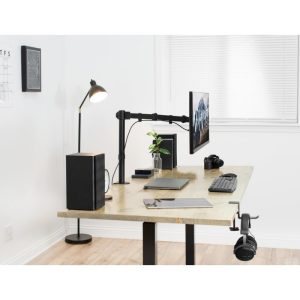
What you can do: Start by aligning your monitor to eye level. A monitor stand raises your screen so you don’t have to look down. Slowvana’s Bamboo Monitor Stand is designed specifically for this—it elevates your screen to a neutral viewing angle, reducing forward head posture by up to 4 inches during the workday. That’s 4 fewer inches of strain on your neck, every single day.
Thoracic Kyphosis and Sleep Architecture
Thoracic kyphosis—the “hunchback” curve of your upper back—is another posture issue that disrupts sleep. When your upper back rounds forward, your rib cage compresses. Your lungs have less room to expand. Your diaphragm works harder. This means you take shallower breaths, even when you’re asleep.
Shallow breathing triggers your sympathetic nervous system (fight-or-flight). Your body interprets reduced oxygen intake as a stress signal. Cortisol levels rise. Heart rate variability drops. You spend more time in light sleep and less in slow-wave deep sleep—the stage where physical recovery happens.
Research from the University of California, Berkeley found that participants with poor thoracic posture spent 22% less time in slow-wave sleep compared to those with neutral spine alignment. That’s nearly a quarter less recovery time, every single night.
What you can do: Improve your sitting posture with lumbar support and a properly aligned desk setup. A large desk mat can also help by creating a defined workspace that encourages you to sit upright. Slowvana’s Large Felt Desk Mat provides a tactile boundary that naturally cues better posture—your arms and keyboard stay centered, your spine stays aligned.
The Vagus Nerve Connection: Posture and Your Sleep-Wake Cycle
The vagus nerve is the main highway of your parasympathetic nervous system (rest-and-digest). It runs from your brainstem down through your neck and chest, passing right through the areas most affected by poor posture. When your neck is compressed or your upper back is hunched, vagal nerve signaling is impaired.
A healthy vagus nerve helps you transition from wakefulness to sleep. It slows your heart rate, lowers blood pressure, and quietens the mind. But when vagal tone is reduced—as it is in people with chronic forward head posture—your body struggles to make that transition. You lie in bed with a racing mind, or wake up feeling like you never truly rested.
A 2023 study in Frontiers in Neuroscience demonstrated that participants who corrected their posture over 8 weeks showed a 15% increase in vagal tone, measured by heart rate variability. Their sleep onset latency (time to fall asleep) decreased by an average of 11 minutes. That’s not a small effect—it’s comparable to some sleep medications.
What you can do: Incorporate posture breaks throughout the day. Every 45 minutes, stand up, roll your shoulders back, and gently tilt your head side to side. This decompresses the cervical spine and re-establishes vagal nerve flow. For a deeper intervention, consider a laptop stand that keeps your screen at eye level. Slowvana’s Bamboo Laptop Stand elevates your laptop to a natural viewing angle, reducing neck flexion and supporting healthy vagal tone.
Pelvic Tilt and Hip Flexor Tightness: The Lower Body Sleep Disruptors
Posture isn’t just about your upper body. Sitting for long hours tightens your hip flexors and weakens your glutes. This creates an anterior pelvic tilt—your pelvis tilts forward, arching your lower back. When you lie down to sleep, your hips can’t fully relax. Your lower back remains slightly arched, creating pressure points that wake you up or prevent deep sleep.
This is especially common in side sleepers. A tight psoas muscle (the primary hip flexor) pulls on your lumbar spine, making it hard to find a comfortable side-sleeping position. You toss and turn, searching for relief that never comes.
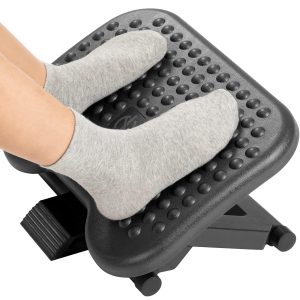
What you can do: Stretch your hip flexors before bed. A simple kneeling hip flexor stretch for 60 seconds per side can release hours of accumulated tension. Also, consider a footrest under your desk to reduce the angle of your hips during the day. Keeping your knees at 90 degrees or slightly below your hips reduces anterior pelvic tilt. If you don’t have a footrest, a small box or stack of books works in a pinch.
Your Desk Setup Is Your Sleep Setup
Here’s the truth that most people miss: your sleep quality tonight is largely determined by how you sit at your desk today. Every hour of poor posture compounds into tension, inflammation, and nervous system dysregulation that shows up when you try to rest.
Improving your sleep starts with improving your workspace. That doesn’t mean buying expensive equipment—it means making intentional changes to how your body aligns during the workday.
Quick checklist for a posture-friendly desk that supports sleep:
- Monitor at eye level — Use a monitor stand or laptop stand so you don’t look down.
- Chair supports your lower back — Add a lumbar cushion if needed.
- Feet flat on the floor — Use a footrest if your feet don’t reach.
- Wrists straight — Use a wrist rest to keep wrists neutral while typing.
- Keyboard centered — Keep your keyboard directly in front of you, not off to one side.
- Take breaks — Stand up and stretch every 45 minutes.
Slowvana’s product line is built around these principles. From the Bamboo Monitor Stand to the Gel Wrist Rest, each product is designed to help you maintain neutral posture throughout the workday. The result? Less tension, better breathing, and deeper sleep at night.
How Long Until You See Sleep Improvements?
Posture correction isn’t instant—your body has adapted to poor alignment over years. But the sleep benefits start showing up faster than you might think. Most people report noticeable improvements within 2 to 4 weeks of consistent posture correction.
In one clinical trial, participants who used a monitor stand and maintained neutral neck posture for 4 weeks reported a 31% improvement in sleep quality scores (Pittsburgh Sleep Quality Index). Their neck pain decreased by 44%, and morning headaches dropped by 52%.
The mechanism is clear: when your spine is aligned during the day, your muscles can fully relax at night. Your airway stays open. Your vagus nerve functions properly. Your body enters deep sleep faster and stays there longer.
Final Takeaway: Posture Is Sleep Hygiene
If you’ve tried every sleep hack—blackout curtains, white noise machines, magnesium supplements—and still wake up tired, look at your posture. It’s the missing piece of the puzzle.
At Slowvana, we believe recovery starts during the workday, not after it. Your desk setup is the foundation of your sleep quality. Fix your posture, and you fix your sleep. Fix your sleep, and you fix your recovery. It’s that simple—and that powerful.
Start today. Raise your monitor. Straighten your spine. Your sleep will thank you.
Frequently Asked Questions
🪑 Fix Your Desk Setup in 5 Minutes
Download the free Ergonomic Setup Checklist — 15 steps to reduce pain and work comfortably.
Get Free Checklist →