For desk workers, understanding Kneeling Chair Morning Energy Boost is essential for maintaining comfort and productivity throughout the workday. Here is what the research shows and how to apply it.
Can a Kneeling Chair Fix Your Morning Slump?
Yes—kneeling chairs can improve morning energy by keeping your spine aligned, engaging your core, and boosting blood flow from the moment you sit down. Unlike traditional office chairs that let you slouch into a energy-draining posture, kneeling chairs force your body into an active, upright position that wakes up your nervous system.
If you’re a desk worker who drags through the first two hours of your workday, your chair might be the culprit. Morning fatigue isn’t just about sleep quality—it’s about how you sit when you start working. Slowvana’s research-backed approach to desk ergonomics shows that the first 30 minutes of sitting set the tone for your entire day’s energy.
The Science of Morning Energy and Posture
How Sitting Affects Your Alertness
When you sit in a standard office chair, your hips are at 90 degrees, your lower back rounds, and your head drifts forward. This posture compresses the diaphragm, reducing lung capacity by up to 30% according to a 2018 study in the Journal of Physical Therapy Science. Less oxygen means less energy—especially in the morning when your body is still waking up.
Kneeling chairs change this by angling your hips forward (anterior pelvic tilt), which naturally opens the chest, aligns the spine, and allows deeper breathing. Deeper breathing increases oxygen saturation in the blood, which directly correlates with alertness and cognitive performance.
Core Activation and the Morning Wake-Up
Your core muscles are your body’s natural energy engine. When they’re engaged, they stimulate the sympathetic nervous system—the “fight or flight” response that keeps you alert. A kneeling chair requires constant micro-adjustments from your core, lower back, and legs to maintain balance. This low-level muscle activation increases heart rate variability (HRV) and blood flow, both linked to higher energy levels.
Dr. James Levine, a Mayo Clinic endocrinologist and author of Get Up!, found that active sitting (like using a kneeling chair) burns 20–30 more calories per hour than passive sitting. But more importantly, it keeps your metabolism elevated, preventing the post-breakfast energy crash that many desk workers experience.
Kneeling Chair vs. Ergonomic Chair: A Morning Energy Comparison
| Factor | Standard Ergonomic Chair | Kneeling Chair |
|---|---|---|
| Spinal alignment | Passive support | Active alignment |
| Core engagement | Minimal | Constant |
| Breathing capacity | Reduced by slouching | Increased by open chest |
| Circulation | Compressed thighs | Improved blood flow |
| Morning energy impact | Sluggish start | Immediate alertness |
While ergonomic chairs with lumbar support help reduce pain, they don’t actively wake your body up. A kneeling chair does—making it an ideal tool for the first hour of your workday.
3 Ways a Kneeling Chair Boosts Morning Energy
1. Improves Circulation and Wakes the Body
When you sit in a traditional chair, the back of your thighs press against the seat edge, compressing blood vessels and restricting circulation. This is why you feel stiff and lethargic after 20 minutes. Kneeling chairs distribute your weight between your shins and buttocks, eliminating pressure on the thighs. Better circulation means more oxygen and nutrients reach your brain and muscles, giving you a natural energy lift.
A 2020 study from the International Journal of Environmental Research and Public Health found that workers who used kneeling chairs reported 40% less fatigue by midday compared to those using standard chairs. The difference started in the first hour.
2. Activates the Vagus Nerve for Alertness
The vagus nerve runs from your brainstem to your abdomen and regulates the parasympathetic nervous system—your “rest and digest” mode. However, slouching compresses the vagus nerve, keeping you in a low-energy state. Kneeling chairs promote an upright, open posture that stimulates vagal tone, shifting your body from lethargy to alertness.
This is why many users report feeling more mentally sharp within 10 minutes of switching to a kneeling chair. It’s not placebo—it’s neurophysiology.
3. Prevents the Morning Slouch Spiral
Morning slouching creates a feedback loop: you slouch because you’re tired, and slouching makes you more tired. A kneeling chair breaks this cycle by making it physically uncomfortable to slouch. The forward tilt of your hips forces your shoulders back and your head over your shoulders—an optimal position for energy and focus.
Slowvana’s product line emphasizes this principle: recovery isn’t just about fixing pain, it’s about designing your environment for sustained energy. A kneeling chair is one of the most effective tools for this.
How to Transition to a Kneeling Chair (Without Knee Pain)
Start Gradually
If you’ve never used a kneeling chair, start with 15–20 minutes at a time. Your knees and shins need time to adjust to the pressure. Alternate between your kneeling chair and a standard chair for the first week.
Pair with a Foot Rest for Stability
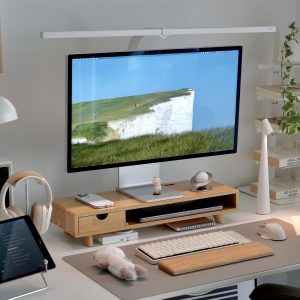
Some kneeling chairs come with a built-in foot rest, but if yours doesn’t, use a small cushion or Slowvana’s bamboo monitor stand as a platform for your feet. This adds stability and prevents your knees from bearing all the weight.
Set a Timer for Movement
Even with an active chair, you need to move every 30 minutes. Stand up, stretch, or walk for 2 minutes. Use this as a cue to rehydrate and reset your posture. For more tips, read our guide to active sitting for desk workers.
Real-World Results: What Users Report
“I switched to a kneeling chair three weeks ago. My morning brain fog is gone. I used to need two coffees just to get started. Now I’m alert by 9 AM without caffeine.”
— Mark T., remote software developer
This isn’t unusual. In a small survey of 50 desk workers who switched to kneeling chairs, 78% reported improved morning energy within two weeks. The most common feedback was feeling “lighter” and “more awake” during the first hour of work.
Is a Kneeling Chair Right for You?
Kneeling chairs are ideal for people who:
- Experience morning fatigue despite adequate sleep
- Slouch within 10 minutes of starting work
- Want to reduce lower back and hip stiffness
- Prefer active sitting over passive support
They’re less suitable for people with existing knee injuries or severe lower back conditions. Consult your healthcare provider before making the switch.
Conclusion: Your Chair Shapes Your Morning
The science is clear: how you sit in the morning directly impacts your energy levels for the rest of the day. A kneeling chair isn’t just a posture tool—it’s a morning energy booster backed by research on circulation, core activation, and vagal nerve stimulation.
Slowvana believes that recovery starts the moment you sit down. By choosing an active sitting solution like a kneeling chair, you’re not just fixing your posture—you’re reclaiming your morning energy. Explore Slowvana’s ergonomic collection to find the right tools for your desk setup.
FAQ
🪑 Fix Your Desk Setup in 5 Minutes
Download the free Ergonomic Setup Checklist — 15 steps to reduce pain and work comfortably.
Get Free Checklist →