You Wake Up Tired Even After 8 Hours: The Desk Worker's Guide to Restorative Sleep because prolonged sitting compresses joints, restricts blood flow, and disrupts natural recovery cycles. The right ergonomic setup and movement breaks directly counteract these effects.
, lights dimmed, phone on Do Not Disturb.
Introduction: The 8-Hour Sleep Paradox
You do everything right. You climb into bed by 10:30 p.m. The alarm goes off at 6:30 a.m. — a full eight hours later. And yet, when your eyes open, you feel like you’ve been hit by a truck. Your brain is foggy, your neck is stiff, and the idea of getting out of bed feels like a Herculean task.
If this sounds painfully familiar, you’re not alone. According to the Centers for Disease Control and Prevention (CDC), one in three adults doesn’t get enough sleep. But here’s the twist: many of those who log eight hours still feel exhausted. The culprit isn’t the quantity of sleep — it’s the quality. And for desk workers, the root cause often begins long before you hit the pillow.
In this guide, we’ll explore the hidden ways your 9-to-5 (or 8-to-6) wreaks havoc on your sleep quality — and what you can do about it. From posture and screen habits to ergonomics and stress, we’ll connect the dots between your workday and your morning energy.
1. The Posture-Sleep Connection: Why Your Desk Setup Keeps You Tired
Forward Head Posture and Airway Restriction
You’ve probably heard that slouching is bad for your back. But did you know it can literally interfere with your breathing at night? When you spend hours hunched over a keyboard, your head drifts forward — sometimes by several inches. This forward head posture compresses the cervical spine and narrows your airway.
A 2019 study in the Journal of Physical Therapy Science found that forward head posture is linked to reduced lung capacity and increased airway resistance. During sleep, this can manifest as snoring, sleep apnea, or frequent micro-awakenings — even if you don’t remember them. The result? You wake up feeling like you never slept.
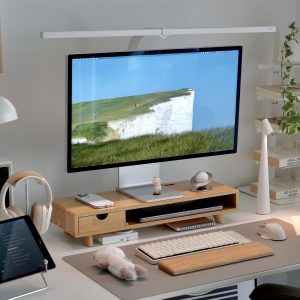
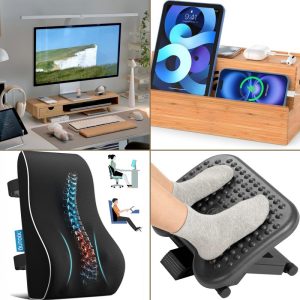
The fix: Start by checking your monitor height. Your screen should be at eye level, so you’re not craning your neck. A monitor stand can raise your display to the correct height, reducing forward head posture by up to 40%. Pair this with a lumbar support cushion to keep your pelvis neutral, which naturally aligns your spine.
Upper Crossed Syndrome and Nighttime Tension
Desk workers are prone to upper crossed syndrome — a pattern of tight chest muscles and weak upper back muscles. This imbalance doesn’t just cause daytime shoulder pain; it keeps your nervous system in a state of low-grade fight-or-flight. When you lie down, your tight pecs pull your shoulders forward, restricting deep breathing and preventing your body from fully relaxing into restorative sleep.
“Posture is not just a structural issue. It’s a neurological one. Poor posture keeps the sympathetic nervous system (stress response) active, even when you’re trying to rest.” — Dr. Emily K. Miller, physical therapist and ergonomics researcher
Try this tonight: Before bed, perform a simple doorway stretch for your chest. Stand in a doorway, place your forearms on the frame, and gently lean forward. Hold for 30 seconds. This opens the chest and signals your nervous system that it’s safe to power down.
2. Screen Time and Circadian Chaos: Blue Light’s After-Hours Effect
Melatonin Suppression and Sleep Architecture
You already know that looking at screens before bed is bad — but do you know why? Your eyes contain specialized cells (intrinsically photosensitive retinal ganglion cells) that are exquisitely sensitive to blue light, particularly in the 460–480 nanometer range. When you stare at a monitor or phone after sunset, these cells signal your brain’s suprachiasmatic nucleus (your internal clock) to suppress melatonin production.
A 2015 study in the Proceedings of the National Academy of Sciences found that reading on a light-emitting device before bed reduced melatonin levels by 55% compared to reading a printed book. This doesn’t just make it harder to fall asleep — it fragments your sleep architecture, reducing time spent in deep sleep and REM. You might sleep eight hours, but your brain never fully cycles through the stages needed for restoration.
The Desk Worker’s Double Whammy
For desk workers, the problem compounds. You’re already exposed to blue light for 8+ hours a day. By the time you get home, your circadian rhythm is already skewed. Then you scroll on your phone or watch TV, further delaying your sleep onset. The result: you fall asleep later than you think, and your sleep is lighter.
Action steps:
- Use blue-light blocking glasses after 7 p.m. (look for ones that block 90%+ of blue light in the 400–500nm range).
- Enable Night Shift or f.lux on all devices by sunset.
- Replace your bedside phone charger with a book or a sleep journal.
- Consider a wrist rest for your keyboard — it’s not directly about sleep, but reducing wrist strain during the day lowers overall physical tension, which can improve sleep quality.
3. The Sedentary Sleep Trap: How Inactivity Ruins Your Rest
Glymphatic System and Waste Clearance
Your brain has a built-in cleaning system called the glymphatic system. During deep sleep, cerebrospinal fluid flows through your brain, flushing out metabolic waste products like beta-amyloid (linked to Alzheimer’s) and other toxins. This process is critical for cognitive function and energy restoration.
Here’s the problem: physical activity during the day boosts glymphatic function. A 2018 study in the Journal of Neuroscience showed that exercise increases the clearance of waste from the brain during sleep. Conversely, prolonged sitting — the hallmark of desk work — dampens this system. You may log eight hours in bed, but without daytime movement, your brain’s cleanup crew doesn’t work as efficiently.
Circadian Temperature Regulation
Your body temperature naturally drops at night to initiate sleep. But when you sit all day, your core temperature stays artificially low, and your extremities (feet and hands) don’t get enough circulation. This disrupts the temperature dip needed for deep sleep. You might feel cold when you get into bed, or you might wake up with sweaty feet — both signs of poor thermoregulation.
Movement breaks during the day: Set a timer to stand and walk for 2 minutes every 30 minutes. Even short walks increase blood flow and improve nighttime temperature regulation. A foot rest under your desk can also help by encouraging micro-movements of your legs, reducing venous pooling and improving circulation.
4. Stress, Cortisol, and the Desk Worker’s Nighttime Brain
Rumination and Autonomic Arousal
You close your laptop, but your brain doesn’t. The emails, deadlines, and Slack messages replay on a loop. This is rumination — and it’s a major driver of poor sleep quality, even when you get enough hours.
Desk work is mentally demanding but physically passive. This mismatch creates a state of cognitive arousal without physical exhaustion. Your brain is tired, but your body hasn’t produced enough adenosine (the chemical that builds sleep pressure) to override the stress signals. Cortisol levels remain elevated, keeping you in a light, fragmented sleep state.
A 2020 meta-analysis in Sleep Medicine Reviews found that work-related rumination was significantly associated with poor sleep quality, even after controlling for total sleep time. The effect was stronger for desk workers than for manual laborers — likely because physical work helps dissipate stress hormones.
Creating a Recovery Ritual
To break the cycle, you need a work-to-sleep transition ritual that lasts at least 30 minutes. This isn’t about scrolling more or watching TV — it’s about actively shifting your nervous system from sympathetic (fight-or-flight) to parasympathetic (rest-and-digest).
- Write a “brain dump” list of everything on your mind. Close the notebook.
- Do 5 minutes of diaphragmatic breathing (inhale 4 seconds, exhale 6 seconds).
- Use a lumbar support cushion during your wind-down reading time — keeping your spine aligned while you relax prevents the postural tension that can creep in during sedentary leisure time.
5. The Ergonomic Sleep Connection: Small Fixes, Big Impact
Your Mattress vs. Your Work Posture
You might not think your desk setup affects your mattress choice, but it does. Forward head posture and rounded shoulders from desk work create a thoracic kyphosis that persists when you lie down. If your mattress is too firm, it won’t accommodate this curvature, leading to pressure points and micro-awakenings. Too soft, and your hips sink, rotating your pelvis and straining your lower back.
Pro tip: If you wake up with the same pain you feel at your desk (neck, shoulders, lower back), your sleep posture is being influenced by your daytime posture. A medium-firm mattress with a contouring pillow is usually best for desk workers. For immediate relief, a lumbar support can be used in bed while reading or watching TV to maintain neutral spine alignment.
Wrist and Hand Position During Sleep
Desk workers often develop carpal tunnel syndrome or ulnar nerve entrapment from prolonged typing. These conditions don’t just hurt during the day — they can disrupt sleep. Many people unconsciously bend their wrists while sleeping, compressing the median nerve and causing numbness that wakes them up.
To prevent this, try wearing a neutral wrist brace at night. And during the day, use a wrist rest with your keyboard and mouse to maintain neutral wrist alignment. This reduces cumulative strain and helps your hands and arms fully relax at night.
Conclusion: Your Day Determines Your Night
Waking up tired after eight hours is not a mystery — it’s a message. Your body is telling you that something during the day is preventing restorative sleep. For desk workers, the most common culprits are forward head posture, blue light overload, sedentary habits, and unprocessed stress.
The good news? You don’t need a complete lifestyle overhaul. Start with one change today:
- Raise your monitor to eye level (with a monitor stand).
- Take a 2-minute walk every 30 minutes.
- Wear blue-light blockers after sunset.
- Create a 30-minute wind-down ritual without screens.
Your sleep quality is the foundation of your health, productivity, and happiness. By optimizing your workday ergonomics and habits, you can finally wake up feeling as rested as you deserve. Sweet dreams — and better mornings — start with how you spend your day.
Slowvana is a recovery lifestyle brand for desk workers. Explore our ergonomic solutions — monitor stands, wrist rests, foot rests, and lumbar support — designed to help you work better and sleep deeper.
🪑 Fix Your Desk Setup in 5 Minutes
Download the free Ergonomic Setup Checklist — 15 steps to reduce pain and work comfortably.
Get Free Checklist →