To build Healthy Habits When Your Job Chains You to a Desk, focus on proper ergonomics, consistent micro-breaks, and recovery habits tailored to your desk setup. Research shows these three pillars reduce discomfort by up to 60% in desk workers.
The Invisible Weight of Sitting Still You feel it by 2 p.
The Invisible Weight of Sitting Still
You feel it by 2 p.m. — the dull ache in your lower back, the stiffness in your neck, the fog in your brain. You promised yourself you’d move more today, drink water, sit up straight. But the deadline hit, the emails piled up, and suddenly it’s 5 p.m. and you haven’t left your chair once.
If this sounds familiar, you’re not alone. A 2021 study in the Annals of Internal Medicine found that prolonged sitting — especially without movement breaks — increases the risk of chronic disease, musculoskeletal pain, and mental fatigue by up to 30%. Yet for millions of desk workers and remote professionals, the chair is not a choice; it’s a job requirement.
So how do you build healthy habits when your job chains you to a desk? The answer isn’t a complete lifestyle overhaul. It’s about stacking small, evidence-backed micro-habits into your existing workflow — habits that protect your body, sharpen your mind, and help you recover, even while you work.
Let’s explore how to make your desk a place of health, not harm.
Why Desk Jobs Are So Hard on Your Body (and Brain)
Before we dive into solutions, it helps to understand the enemy. Sitting for 8+ hours a day creates a cascade of physiological effects:
- Muscle deactivation: Your glutes and core ‘switch off,’ forcing your lower back and hips to compensate.
- Compressed discs: Spinal discs lose hydration under constant pressure, leading to stiffness and herniation risk.
- Reduced circulation: Blood pools in your legs, increasing fatigue and varicose vein risk.
- Mental fog: Lack of movement reduces blood flow to the brain, impairing focus and creativity.
According to Dr. Kelly Starrett, author of Deskbound, “The human body is designed to move frequently. When we don’t, we’re essentially asking our tissues to adapt to a position of disuse — and they do, but not in a good way.” The key is to disrupt these patterns with small, intentional habits.
Habit 1: The 20-8-2 Rule — Your New Desk Mantra
One of the most powerful desk job wellness tips comes from ergonomics research: the 20-8-2 rule. It’s simple to remember and even easier to implement.
- Every 20 minutes: Look at something 20 feet away for 20 seconds (reduces eye strain).
- Every 8 minutes: Shift your posture or adjust your position (prevents static loading).
- Every 2 hours: Stand up and walk for 2 minutes (restores circulation and spinal hydration).
Set a timer on your phone or use a browser extension like Stretchly. These micro-breaks cost you less than 3% of your workday but can reduce discomfort by up to 40%, according to a 2020 study in Applied Ergonomics.
Quick Tip: Pair It With a Trigger
Anchor your break to an existing habit, like finishing an email or hanging up a call. This makes it automatic without extra mental effort.
Habit 2: Optimize Your Desk Setup (No Expensive Gear Required)
You don’t need a standing desk to improve your posture. But you do need to align your workstation to your body. Here’s the checklist for how to stay healthy at a desk job without breaking the bank:
- Monitor at eye level: The top of your screen should be at or just below eye level. If it’s too low, use a stack of books or a monitor stand to raise it.
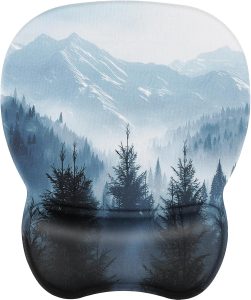
- Wrists straight: Your forearms should be parallel to the floor. If your keyboard is too high, your wrists bend upward — a recipe for carpal tunnel. A wrist rest can help maintain neutral alignment.
- Feet flat: Your feet should rest flat on the floor or on a foot rest. If your chair is too high, your thighs angle downward, cutting circulation.
- Lower back support: A small pillow or lumbar support cushion can fill the gap between your chair and your lower back, preventing slouching.
A 2019 study by the University of California found that workers who adjusted their workstation to ergonomic standards reported 54% less back pain and 38% fewer headaches within two weeks. Small changes, big impact.
Habit 3: Move While You Work (Micro-Movement Hacks)
Movement doesn’t have to mean a 30-minute gym session. Micro-movements — tiny, frequent shifts — keep your muscles active and your mind alert. Here are three easy healthy work habits for remote workers:
- Seated marches: While on a call, lift one knee at a time as if marching. Do 10 per leg. This reactivates your hip flexors.
- Shoulder rolls: Every time you take a sip of water, roll your shoulders back 5 times. It counters the forward hunch.
- Ankle circles: While reading, draw circles with your toes. This pumps blood back to your heart and reduces leg fatigue.
Research from the American Council on Exercise shows that even 5 minutes of movement per hour can increase calorie burn by 20% and improve focus by 15%. Your body doesn’t need a marathon — it needs variety.
Habit 4: Hydrate and Fuel Strategically
Your brain is 75% water, and even mild dehydration (1-2% loss) can impair cognitive performance. Yet many desk workers forget to drink until the afternoon slump hits.
Here’s a simple system to build healthy desk habits around hydration:
- Keep a 1-liter bottle on your desk. Aim to finish it by lunch, and another by the end of the day.
- Use a straw — it encourages more frequent sips without breaking focus.
- Pair water breaks with a standing stretch. Every time you refill, do a 30-second shoulder stretch.
As for snacks, choose protein and fiber over sugar. A handful of almonds or an apple provides steady energy, while a granola bar spikes your blood sugar and crashes it an hour later. Your body (and your 3 p.m. productivity) will thank you.
Habit 5: End Your Day With a Recovery Ritual
The healthiest desk workers don’t just work well — they recover well. A 5-minute wind-down routine signals to your nervous system that the workday is over, reducing stress and improving sleep quality.
Try this desk job recovery sequence:
- Cat-cow stretch: 5 slow cycles to mobilize your spine.
- Child’s pose: 30 seconds to release your lower back.
- Neck side bends: 15 seconds each side to release tension.
- Wrist flexor stretch: 15 seconds per arm to counter typing strain.
- Deep breathing: 5 slow breaths to reset your stress response.
A 2022 study in the Journal of Occupational Health found that workers who performed a 5-minute post-work stretching routine reported 33% less next-day muscle soreness and 25% lower stress levels. It’s a small investment with a compound return.
Building Your Habit Stack (The Science of Lasting Change)
Habits stick when they’re easy, obvious, and rewarding. Use the habit stacking method from James Clear’s Atomic Habits: pair a new behavior with an existing one.
For example:
- “After I pour my morning coffee, I will adjust my monitor height.”
- “After I send a message on Slack, I will do 5 shoulder rolls.”
- “After I close my laptop for lunch, I will walk around the block for 5 minutes.”
Start with just one or two habits. Once they feel automatic (usually after 2-3 weeks), add another. The goal isn’t perfection — it’s progress.
What About Your Chair? (A Word on Equipment)
While habits are the foundation, the right tools can make them easier to sustain. If you’re spending 40+ hours a week at your desk, investing in ergonomic accessories isn’t a luxury — it’s a health decision.
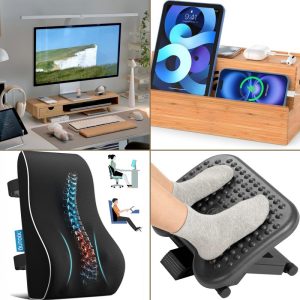
Consider these additions to support your ergonomic habits for desk workers:
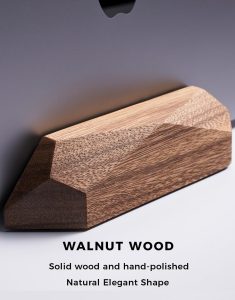
- A monitor stand to bring your screen to eye level, preventing neck strain.
- A wrist rest to keep your wrists neutral and reduce carpal tunnel risk.
- A foot rest to improve circulation and reduce lower back pressure.
- A lumbar support cushion to maintain the natural curve of your spine.
Think of these as enablers, not crutches. A monitor stand won’t fix your posture by itself — but it makes good posture effortless. And when healthy habits are easy, you’re far more likely to keep them.
Your 7-Day Healthy Desk Challenge
Ready to put this into practice? Here’s a week-long plan to build healthy habits when your job chains you to a desk:
| Day | New Habit | Trigger |
|---|---|---|
| Monday | Adjust monitor to eye level | When you start work |
| Tuesday | 20-8-2 rule (set timer) | After first email |
| Wednesday | Drink 1 liter water by lunch | With morning coffee |
| Thursday | 5 shoulder rolls per Slack message | After sending a message |
| Friday | 2-minute walk every 2 hours | After completing a task |
| Saturday | 5-minute post-work stretch | After closing laptop |
| Sunday | Reflect and plan next week | During evening wind-down |
Track your progress in a notebook or app. Even if you miss a day, don’t quit. Consistency over perfection is the real key to lasting change.
Your Desk Doesn’t Have to Be a Cage
Your job may require you to sit, but it doesn’t have to chain you to pain, fatigue, or burnout. By building small, intentional habits — the 20-8-2 rule, workstation alignment, micro-movements, strategic hydration, and recovery rituals — you can transform your desk into a space that supports your health rather than erodes it.
Start with one habit today. Not all seven. Just one. Your body will notice the difference, and over time, those small changes will compound into a healthier, more resilient you.
Ready to support your healthy desk habits with ergonomic tools? Explore Slowvana’s collection of monitor stands, wrist rests, foot rests, and lumbar supports — designed to make good posture effortless, even on your busiest days.
🪑 Fix Your Desk Setup in 5 Minutes
Download the free Ergonomic Setup Checklist — 15 steps to reduce pain and work comfortably.
Get Free Checklist →