The link between Sleep Hygiene for People Who Sit 8+ Hours a Day and Reset Your Body Clock directly affects desk worker health. Understanding this relationship helps you address the root cause rather than just treating symptoms.
Introduction: The Desk-Sleep Paradox
You spend eight hours hunched over a keyboard, eyes locked on a glowing screen. Your shoulders are tight, your hips are flexed, and your brain is buzzing with Slack notifications. Then you crawl into bed—and stare at the ceiling for two hours.
If this sounds familiar, you’re not alone. Research from the National Sleep Foundation shows that people with sedentary jobs are 40% more likely to report poor sleep quality. The culprit? A perfect storm of physical tension, blue light exposure, and disrupted circadian rhythms.
But here’s the good news: sleep hygiene for desk workers isn’t about counting sheep or drinking chamomile tea. It’s about undoing the damage of eight hours of sitting—and setting your body up for deep, restorative rest.
In this guide, we’ll walk you through the science-backed strategies that actually work for people who sit all day. From evening stretches to ergonomic tweaks, you’ll learn how to reset your body clock and wake up feeling human again.
Why Sitting All Day Sabotages Your Sleep
Before we dive into solutions, let’s understand the problem. Sitting for prolonged periods affects sleep in three major ways:
1. Muscle Tension and Pain
When you sit for 8+ hours, your hip flexors shorten, your glutes switch off, and your upper back rounds forward. This creates a cascade of tension that follows you into bed. A 2023 study in BMC Musculoskeletal Disorders found that chronic low back pain—common among desk workers—is linked to a 60% higher risk of insomnia.
Your body is literally too tight to relax.
2. Circadian Rhythm Disruption
Your internal body clock runs on light. But desk workers spend their days under artificial lighting and their evenings staring at screens. This confuses your brain into thinking it’s still daytime, suppressing melatonin production. The result? You feel wired at 10 PM.
3. Reduced Movement and Body Temperature Regulation
Your body needs a drop in core temperature to initiate sleep. Physical activity helps regulate this. But when you’ve been sedentary all day, your temperature regulation system gets sluggish. You may feel too warm, too restless, or just ‘off’ when you try to sleep.
6 Research-Backed Sleep Hygiene Tips for Desk Workers
These strategies are designed specifically for people who sit all day. They address the root causes—not just the symptoms—of poor sleep.
1. Reset Your Spine Before Bed (5-Minute Stretch Routine)
Your spine compresses during the day, especially if you sit with poor posture. Counteract this with gentle stretches that open the hips, release the lower back, and decompress the spine.
- Child’s Pose: Kneel on the floor, sit back on your heels, and stretch your arms forward. Hold for 60 seconds. This releases tension in the lower back and shoulders.
- Seated Spinal Twist: Sit on the edge of your bed, twist your torso to the right, and hold for 30 seconds. Repeat on the left. This improves spinal mobility and calms the nervous system.
- Legs-Up-the-Wall: Lie on your back and scoot your hips close to a wall, extending your legs up. Stay for 3-5 minutes. This reverses the effects of prolonged sitting by improving circulation and reducing lower back pressure.
A 2021 review in Sleep Medicine Reviews found that even 5 minutes of evening stretching improves sleep onset and reduces nighttime awakenings.
2. Cut Off Blue Light 90 Minutes Before Bed
This is non-negotiable for desk workers. Your eyes have been assaulted by blue light all day. Give them a break.
- Switch to warm, dim lighting in your bedroom (think salt lamps or candles).
- Use blue-light blocking glasses if you must work late.
- Enable night mode on all devices by 8 PM.
- No screens in bed. Period.
Research from Harvard shows that blue light suppresses melatonin for twice as long as other wavelengths. Your evening routine should be a digital sunset.
3. Optimize Your Sleep Environment (Ergonomics Matter Here Too)
Your workspace ergonomics affect your sleep more than you think. Pain from a poorly set up desk follows you to bed.
- Pillow height: If you sit hunched forward all day, your neck may be tight. Use a contoured cervical pillow to maintain a neutral spine while sleeping.
- Mattress support: A medium-firm mattress is best for lower back pain. If yours is too soft, consider a firm mattress topper.
- Room temperature: Keep your bedroom at 65-68°F (18-20°C). Your body needs to cool down to fall asleep.
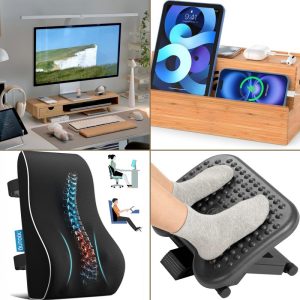
Your desk setup also plays a role. Using a Slowvana monitor stand to raise your screen to eye level reduces forward head posture—which means less neck tension at bedtime. Pair it with a lumbar support cushion during the day to prevent the lower back tightness that keeps you tossing and turning.
4. Create a ‘Shutdown Ritual’ for Your Brain
Your mind is still running on work mode. Give it a clear signal that the day is over.
- Write a brain dump: Spend 2 minutes writing down everything you need to do tomorrow. This reduces ‘task-switching’ anxiety that keeps you awake.
- Do a body scan: Lie in bed and mentally scan from your toes to your head. Notice tension without trying to change it. This activates the parasympathetic nervous system.
- Read a physical book: Not a Kindle. Not your phone. An actual paper book. This signals to your brain that it’s time to wind down.
A 2020 study in Journal of Clinical Sleep Medicine found that a consistent 30-minute wind-down routine improved sleep quality by 25% in adults with chronic insomnia.
5. Move More During the Day (Yes, It Helps at Night)
You might think exercise is separate from sleep hygiene. It’s not. Physical activity during the day improves sleep quality by helping regulate your body temperature and reducing anxiety.
- Take a 10-minute walk after lunch. Morning sunlight exposure also helps reset your circadian rhythm.
- Stand up every 45 minutes. Set a timer. Walk to the water cooler. Stretch your hips.
- Avoid intense exercise within 2 hours of bedtime—it raises core temperature and heart rate, making sleep harder.
Even small movement breaks add up. A 2022 study in Sleep Health found that desk workers who took hourly movement breaks reported 30% better sleep quality than those who didn’t.
6. Use Your Ergonomic Tools for Nighttime Recovery
Your desk setup isn’t just for work—it’s part of your recovery ecosystem. Here’s how ergonomic tools can improve your sleep:
- Wrist rests: Using a Slowvana gel wrist rest during the day reduces wrist strain and prevents carpal tunnel symptoms that can wake you up at night with numbness or tingling.
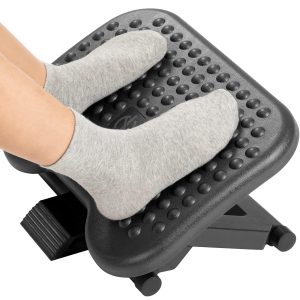
- Foot rests: A Slowvana adjustable foot rest keeps your hips at a 90-degree angle, reducing lower back tension. Less pain during the day means less pain at night.
- Monitor stand: Elevating your screen to eye level prevents the ‘tech neck’ that causes morning headaches and neck stiffness.
Think of it this way: ergonomics is preventive sleep hygiene. The less physical stress you accumulate during the day, the easier it is to relax at night.
Sample Evening Routine for Desk Workers
Here’s a simple, repeatable routine that takes about 30 minutes:
| Time | Activity | Why It Works |
|---|---|---|
| 8:00 PM | Turn off screens. Dim lights. | Starts melatonin production. |
| 8:10 PM | 5-minute stretch (Child’s Pose, spinal twist, legs-up-the-wall). | Releases physical tension from sitting. |
| 8:20 PM | Warm shower or bath. | Drop in body temperature after shower signals sleep. |
| 8:30 PM | Brain dump in journal. | Reduces mental clutter. |
| 8:40 PM | Read a physical book. | Calms the nervous system. |
| 9:15 PM | Lights out. | Consistent bedtime reinforces circadian rhythm. |
When to Seek Professional Help
If you’ve tried these strategies for 2-3 weeks and still struggle with sleep, it may be time to talk to a doctor or sleep specialist. Chronic insomnia, sleep apnea, or severe pain should not be ignored.
But for most desk workers, the issue is accumulated physical and mental tension—and that’s something you can fix starting tonight.
Final Takeaway: Sleep Starts at Your Desk
Sleep hygiene for people who sit 8+ hours a day isn’t about expensive gadgets or complicated routines. It’s about rebuilding the connection between your body and your environment.
Start with one change tonight: stretch for 5 minutes before bed. Then add another tomorrow: cut off screens an hour earlier. Over time, these small shifts will transform your sleep—and your energy during the day.
Your desk setup is part of this puzzle. By using ergonomic tools like a Slowvana monitor stand, wrist rest, or lumbar support cushion, you’re not just preventing pain—you’re setting the stage for better recovery, every single night.
Sleep well, desk warriors. Your body deserves it.
🪑 Fix Your Desk Setup in 5 Minutes
Download the free Ergonomic Setup Checklist — 15 steps to reduce pain and work comfortably.
Get Free Checklist →