The link between Posture and Sleep Quality and The Connection Nobody Talks About directly affects desk worker health. Understanding this relationship helps you address the root cause rather than just treating symptoms.
The Hidden Link Between Your Desk and Your Bed
You’ve tried all the sleep hacks. Blackout curtains. White noise machines. Magnesium supplements. No screens an hour before bed. Yet you still wake up groggy, with a stiff neck or a dull ache in your lower back. What if the problem isn’t what happens in your bedroom — but what happens at your desk?
There’s a connection between posture and sleep quality that most people overlook. Your body doesn’t reset the moment you lie down. It carries the tension, the misalignment, and the strain from eight hours of sitting into eight hours of supposed rest. And that’s exactly why you’re not waking up recovered.
In this article, we’ll explore the science behind how daytime posture impacts nighttime sleep, and give you actionable steps — including ergonomic adjustments — to break the cycle. Because recovery doesn’t start when you close your eyes. It starts the moment you sit down to work.
How Daytime Posture Programs Your Nervous System for Poor Sleep
Your posture isn’t just about how you look sitting at a desk. It’s a signal to your nervous system. When you slouch forward — shoulders rounded, head jutting out, hips tucked under — your body interprets this as a stress posture. It’s the same position you’d take if you were bracing for impact. And your nervous system responds accordingly.
Research published in the journal Health Psychology found that participants who sat in a slumped posture reported lower self-esteem, more fear, and higher cortisol levels compared to those sitting upright. Cortisol is your primary stress hormone. Elevated cortisol at the end of the day directly interferes with your ability to fall asleep and stay in deep sleep stages.
“Chronic poor posture keeps your sympathetic nervous system (fight or flight) activated, making it harder for your parasympathetic system (rest and digest) to take over at night.” — Dr. Emily K. Miller, Physical Therapist and Ergonomics Researcher
The result? You lie in bed with a racing mind, tension in your shoulders, and a body that can’t fully let go. You might fall asleep, but you won’t get the restorative deep sleep your body needs to repair and recover.
The Forward Head Posture Problem: Why Your Neck Keeps You Awake
If you’re a desk worker, you likely have forward head posture — also known as “tech neck.” Your head weighs about 10-12 pounds in neutral alignment. For every inch your head moves forward, the effective weight on your cervical spine doubles. At just three inches forward, your neck is supporting the equivalent of 30-40 pounds.
This chronic tension doesn’t stop when you log off. The muscles in your upper neck and shoulders remain contracted, pulling on your cervical spine and reducing blood flow to your brain. When you lie down, these muscles are still fighting to hold your head in that forward position — even though you’re horizontal.
A 2019 study in the Journal of Physical Therapy Science found that individuals with forward head posture had significantly lower sleep quality scores on the Pittsburgh Sleep Quality Index compared to those with neutral neck alignment. The mechanism? Restricted blood flow to the brainstem and increased tension in the suboccipital muscles — both critical for initiating and maintaining sleep.
How to Fix Your Posture for Better Sleep: A 3-Step Protocol
You don’t need a complete lifestyle overhaul. These three adjustments — done consistently — can shift your posture and sleep quality within two weeks.
Step 1: Fix Your Desk Setup (The Foundation of Sleep Recovery)
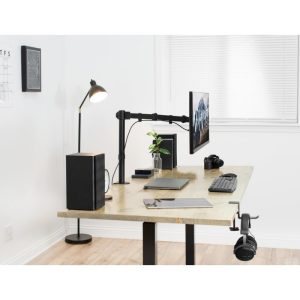
Your desk is where your posture problems begin. If your monitor is too low, you’ll instinctively crane your neck forward. If your keyboard is too high, your shoulders will round and your upper back will tighten. These micro-adjustments compound over an 8-hour workday into significant physical stress.
Here’s the ergonomic checklist for better sleep:
- Monitor at eye level: Use a monitor stand or laptop stand to raise your screen so the top third is at eye level. This prevents forward head posture. Slowvana’s Bamboo Monitor Stand raises your screen 6 inches, aligning your neck naturally.
- Wrists neutral: If your wrists are bent upward while typing, it creates tension that radiates up through your shoulders. A Gel Wrist Rest keeps your wrists in a neutral position, reducing upper body strain.
- Feet flat on the floor: When your feet dangle or rest on your toes, your pelvis tilts, pulling your lower back out of alignment. A foot rest (or even a stack of books) keeps your hips at 90 degrees and your spine neutral.
- Lumbar support: The natural curve of your lower back needs support. Without it, you’ll slump — compressing your diaphragm and restricting oxygen flow. Better breathing during the day means better oxygen delivery for sleep recovery.
These aren’t just comfort upgrades. They’re sleep investments. Every hour you spend in proper alignment is an hour your body isn’t accumulating tension that will keep you awake later.
Step 2: The 10-Minute Posture Reset (Do This Before Bed)
Your body holds onto the day’s posture patterns. Before you get into bed, spend 10 minutes releasing the tension your desk created. This isn’t a full workout — it’s a targeted reset.
| Exercise | Duration | Why It Helps Sleep |
|---|---|---|
| Chin tucks | 2 minutes | Realigns cervical spine, releases suboccipital tension |
| Thoracic extension over a foam roller | 3 minutes | Opens chest and upper back, counteracts slouching |
| Child’s pose with arms extended | 2 minutes | Stretches latissimus dorsi and lower back, activates parasympathetic nervous system |
| Cat-cow stretches | 3 minutes | Mobilizes entire spine, improves circulation to spinal discs |
Do this sequence in a dimly lit room. Focus on slow, deep breaths. You’re signaling to your nervous system: “The workday is over. It’s safe to rest.”
Step 3: Optimize Your Sleep Posture
Even after you fix your daytime alignment, your sleep posture matters. The position you sleep in can either reinforce or undo the work you’ve done.
- Back sleeping: The gold standard for spinal alignment. Use a pillow that supports the natural curve of your neck — not too thick, not too flat. Place a small pillow under your knees to maintain lumbar curve.
- Side sleeping: Use a pillow that fills the gap between your ear and shoulder. Place a pillow between your knees to keep your hips and pelvis aligned.
- Stomach sleeping: Avoid if possible. It rotates your neck for hours and flattens your lumbar curve. If you must, use a very thin pillow (or none) under your head.
The goal is to maintain the neutral spine you worked to create all day. When your sleep posture fights your daytime alignment, you wake up with the same tension you went to bed with.
Why Your Mattress and Pillow Might Be Sabotaging Your Recovery
You can have perfect daytime posture and still struggle with sleep if your sleep surface isn’t supporting you. A mattress that’s too soft allows your hips to sink, rotating your pelvis and straining your lower back. A pillow that’s too thick forces your neck into lateral flexion — holding it there for hours.
Research from the Journal of Chiropractic Medicine indicates that pillow height significantly affects cervical spine alignment during sleep. The ideal pillow height depends on your sleep position and shoulder width. For side sleepers, a taller pillow is needed. For back sleepers, a lower, contouring pillow works best.
If you wake up with neck stiffness, headaches, or tingling in your fingers, your pillow is likely the culprit. Replace it every 12-18 months — pillows lose support over time, even if they look fine.
The Slowvana Approach: Recovery That Starts at Your Desk
At Slowvana, we believe recovery isn’t something you do after work. It’s something you build into your workday. Our products are designed to help you maintain natural alignment while you work — so your body isn’t fighting against itself for eight hours.
When you use a Bamboo Monitor Stand to raise your screen, you’re not just protecting your neck. You’re reducing the cortisol load your body carries into the evening. When you rest your wrists on a Gel Wrist Rest, you’re preventing the shoulder tension that keeps you tossing and turning. When you organize your desk with a Bamboo Cable Management Box, you’re creating a calm visual environment that signals to your brain: this is a space for focus, not stress.
Every ergonomic improvement you make during the day is a deposit into your sleep recovery account. The interest compounds nightly.
Frequently Asked Questions About Posture and Sleep Quality
Can bad posture really cause insomnia?
While bad posture alone may not cause clinical insomnia, it can significantly disrupt sleep quality. Poor posture keeps your sympathetic nervous system activated, elevates cortisol, and creates physical tension that makes it harder to fall asleep and stay in deep sleep. Many people who fix their daytime posture report falling asleep faster and waking up less during the night.
How long does it take to improve sleep quality by fixing posture?
Most people notice improvements in sleep quality within 1-2 weeks of consistently maintaining good daytime posture and doing a nightly posture reset. However, if you’ve had poor posture for years, it may take 4-6 weeks for your muscles and connective tissues to fully adapt.
What is the best sleeping position for desk workers?
Back sleeping is generally best for spinal alignment, especially for desk workers who spend all day in a flexed position. Use a pillow that supports your neck’s natural curve and a small pillow under your knees. If you prefer side sleeping, use a pillow between your knees to keep your hips aligned and a pillow that fills the gap between your ear and shoulder.
Does a monitor stand really help with sleep quality?
Yes. A monitor stand that raises your screen to eye level prevents forward head posture, which reduces tension in your neck and upper shoulders. This tension, when accumulated over a workday, directly interferes with your ability to relax at night. By reducing daytime strain, a monitor stand indirectly but significantly improves sleep quality.
Can a wrist rest improve my sleep?
Indirectly, yes. When your wrists are bent while typing, tension travels up through your forearms, elbows, and shoulders. This tension accumulates and can cause upper body stiffness that makes it hard to get comfortable in bed. A gel wrist rest keeps your wrists neutral, reducing this cascade of tension and helping you wind down more easily at night.
Your Next Step: Start Tonight
You don’t need to overhaul your entire life to sleep better. The connection between posture and sleep quality is real, but it’s also reversible. Start with one change: raise your monitor to eye level tomorrow. Do the 10-minute posture reset before bed tonight. Notice how you feel when you wake up.
Recovery isn’t something that happens to you. It’s something you create — one ergonomic adjustment, one stretch, one intentional breath at a time. Your desk can be the place where your best sleep begins.
Explore Slowvana’s collection of ergonomic desk essentials designed to support your recovery lifestyle — from monitor stands to wrist rests, each product is built to help you work without tension and sleep without pain.
🪑 Fix Your Desk Setup in 5 Minutes
Download the free Ergonomic Setup Checklist — 15 steps to reduce pain and work comfortably.
Get Free Checklist →