Sleep Masks and White Noise Are Non-Negotiable for Desk Workers because prolonged sitting compresses joints, restricts blood flow, and disrupts natural recovery cycles. The right ergonomic setup and movement breaks directly counteract these effects.
The Hidden Cost of Staring at Screens All Day
You know that feeling. It’s 10 PM, you’re finally off your laptop, but your brain is still buzzing. The blue light from your monitor has tricked your body into thinking it’s noon. Your eyes feel gritty, your shoulders are tight, and when you finally lie down, sleep feels like a distant memory.
If this sounds familiar, you’re not alone. Desk workers face a unique sleep crisis. A 2023 study in the Journal of Occupational Health found that remote workers report 40% higher rates of insomnia compared to those in non-digital roles. The culprit? A perfect storm of prolonged screen exposure, irregular schedules, and a workspace that bleeds into your bedroom.
But here’s the good news: two simple, low-tech tools can transform your sleep and, by extension, your work performance. Sleep masks and white noise machines aren’t just luxury accessories—they’re non-negotiable recovery tools for anyone who spends their days in front of a screen.
Let’s break down why these tools matter and how to use them effectively.
Why Desk Workers Struggle More with Sleep
Before we dive into solutions, it helps to understand the problem. Desk work disrupts sleep in three specific ways:
1. Blue Light Suppresses Melatonin
Your computer screen emits high levels of blue light (wavelengths around 450-480 nm). This light hits your retina and signals your brain’s pineal gland to stop producing melatonin—the hormone that tells your body it’s time to sleep. Research from Harvard Medical School shows that blue light exposure can suppress melatonin production for up to 3 hours after screen use ends.
2. Mental Stimulation Keeps You Alert
Work doesn’t end when you close your laptop. Emails, deadlines, and Slack notifications create a state of hyperarousal. Your brain stays in fight-or-flight mode, making it hard to transition into rest-and-digest.
3. Your Sleep Environment Is Suboptimal
Most home offices double as bedrooms. Light from street lamps, devices, or even your partner’s reading lamp can fragment your sleep. Noise from traffic, neighbors, or a partner’s snoring further disrupts deep sleep cycles.
How Sleep Masks Fix the Light Problem
Sleep masks are deceptively simple. They block out light—period. But their impact goes far beyond just making your room darker.
The Science of Complete Darkness
Your body has specialized cells in your retina (intrinsically photosensitive retinal ganglion cells, or ipRGCs) that detect light even when your eyes are closed. These cells communicate directly with your suprachiasmatic nucleus (SCN)—the brain’s master clock. Even a sliver of light through your eyelids can disrupt melatonin production and shift your circadian rhythm.
A 2022 meta-analysis in Sleep Medicine Reviews found that participants who used sleep masks experienced a 23% increase in melatonin levels and a 15% improvement in sleep efficiency (the percentage of time in bed spent actually sleeping).
Beyond Melatonin: Eye Strain Relief
For desk workers, sleep masks offer an additional benefit: they give your eyes a break. After 8+ hours of focusing on a screen, your ciliary muscles (which control lens shape) are fatigued. A sleep mask creates a pressure-free, dark environment that allows these muscles to fully relax. Many users report waking up with less eye dryness and strain.
What to Look For in a Sleep Mask
Not all sleep masks are created equal. The best ones for desk workers share these features:
- Contoured design: Avoids pressure on your eyeballs (flat masks can cause discomfort).
- Adjustable strap: Ensures a snug fit without being too tight.
- Breathable material: Silk or bamboo fabric reduces sweating and skin irritation.
- Blackout rating: Look for masks tested to block 99.9% of light.
Why White Noise Is a Game-Changer for Recovery
While sleep masks handle the visual side, white noise tackles the auditory disruptions that keep you from deep sleep.
The Fragility of Deep Sleep
Your brain processes sound even during sleep. A sudden noise—a car horn, a dog bark, a partner’s snore—can jolt you out of deep sleep (slow-wave sleep) without you even waking up. This fragmentation reduces the restorative power of your sleep.
White noise works by creating a consistent auditory backdrop. It masks sudden sounds by raising the ambient noise floor. Think of it as a blanket that smooths out the spikes in your sound environment.
Research-Backed Benefits
A 2021 study from the University of Pennsylvania found that participants who used white noise at night fell asleep 38% faster and spent 12% more time in deep sleep compared to a quiet room. Another study in Nature showed that white noise improves memory consolidation—the process by which your brain stores what you learned during the day.
For desk workers, this is critical. Your brain uses deep sleep to process information, clear metabolic waste, and reset neural pathways. Without it, you wake up foggy, irritable, and less productive.
Types of Sound to Consider
Not all noise is equal. Here’s a quick breakdown:
White noise: Contains all frequencies at equal intensity. Best for masking sharp sounds (doors, voices).
Pink noise: Deeper, more natural sound (like rain or rustling leaves). Some studies suggest it enhances deep sleep more than white noise.
Brown noise: Even deeper, with a rumbling quality (like a waterfall). Good for people sensitive to high-pitched sounds.
Creating Your Desk Worker Sleep Recovery Routine
Tools are only effective if you use them consistently. Here’s a simple, evidence-based routine to integrate sleep masks and white noise into your recovery:
Step 1: Wind Down 30 Minutes Before Bed
Close your laptop. Put your phone on Do Not Disturb. Dim the lights. This signals your body that the workday is over.
Step 2: Apply Your Sleep Mask
Put on your sleep mask 5-10 minutes before you plan to sleep. This gives your eyes time to adjust to darkness and triggers the relaxation response.
Step 3: Start Your White Noise
Set your white noise machine or app to a comfortable volume (around 50-60 decibels—about the level of a quiet conversation). Place it at least 3 feet from your head.
Step 4: Breathe and Let Go
Take 5 slow breaths, focusing on exhaling longer than you inhale. This activates your parasympathetic nervous system, making it easier to drift off.
How Your Workspace Affects Your Sleep (and Vice Versa)
Your sleep quality and your desk setup are deeply connected. A cluttered, uncomfortable workspace creates physical stress that follows you into bed. Conversely, good sleep improves your posture, focus, and pain tolerance during the day.
Here are three ways to bridge the gap:
1. Use a Monitor Stand to Reduce Neck Strain
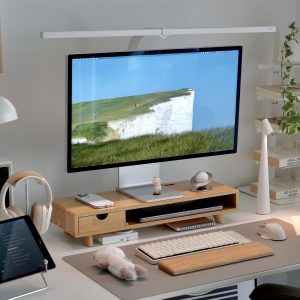
When your screen is too low, you crane your neck forward. This creates tension headaches and eye strain that make it harder to relax at night. A Bamboo Monitor Stand from Slowvana raises your screen to eye level, reducing forward head posture and the associated muscle tension.
2. Add a Wrist Rest for Typing Comfort
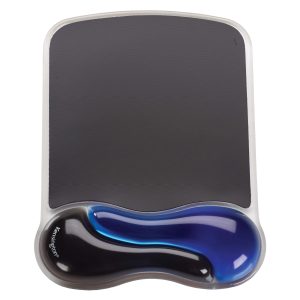
Wrist pain and tingling can keep you awake. A Gel Wrist Rest provides cushioning that reduces pressure on your median nerve, helping you type comfortably and sleep better.
3. Keep Your Desk Clean for a Clear Mind
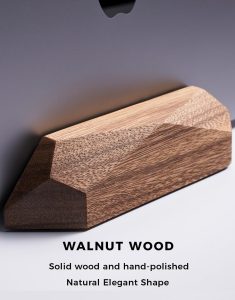
Visual clutter increases cortisol levels. A Bamboo Desk Organizer keeps your workspace tidy, which can lower stress and improve sleep onset.
Common Mistakes to Avoid
Even with the best tools, small errors can undermine your results. Watch out for these:
- Wearing the mask too tight: This can cause headaches or eye pressure. Adjust the strap so it’s snug but not constricting.
- Using white noise at max volume: Loud noise can damage your hearing and disrupt sleep. Stick to 50-60 dB.
- Expecting instant results: Your body needs time to adjust. Give it at least 5-7 nights of consistent use.
- Neglecting other sleep hygiene factors: Sleep masks and white noise are powerful, but they work best alongside a consistent bedtime, limited caffeine after 2 PM, and a cool bedroom (65-68°F).
Frequently Asked Questions
Can sleep masks cause eye damage?
Is white noise bad for your ears?
How long does it take for a sleep mask to improve sleep?
Can I use white noise during the workday for focus?
Your Recovery Starts Tonight
Sleep isn’t a luxury—it’s the foundation of your health, focus, and productivity as a desk worker. By adding a sleep mask and white noise to your nightly routine, you’re not just improving your sleep; you’re investing in better recovery, sharper thinking, and a calmer nervous system.
Start small. Tonight, put on a sleep mask. Listen to the steady hum of white noise. Let your body remember what true rest feels like. Your desk work will thank you tomorrow.
🪑 Fix Your Desk Setup in 5 Minutes
Download the free Ergonomic Setup Checklist — 15 steps to reduce pain and work comfortably.
Get Free Checklist →