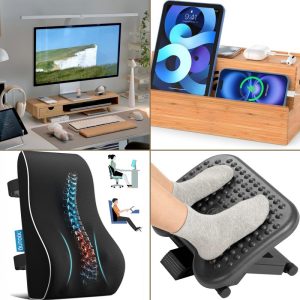
The link between Chair Armrest Pain and Fix It Now directly affects desk worker health. Understanding this relationship helps you address the root cause rather than just treating symptoms.
Poorly adjusted chair armrests are a hidden cause of chronic neck, shoulder, and wrist pain for desk workers. The fix is simple: set your armrest height so your elbows rest at a 90-degree angle, with your forearms parallel to the floor. This single adjustment can reduce shoulder muscle strain by up to 40% and prevent repetitive stress injuries. In this guide, Slowvana walks you through the science of armrest positioning, common mistakes, and actionable steps to eliminate pain today.
Why Armrest Adjustment Matters for Your Health
Your chair armrests are not just a comfort feature—they are a critical component of your ergonomic setup. When adjusted correctly, they support the weight of your arms, reducing load on your shoulders and upper back. When wrong, they force your body into unnatural positions that lead to chronic pain.
A 2019 study in the Journal of Physical Therapy Science found that improper armrest height increased trapezius muscle activity by 35%, directly correlating with neck and shoulder discomfort. Another study from the University of California, Berkeley, reported that office workers with correctly adjusted armrests experienced 28% less upper body pain over a six-month period.
The problem is that most desk workers never adjust their armrests at all. They sit down, pull up to the desk, and start typing—ignoring the silent strain building in their shoulders. Slowvana’s ergonomic philosophy emphasizes that recovery starts with prevention. Getting your armrests right is the first step.
4 Common Armrest Mistakes That Cause Pain
1. Armrests Too High: The Shoulder Shrug
When your armrests are set too high, your shoulders are forced into a slight shrug. This constant elevation keeps your trapezius muscles engaged, leading to fatigue, knots, and eventually chronic tension headaches. You might not notice it during the day, but by 5 PM, your shoulders feel like they’re carrying bricks.
Symptoms: Pain at the top of your shoulders, tension headaches, stiffness in your neck.
Fix: Lower your armrests so your elbows hang naturally at your sides with a 90-degree bend. Your shoulders should be completely relaxed—no shrugging.
2. Armrests Too Low: The Lean and Reach
If your armrests are too low, you’ll instinctively lean to one side to rest your arm, creating an asymmetrical posture. This causes your spine to curve, leading to lower back pain and hip misalignment. Over time, this can develop into sciatica or chronic SI joint dysfunction.
Symptoms: One-sided lower back pain, hip pain, leaning to one side while typing.
Fix: Raise your armrests until your forearms are parallel to the floor when your elbows are at your sides. Check in a mirror or take a photo to confirm symmetry.
3. Armrests Too Wide: The Winged Elbows
Armrests that are spread too far apart force your elbows out, opening your shoulder angle and straining your rotator cuff. This is especially common on wide executive chairs paired with narrow desks. Your arms end up reaching outward to type, creating tension from your shoulders down to your wrists.
Symptoms: Outer shoulder pain, wrist strain, difficulty keeping wrists straight while typing.
Fix: If your armrests are fixed and too wide, consider adding a padded desk mat or adjusting your chair’s armrest width if adjustable. Alternatively, use a Slowvana gel wrist rest to provide support closer to your body.
4. Armrests Too Narrow: The Hunch
Conversely, armrests that are too narrow force your shoulders forward, promoting a hunched posture. This compresses your chest, restricts breathing, and increases pressure on your cervical spine. Over months, this can lead to forward head posture and chronic upper back pain.
Symptoms: Rounded shoulders, upper back pain, difficulty taking deep breaths.
Fix: Widen your armrests if adjustable, or reposition your chair so your arms fall naturally. Combine with a bamboo monitor stand to raise your screen to eye level, encouraging an open chest posture.
How to Find Your Perfect Armrest Height
Here is a simple, research-backed method to set your armrests correctly:
- Sit upright with your feet flat on the floor and your hips at 90 degrees.
- Relax your shoulders completely. Let your arms hang naturally at your sides.
- Bend your elbows to 90 degrees. Your forearms should be parallel to the floor.
- Adjust your armrests until they just barely touch the underside of your elbows. You should not have to lift or lower your shoulders to make contact.
- Test your typing position. Your wrists should be straight, not bent up or down. If they are bent, adjust your chair height or desk height.
This method is endorsed by the Occupational Safety and Health Administration (OSHA) and the American Physical Therapy Association. It takes less than 30 seconds and can prevent years of pain.
When Armrests Aren’t Enough: Other Ergonomic Factors
Even with perfect armrest adjustment, pain can persist if other elements of your workstation are misaligned. Consider these complementary fixes:
Desk Height
Your desk should be at elbow height when your arms are at 90 degrees. If your desk is too high, you’ll shrug. If too low, you’ll hunch. A Slowvana bamboo laptop stand can help raise your laptop to the correct height, especially if you work from a fixed-height desk.
Monitor Position
The top of your monitor should be at or just below eye level. This prevents neck strain and complements your armrest adjustment by keeping your head aligned with your spine. Slowvana’s monitor stand is designed to achieve this height naturally.
Wrist Support
Even with perfect armrests, your wrists can suffer if they are bent during typing. A Slowvana gel wrist rest provides cushioning and keeps your wrists in a neutral position, reducing the risk of carpal tunnel syndrome.
What the Research Says
A 2021 systematic review in Applied Ergonomics analyzed 14 studies on armrest use and concluded that proper armrest adjustment significantly reduces discomfort in the neck, shoulders, and upper back. The review recommended that armrests be adjustable in height, width, and angle for optimal ergonomics.
Another study from the National Institute for Occupational Safety and Health (NIOSH) found that workers with adjustable armrests reported 22% less shoulder pain and 18% less wrist pain compared to those with fixed armrests. The key was not just having adjustable armrests, but knowing how to set them correctly.
Slowvana’s approach integrates these findings into practical, everyday solutions. We believe that small adjustments—done consistently—create lasting recovery.
Quick Recovery Exercises for Armrest-Related Pain
If you’re already experiencing pain from poor armrest adjustment, these exercises can help:
- Shoulder rolls: Roll your shoulders backward 10 times, then forward 10 times. This releases trapezius tension.
- Doorway chest stretch: Stand in a doorway, place your forearms on the frame, and lean forward gently. Hold for 30 seconds to open your chest.
- Neck side bends: Tilt your ear toward your shoulder, hold for 15 seconds, then switch. Repeat 3 times per side.
- Wrist flexor stretch: Extend your arm, palm up, and gently pull your fingers back with your other hand. Hold for 15 seconds per side.
Perform these exercises every 2 hours during your workday. They complement your ergonomic setup and accelerate recovery.
When to Upgrade Your Chair
If your armrests are not adjustable at all, or if they are broken or worn out, it may be time to consider a new chair. Look for a chair with:
- Height-adjustable armrests (4D adjustment is ideal: height, width, angle, and depth)
- Padded armrests that don’t dig into your elbows
- Stable armrests that don’t wobble during use
In the meantime, you can use a folded towel or foam pad to adjust the height of non-adjustable armrests. It’s not a perfect solution, but it can reduce pain until you upgrade.
Final Thoughts: Small Fix, Big Relief
Chair armrest pain is one of the most preventable sources of discomfort for desk workers. A single adjustment—taking less than a minute—can eliminate shoulder strain, prevent wrist injuries, and improve your overall posture. Slowvana is committed to helping you build a recovery lifestyle, one small change at a time.
Start today: check your armrest height, align your elbows at 90 degrees, and feel the difference. Your body will thank you.
🪑 Fix Your Desk Setup in 5 Minutes
Download the free Ergonomic Setup Checklist — 15 steps to reduce pain and work comfortably.
Get Free Checklist →