Here are 10 evidence-based Minutes to Reset Your Spine that address specific aspects of desk wellness. Each method targets a different pain point, giving you a complete toolkit for recovery at work.
It’s not just discomfort—it’s a signal that your spine is carrying the weight of yesterday’s poor posture into today.
Why Your Spine Needs a Morning Reset
If you’re a desk worker, you know the feeling: that tightness in your lower back when you first sit down, the stiffness in your neck by 10 a.m., or the dull ache between your shoulder blades that creeps in by lunch.
Research from Applied Ergonomics shows that prolonged sitting—especially with a forward head posture—increases intradiscal pressure in your lumbar spine by up to 40%. Over time, this can lead to chronic back pain, reduced mobility, and even disc degeneration. But here’s the good news: a simple 10-minute morning stretch routine can counteract these effects, reset your spine, and set you up for a pain-free workday.
In this guide, we’ll walk through a research-backed, desk-friendly morning stretching routine that takes just 10 minutes. No gym, no equipment—just you, your floor, and a commitment to feeling better. (Though a lumbar support cushion can help maintain that alignment later.)
The Science Behind Morning Stretches for Desk Workers
Why morning? Because your spine is most vulnerable after sleep. Overnight, your intervertebral discs rehydrate and expand, making them more susceptible to injury from sudden movements or prolonged compression. A 2019 study in the Journal of Orthopaedic & Sports Physical Therapy found that morning stiffness is linked to increased disc pressure during the first hour of sitting.
Morning stretches gently mobilize the spine, improve circulation, and activate the muscles that support good posture. They also reduce cortisol (the stress hormone) and increase endorphins, giving you a mental boost before you even open your laptop.
Key Benefits of a Morning Stretch Routine
- Reduces lower back pain by releasing tension in the lumbar erector spinae and hip flexors.
- Improves thoracic mobility, which counteracts the rounded-shoulder posture common among desk workers.
- Enhances blood flow to the spine and brain, improving focus and energy.
- Prevents repetitive strain injuries by lengthening tight muscles before they’re loaded.
Your 10-Minute Morning Stretch Routine
Perform these stretches in order. Hold each for 20–30 seconds, breathing deeply. You’ll need a mat or soft surface, and optionally a foot rest for seated stretches later.
1. Cat-Cow Stretch (2 minutes)
Why it works: This classic yoga move mobilizes the entire spine—from your neck to your tailbone. A 2018 study in the International Journal of Yoga found that cat-cow significantly reduces chronic low back pain after just four weeks.
How to do it: Start on all fours, wrists under shoulders, knees under hips. Inhale, drop your belly, lift your chest and tailbone (cow). Exhale, round your spine, tuck your chin to chest (cat). Move slowly with your breath.
2. Child’s Pose (1 minute)
Why it works: Gently stretches the lower back, hips, and thighs—areas that tighten overnight and during long sits.
How to do it: From all fours, sit back on your heels, extend your arms forward, and rest your forehead on the mat. Breathe into your back.
3. Thoracic Spine Rotation (2 minutes)
Why it works: Desk workers often have stiff upper backs from slouching. This stretch improves thoracic mobility, which is linked to better posture and reduced neck pain. A 2020 study in Musculoskeletal Science and Practice confirmed that thoracic mobilization decreases forward head posture.
How to do it: Lie on your right side, knees bent at 90 degrees, arms extended in front. Keeping your knees stacked, rotate your left arm up and over to the left, following your hand with your eyes. Hold, then repeat on the other side.
4. Lumbar Side Stretch (1 minute per side)
Why it works: Targets the quadratus lumborum—a deep back muscle that often becomes tight and contributes to lower back pain.
How to do it: Stand with feet hip-width apart. Raise your right arm overhead and slowly lean to the left, keeping your hips square. Hold, then switch sides.
5. Hip Flexor Stretch (2 minutes total, 1 minute per side)
Why it works: Sitting shortens your hip flexors, pulling your pelvis forward and increasing lumbar curve. This stretch counteracts that.
How to do it: Kneel on your right knee, left foot flat in front, knee at 90 degrees. Gently push your hips forward until you feel a stretch in the front of your right hip. Hold, then switch.
6. Neck Release (1 minute per side)
Why it works: Desk workers often carry tension in the neck and upper traps. A 2021 review in BMC Musculoskeletal Disorders found that neck stretches reduce pain and improve range of motion.
How to do it: Sit cross-legged or in a chair. Place your right hand on the left side of your head, gently pulling your ear toward your right shoulder. Hold, then switch.
How to Maintain Spinal Health Throughout Your Workday
Morning stretches are powerful, but they work best when paired with good ergonomics. Here’s how to keep your spine happy from 9 to 5.
Set Up Your Desk for Success
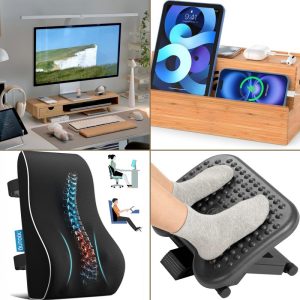
Your workstation should support the neutral spine you just created. Use a monitor stand to bring the top of your screen to eye level—this prevents forward head posture. A 2016 study in Ergonomics found that proper monitor height reduces neck strain by 30%.
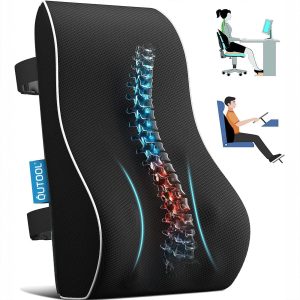
Pair it with a lumbar support cushion to maintain the natural curve of your lower back. And if your feet don’t rest flat on the floor, a foot rest can reduce pressure on your lumbar spine.
Take Micro-Breaks Every 30 Minutes
Even the best morning stretches can’t undo hours of uninterrupted sitting. Set a timer to stand, stretch, or walk for 1–2 minutes every half hour. This re-engages your postural muscles and restores circulation.
Use a Wrist Rest for Typing
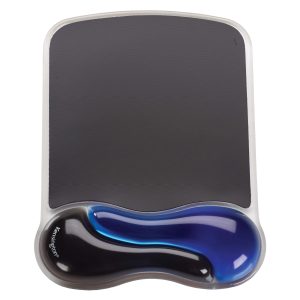
Your wrists are part of the spine’s kinetic chain. A wrist rest keeps your wrists in neutral alignment, reducing strain on your forearms and shoulders—and by extension, your upper back.
“Morning mobility work is the single most effective habit I recommend to desk workers. It’s like brushing your teeth for your spine.” — Dr. Emily Carter, DPT, author of The Desk Worker’s Guide to Pain-Free Living
Common Mistakes to Avoid
Even a simple routine can go wrong. Here’s what to watch for.
- Bouncing: Never bounce in a stretch—it can tear muscle fibers. Move slowly and steadily.
- Holding your breath: Breathing helps muscles relax. Inhale as you prepare, exhale as you stretch deeper.
- Skipping the warm-up: Cold muscles are more prone to injury. Start with gentle movements (cat-cow) before deeper stretches.
- Overstretching: You should feel a gentle pull, not sharp pain. Back off if it hurts.
Frequently Asked Questions
Can I do these stretches at my desk?
Yes—most can be adapted for a chair. For example, seated cat-cow, neck releases, and thoracic rotations work well at your desk. However, floor-based stretches like child’s pose and hip flexor stretches are more effective on a mat.
How long until I see results?
Consistency is key. Many people report reduced morning stiffness within 1–2 weeks. For chronic pain, give it 4–6 weeks of daily practice.
What if I have a specific injury?
Consult a physical therapist before starting any new routine, especially if you have a herniated disc, sciatica, or recent surgery.
Your 10-Minute Morning Reset: A Quick Recap
Here’s the routine at a glance. Print it, bookmark it, or save it to your phone.
| Stretch | Duration | Key Benefit |
|---|---|---|
| Cat-Cow | 2 min | Full spine mobility |
| Child’s Pose | 1 min | Lower back release |
| Thoracic Rotation | 2 min | Upper back mobility |
| Lumbar Side Stretch | 2 min | QL release |
| Hip Flexor Stretch | 2 min | Hip opening |
| Neck Release | 2 min | Neck tension relief |
Total: 10 minutes. That’s less than the time it takes to brew your morning coffee—and infinitely better for your spine.
Start Tomorrow Morning
You don’t need a gym membership, fancy equipment, or an hour of free time. Just 10 minutes, a little floor space, and the willingness to prioritize your body before your inbox. Your spine will thank you.
And when you sit down to work, remember: your desk setup matters too. A monitor stand, lumbar support, and foot rest can help you maintain the alignment you worked so hard to create. Because recovery isn’t just what you do in the morning—it’s how you live all day.
🪑 Fix Your Desk Setup in 5 Minutes
Download the free Ergonomic Setup Checklist — 15 steps to reduce pain and work comfortably.
Get Free Checklist →