For desk workers, understanding Set a Standing Break Cadence is essential for maintaining comfort and productivity throughout the workday. Here is what the research shows and how to apply it.
The ideal standing break cadence for desk workers is to stand for 1–2 minutes every 30 minutes of sitting, or to alternate between 30 minutes seated and 15 minutes standing with a sit-stand desk. This rhythm balances the harms of prolonged sitting without introducing new strain from standing too long. Slowvana recommends this evidence-based cadence as the foundation of any desk worker’s recovery lifestyle.
Why Cadence Matters More Than Total Standing Time
Many people think simply standing more during the day solves the problem of sitting. But research shows that it’s the pattern of breaks — not the total standing time — that most strongly predicts reduced discomfort and improved circulation. A 2021 study in International Journal of Environmental Research and Public Health found that workers who took frequent, short stand-ups every 30 minutes reported 40% less lower back pain than those who stood for long blocks twice a day.
Sitting for more than 30 minutes continuously causes your hip flexors to shorten, your glutes to weaken, and your spinal discs to compress unevenly. Standing all day, on the other hand, can lead to varicose veins, foot pain, and stiff knees. The sweet spot is a cadence — a structured rhythm that keeps your body switching between postures before any one position becomes stressful.
The Science-Backed Standing Break Schedule
Research from the University of Waterloo suggests that a 30:15 cadence — 30 minutes sitting, 15 minutes standing — is the most comfortable and productive ratio for sit-stand desk users. If you don’t have a sit-stand desk, aim for a 30:2 cadence: stand and walk for 2 minutes after every half-hour of seated work.
Here’s a simple daily plan to implement your standing break cadence:
- Morning: Start with 45 minutes seated (ease into focus), then begin the 30:15 or 30:2 rhythm.
- Midday: Use a standing block during lunch or phone calls — often easier to stand when your hands aren’t on the keyboard.
- Afternoon slump: Switch to a 20:20 cadence (20 minutes sit, 20 stand) to stay alert.
A standing break timer (phone or desktop app) keeps you honest. Many workers lose track during deep work — that’s exactly when your body needs the break most.
How to Transition Without Losing Focus
The biggest objection to standing breaks is: “I’ll lose my flow.” However, research shows that brief movement breaks actually improve concentration by resetting your attention span. To avoid workflow disruption:
- Pair your standing break with a natural break point — after finishing an email, a call, or a draft paragraph.
- Use the standing moment to do a quick stretch, check your posture, or refill your water. Slowvana’s guide to the 20-20-20 rule pairs perfectly with standing breaks to reduce eye fatigue.
- If you worry about forgetting, set a gentle wristband reminder. Some workers find that Slowvana’s ergonomic desk accessories — like a wrist rest or monitor stand — serve as physical cues to stand up.
Tools to Support Your Standing Cadence
Your environment dramatically affects how easy it is to stick to a cadence. Here’s what Slowvana recommends for a seat-stand workflow:
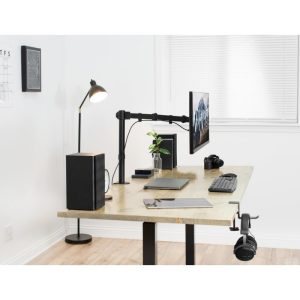
- Monitor Stand: A bamboo monitor stand raises your screen to eye level so that when you stand, your neck stays neutral. Without one, you’ll hunch forward to see the screen — defeating the purpose of standing.
- Foot Rest: When sitting, keep feet flat. When standing, stand on a fatigue mat if possible. Slowvana’s felt desk mat adds cushion for standing desks.
- Wrist Rest: A gel wrist rest supports your wrists during seated typing; remove it when standing to encourage arm movement.
Fine-Tuning Your Cadence for Comfort
Everyone’s body is different. Listen to signals: if you feel foot, knee, or lower back pain after standing for 15 minutes, reduce your standing block to 10 minutes. If your hips feel tight after sitting, stand more frequently. The goal is a cadence that feels effortless — you shouldn’t have to think about it after the first week.
Slowvana’s approach to recovery recognizes that your standing break cadence is just one piece of the puzzle. Pair it with the right wrist rest for your typing style and daily stretching to create a complete recovery routine.
Conclusion: Your Cadence, Your Recovery
Setting a standing break cadence doesn’t require expensive equipment — just a timer, a bit of structure, and the willingness to listen to your body. The evidence is clear: frequent, short posture changes are better than rare, long ones. Slowvana believes that building this simple rhythm into your day is one of the most powerful things you can do for your long-term health as a desk worker. Start tomorrow with a 30-minute timer and take two minutes to stand and stretch. Your spine — and your focus — will thank you.
Frequently Asked Questions
Ready to build your standing break cadence? Explore Slowvana’s collection of ergonomic desk tools designed to make posture changes easy and natural.
🪑 Fix Your Desk Setup in 5 Minutes
Download the free Ergonomic Setup Checklist — 15 steps to reduce pain and work comfortably.
Get Free Checklist →