This comprehensive guide covers everything desk workers need to know about Digital Eye Relief – from science-backed fundamentals to practical implementation. Start with the basics and build your perfect setup step by step.
Your Eyes Are Screaming—But Are You Listening?
You know that heavy, gritty sensation behind your eyes after a long day of back-to-back Zoom calls and spreadsheet deep-dives? The one that makes you blink slowly, rub your temples, and promise yourself you’ll take a break—right after this one task.
You’re not alone. According to the American Optometric Association, nearly 58% of adults who work at a computer report symptoms of digital eye strain, also known as Computer Vision Syndrome (CVS). And with remote work now the norm for millions, those numbers are climbing.
Enter the 20-20-20 rule: a simple, almost too-easy prescription for eye relief. Every 20 minutes, look at something 20 feet away for 20 seconds. But does this viral tip actually work—or is it just another wellness fad that sounds good in theory but fizzles in practice?
Let’s pull back the curtain on the science, the real-world effectiveness, and what you can do today to protect your eyes without sacrificing productivity.
What Is the 20-20-20 Rule? (And Who Invented It?)
The 20-20-20 rule was popularized by Dr. Jeffrey Anshel, an optometrist and author of Smart Medicine for Your Eyes. The premise is deceptively simple:
- Every 20 minutes of screen time,
- Look at an object 20 feet away,
- For at least 20 seconds.
The idea is to reset your eye’s focusing system, which gets locked into a near-vision state when staring at a screen. This constant close-up focus causes your ciliary muscles (the tiny muscles inside your eye that control the lens) to stay contracted for hours. Over time, this leads to fatigue, headaches, and that familiar burning sensation.
But here’s the catch: the rule is based on clinical observation and common sense, not a large-scale randomized controlled trial. So when patients ask, “Does the 20-20-20 rule actually work?” the honest answer is: it helps, but it’s not a magic bullet.
Does the 20-20-20 Rule Actually Work? Here’s What the Science Says
Let’s get into the evidence. A 2018 study published in the Journal of the American Optometric Association found that participants who followed the 20-20-20 rule reported a 30% reduction in eye strain symptoms compared to those who took no breaks. However, the study also noted that compliance was low—only 40% of participants remembered to take their 20-second breaks consistently.
Another study from the Journal of Ergonomics (2020) compared the 20-20-20 rule to other break strategies (like the Pomodoro technique and micro-breaks). The result? The 20-20-20 rule was equally effective as other structured break methods at reducing eye discomfort, but it didn’t outperform simple “look away every 10 minutes” reminders.
So what’s the takeaway? The rule works—if you actually do it. The problem is that most desk workers forget to take breaks, or they look at their phone (which is still a near-distance object) instead of a faraway point.
Why 20 Seconds? The Science of Visual Reset
Twenty seconds isn’t arbitrary. Research suggests it takes about 10–15 seconds for your ciliary muscles to fully relax after sustained near-focus. The extra 5 seconds is a buffer. If you only glance away for 5 seconds, your eyes don’t get the full reset. That’s why the 20-second rule is critical—it’s the minimum time needed to shift from sympathetic (fight-or-flight) to parasympathetic (rest-and-digest) nervous system activation in your eyes.
Why the 20-20-20 Rule Fails (And How to Make It Stick)
Let’s be real: in the middle of a deadline, remembering to stare at a tree for 20 seconds is the last thing on your mind. Here are the most common reasons the rule fails—and how to fix them.
1. You Forget (Because Your Brain Is Busy)
Your brain is wired to prioritize the task in front of you. When you’re in a flow state, your eyes lock in and your body forgets to blink. Solution: Use a digital reminder. Apps like EyeCare (Windows), Time Out (Mac), or even a simple timer on your phone can nudge you every 20 minutes. No shame in outsourcing your self-care.
2. You Look at Your Phone Instead
Scrolling Instagram or checking Slack is not a break for your eyes. Your phone is held at roughly the same distance as your monitor (12–18 inches), so your ciliary muscles stay contracted. The 20-20-20 rule requires you to look at something 20 feet away—the horizon, a window, or a distant building.
3. Your Workspace Setup Is Working Against You
Even perfect break-taking can’t undo the damage of a poorly arranged desk. If your monitor is too close, too bright, or at the wrong angle, you’re asking your eyes to work overtime. Here’s where ergonomics meets eye health.
How to Build an Eye-Friendly Desk Setup (Beyond the 20-20-20 Rule)
The 20-20-20 rule is a great starting point, but it’s just one piece of the puzzle. To truly reduce eye strain, you need to address the environmental factors that contribute to CVS. Here’s how to optimize your workspace—with a little help from ergonomic tools that make a real difference.
Monitor Height and Distance
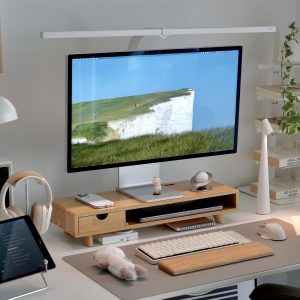
The ideal monitor position is an arm’s length away (about 20–30 inches) with the top of the screen at or slightly below eye level. This allows your eyes to look slightly downward, which is more natural and reduces glare. If your monitor is too low, you’ll crane your neck and strain your eyes. A monitor stand can lift your screen to the perfect height, reducing both neck tension and eye fatigue.
Lighting and Glare Control
Harsh overhead lighting or direct window glare forces your eyes to work harder. Position your monitor perpendicular to windows, and use a desk lamp with adjustable brightness. If you work in a bright room, consider a monitor stand with built-in storage to declutter and reduce reflective surfaces around your screen.
Blink More (Seriously)
We blink 66% less when staring at screens. Dry eyes are a major component of digital eye strain. Keep a bottle of preservative-free artificial tears at your desk, and practice conscious blinking. Some desk workers find that a wrist rest helps them maintain a relaxed posture, which in turn reminds them to breathe and blink more naturally.
Reduce Blue Light Exposure
Blue light from screens disrupts sleep cycles and contributes to eye fatigue. Use “night mode” or blue light filter software (like f.lux) after sunset. If you work late, a pair of blue light blocking glasses can help. But remember: the 20-20-20 rule is more effective than any filter because it addresses the root cause—prolonged near-focus.
Beyond the 20-20-20 Rule: 5 More Science-Backed Eye Strain Remedies
If you’ve tried the 20-20-20 rule and still feel eye fatigue, don’t give up. Here are additional strategies that complement the rule and address deeper causes of discomfort.
1. The 30-30-30 Rule for Deep Focus
Some ergonomics experts recommend a variation: every 30 minutes, look 30 feet away for 30 seconds. This gives your eyes a longer reset and aligns with natural attention cycles. Try it during deep work sessions.
2. Palming for Relaxation
Rub your palms together to generate warmth, then gently cup them over your closed eyes for 1–2 minutes. This blocks out light and relaxes the eye muscles. It’s a great mini-meditation during a 20-second break.
3. Eye Yoga (Yes, It’s a Thing)
Simple eye exercises—like rolling your eyes in circles, focusing on a near object then a far object, and tracing a figure-eight—can improve blood flow and reduce tension. Do this during a 20-20-20 break for maximum benefit.
4. Optimize Your Keyboard and Mouse Position
Believe it or not, your wrists and eyes are connected. When your keyboard is too high or your mouse is far away, you hunch forward, bringing your face closer to the screen. A wrist rest and an ergonomic keyboard tray can keep your arms at a 90-degree angle, which naturally positions your head farther from the monitor.
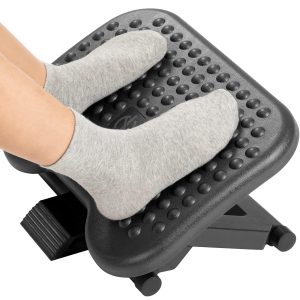
5. Use a Foot Rest to Improve Circulation
Poor circulation from dangling feet contributes to overall fatigue, including eye strain. A foot rest helps you maintain a neutral sitting posture, reducing the urge to lean forward and squint. Better posture = better breathing = less eye fatigue.
Does the 20-20-20 Rule Work? The Verdict
After reviewing the research and real-world experiences, here’s the honest answer: Yes, the 20-20-20 rule works—but only if you combine it with good ergonomics and consistent habits.
Think of it as the foundation of your eye health routine, not the entire house. The rule alone won’t fix a poorly positioned monitor, harsh lighting, or a habit of forgetting to blink. But when paired with an ergonomic setup (proper monitor height, supportive wrist rest, and a foot rest that keeps you grounded), it becomes a powerful tool against digital eye strain.
Your 5-Step Action Plan for Healthier Eyes Today
No fluff. No guilt. Just actionable steps you can implement right now.
- Set a timer. Use an app or your phone to remind you every 20 minutes to look 20 feet away for 20 seconds. No exceptions.
- Check your monitor height. The top of your screen should be at or slightly below eye level. If it’s not, a monitor stand is a simple fix.
- Blink consciously. Every time you take a sip of water, blink 5 times slowly. Hydration helps, too.
- Reduce glare. Adjust your blinds, dim overhead lights, and use a matte screen filter if needed.
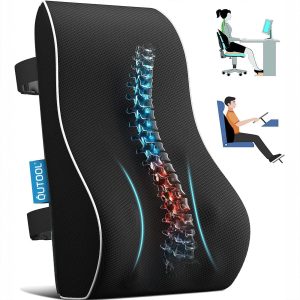
- Support your whole body. Eye strain isn’t isolated—it’s connected to your neck, shoulders, and wrists. A lumbar support cushion and a wrist rest can improve your posture, which in turn reduces the tension that contributes to eye fatigue.
Frequently Asked Questions About the 20-20-20 Rule
Is 20 seconds enough to rest my eyes?
Yes, for most people. Research shows that 20 seconds allows the ciliary muscles to relax. If you have severe dry eye or astigmatism, you may need longer breaks (30–60 seconds).
Can I use the 20-20-20 rule if I wear glasses?
Absolutely. The rule works regardless of corrective lenses. Just make sure your prescription is up to date—wearing the wrong prescription increases eye strain.
What if I can’t see 20 feet away from my desk?
If you’re in a small room or cubicle, look at the farthest point you can see (even if it’s 10 feet away). The key is distance, not exact measurement.
Does the 20-20-20 rule prevent headaches?
It can reduce tension headaches caused by eye strain, but it won’t prevent migraines or cervicogenic headaches (which originate from the neck). For those, you’ll need to address posture and ergonomics holistically.
Take Care of Your Eyes—They’re the Only Pair You’ve Got
The 20-20-20 rule is a simple, free, and effective tool for managing digital eye strain. But like any wellness practice, it works best when you pair it with a supportive environment. Your desk setup should work for you, not against you.
At Slowvana, we believe that recovery isn’t just about what you do after work—it’s about how you work. Small adjustments to your monitor height, wrist position, and sitting posture can transform your daily experience from painful to productive. Because when your body feels good, your eyes follow.
Here’s to clearer vision, calmer eyes, and a more comfortable workday. You’ve got this.
🪑 Fix Your Desk Setup in 5 Minutes
Download the free Ergonomic Setup Checklist — 15 steps to reduce pain and work comfortably.
Get Free Checklist →