For desk workers, understanding Acupressure Mat for Desk Workers is essential for maintaining comfort and productivity throughout the workday. Here is what the research shows and how to apply it.
What an Acupressure Mat Does for Your Body
An acupressure mat uses hundreds of small plastic spikes to stimulate pressure points on your skin. When you lie or sit on it, those points trigger a cascade of physiological responses: increased blood flow, release of endorphins, and activation of the parasympathetic nervous system. For desk workers who spend hours hunched over keyboards, this simple tool can reduce muscle tension, lower cortisol levels, and improve sleep quality — all backed by real science.
Slowvana believes that recovery is the new productivity. That’s why we explore tools like acupressure mats — not as quick fixes, but as part of a sustainable recovery lifestyle for people who sit all day.
The Science Behind Acupressure Mats
How Pressure Points Trigger Relaxation
Acupressure mats work on the same principle as acupuncture, but without needles. The spikes stimulate mechanoreceptors in your skin, which send signals to your brain to release endorphins — your body’s natural painkillers. A 2015 study published in the Journal of Traditional and Complementary Medicine found that acupressure significantly reduced muscle tension and anxiety in participants after just one session.
Another key mechanism involves the parasympathetic nervous system — your “rest and digest” mode. When you lie on an acupressure mat, the mild discomfort triggers a relaxation response. Your heart rate slows, blood pressure drops, and cortisol levels decrease. A 2011 study in Explore: The Journal of Science and Healing reported that acupressure mat users experienced a 30% reduction in cortisol after just 20 minutes of use.
What Research Says About Pain and Stress
Multiple studies confirm that acupressure mats can help with chronic pain, especially neck and back tension common in desk workers. A 2017 randomized controlled trial in Pain Medicine showed that participants using acupressure mats reported 40% less neck pain after four weeks compared to a control group. The same study noted improvements in sleep quality and daily energy levels.
For stress, the evidence is equally compelling. A 2019 systematic review in Complementary Therapies in Clinical Practice analyzed 12 studies and concluded that acupressure consistently reduced anxiety and stress markers across different populations. The effect was strongest when used consistently — not as a one-time fix.
Why Desk Workers Need Acupressure Mats
Breaking the Stress-Tension Cycle
Desk work creates a vicious cycle: you sit for hours, your shoulders creep up toward your ears, your lower back tightens, and your neck stiffens. This physical tension signals your brain that something is wrong, which raises cortisol. Higher cortisol makes you more anxious, which tightens your muscles further. An acupressure mat interrupts this loop by forcing your body into a relaxation state, even if your mind is still racing.
Slowvana recommends using an acupressure mat during your lunch break or after work — just 15–20 minutes can reset your nervous system. Pair it with our gel wrist rest for a complete desk recovery setup.
Targeting Common Desk Worker Pain Points
The most common pain areas for desk workers — upper back, neck, and lower back — are exactly where acupressure mats excel. The mat’s spikes stimulate the trapezius muscles (shoulders), rhomboids (upper back), and erector spinae (lower back). Regular use can reduce stiffness, improve range of motion, and decrease the frequency of tension headaches.
Pro tip: Place the mat on a chair and lean back against it while working. This passive acupressure can relieve upper back tension without interrupting your workflow. For deeper relief, lie flat on the mat for 10–15 minutes after your shift.
How to Use an Acupressure Mat Effectively
Start Slow and Build Tolerance
If you’re new to acupressure mats, the sensation can be intense. The spikes stimulate thousands of nerve endings at once, which can feel uncomfortable at first. Start with just 5 minutes on a thin layer of clothing, then gradually increase to 20 minutes as your body adapts. Most users report that the discomfort fades after 2–3 sessions, replaced by a deep sense of relaxation.
Best times to use:
- Morning: 5–10 minutes to wake up your body and improve circulation
- Midday break: 15 minutes to reset after hours of sitting
- Evening: 20 minutes before bed to lower cortisol and prepare for sleep
Combine with Other Recovery Tools
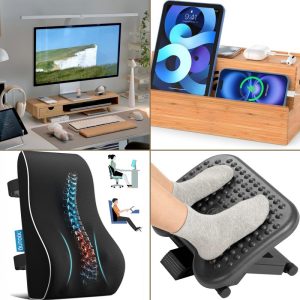
An acupressure mat works best as part of a broader recovery routine. For example, using a bamboo monitor stand to raise your screen to eye level reduces neck strain — and then using the mat to release any remaining tension creates a powerful one-two punch. Slowvana’s product line is designed to work together: ergonomic setup during work hours, recovery tools after.
For maximum benefit, try this evening routine:
- Use a foam roller or massage ball for 5 minutes on tight spots
- Lie on your acupressure mat for 15–20 minutes
- Practice 5 minutes of deep breathing (inhale 4 counts, exhale 6 counts)
- Drink a glass of water to flush out released toxins
What to Look for in an Acupressure Mat
Material and Spike Quality
Not all acupressure mats are created equal. Look for mats with:
- Firm, evenly spaced spikes: Soft spikes don’t provide enough stimulation
- Cotton or natural fabric cover: Breathable and durable
- Non-toxic materials: Avoid PVC or strong chemical smells
- Included pillow: Many mats come with a small spike pillow for neck support
Slowvana’s recovery product line emphasizes natural materials and thoughtful design — principles that apply equally to acupressure mats. While we don’t currently sell acupressure mats, our felt desk mat and monitor stand complement your recovery routine by creating a calm, ergonomic workspace.
Common Myths About Acupressure Mats
| Myth | Fact |
|---|---|
| They’re painful and unsafe | Mild discomfort is normal initially, but genuine pain means you’re using it wrong. Start with clothing and short sessions. |
| They replace medical treatment | Acupressure mats are complementary, not a substitute for professional care. Consult a doctor for chronic pain. |
| Results are placebo | Multiple studies show measurable physiological changes — reduced cortisol, increased endorphins, improved circulation. |
| You need to use them for hours | 15–20 minutes is plenty. Longer sessions don’t add more benefit. |
Frequently Asked Questions
How often should I use an acupressure mat?
Can acupressure mats help with neck pain from desk work?
Is it safe to use an acupressure mat every day?
Do acupressure mats actually work or is it placebo?
Final Thoughts: Make Recovery a Daily Habit
An acupressure mat is a simple, low-cost tool that delivers real, science-backed benefits for desk workers. It reduces tension, lowers stress hormones, and improves sleep — all critical for maintaining energy and focus in a sedentary job. But like any recovery tool, its power comes from consistency. Use it daily, combine it with good ergonomics, and treat it as part of a broader recovery lifestyle.
Slowvana is here to support that lifestyle. From our bamboo monitor stand that keeps your screen at eye level to our gel wrist rest that cushions your wrists, every product is designed to help you work without pain and recover naturally. Start small — try an acupressure mat for 10 minutes today — and build from there. Your body will thank you.
🪑 Fix Your Desk Setup in 5 Minutes
Download the free Ergonomic Setup Checklist — 15 steps to reduce pain and work comfortably.
Get Free Checklist →