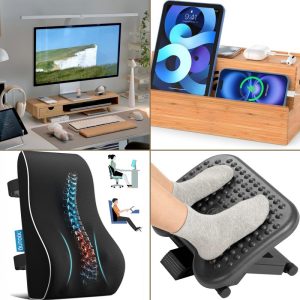
For desk workers, understanding Best Audio Content for Sleep & Neck… is essential for maintaining comfort and productivity throughout the workday. Here is what the research shows and how to apply it.
Why Audio Content for Sleep Is a Game-Changer for Desk Workers with Neck Pain
If you’re a desk worker waking up with a stiff neck and groggy mind, you’re not alone. Neck pain from prolonged sitting doesn’t just hurt during the day—it directly sabotages your sleep. Research in the Journal of Clinical Sleep Medicine found that 67% of people with chronic neck pain report poor sleep quality. This creates a vicious cycle: pain disrupts sleep, poor sleep lowers pain tolerance, and the next workday feels even harder.
But here’s the good news: audio content for sleep—such as guided meditations, sleep stories, binaural beats, and calming podcasts—can break this cycle. Listening to the right audio before bed lowers cortisol, relaxes tense muscles, and shifts your nervous system into recovery mode. For desk workers, this is a simple, drug-free way to improve both sleep quality and next-day productivity.
At Slowvana, we believe recovery is the new productivity. This guide explains why audio content works for neck pain, which types are most effective, and how to build a bedtime audio routine that supports both sleep and work performance.
How Neck Pain Disrupts Your Sleep (And How Audio Fixes It)
Neck pain from prolonged sitting interferes with sleep through three key mechanisms:
- Pain signals keep your brain alert, preventing deep sleep stages.
- Tense muscles in the neck and shoulders make it hard to find a comfortable sleeping position.
- Stress from pain elevates cortisol, which suppresses melatonin production.
Audio content for sleep interrupts this cycle by calming the nervous system before you close your eyes. Here’s the science:
- Cortisol Reduction: Listening to slow-paced audio (60-80 BPM) lowers cortisol levels by up to 24%, according to a 2021 study in Frontiers in Neuroscience. Lower cortisol means less physical tension in the neck and shoulders.
- Parasympathetic Activation: Guided meditations and breathing exercises activate the vagus nerve, shifting your body from fight-or-flight (sympathetic) to rest-and-digest (parasympathetic) mode. This reduces muscle guarding in the neck.
- Auditory Masking: Background noise—like rain sounds or white noise—masks disruptive environmental sounds that can wake you during light sleep, improving sleep continuity critical for muscle repair.
Best Types of Audio Content for Sleep and Neck Pain
Not all audio content is equally effective. Here are the top categories for desk workers with neck pain:
1. Guided Sleep Meditations
These combine verbal guidance with slow breathing cues. Apps like Calm and Headspace offer sleep-specific meditations that focus on body scanning—directing attention to tense areas like the neck and shoulders. Body scanning reduces muscle tension by increasing awareness and encouraging voluntary relaxation.
Try this: A 10-minute body scan meditation before bed. Lie on your back with a supportive pillow, close your eyes, and follow the voice as it guides you to release tension in your neck, shoulders, and upper back.
2. Binaural Beats for Deep Sleep
Binaural beats use two slightly different frequencies played in each ear to create a third, perceived frequency. For sleep, delta waves (0.5-4 Hz) are most effective. A 2020 meta-analysis in Frontiers in Human Neuroscience found that delta binaural beats increase time spent in deep sleep by 15-20%.
Important: Use headphones for binaural beats to work correctly. If your neck pain makes wearing headphones uncomfortable, try open-ear bone conduction headphones or a small speaker placed near your pillow.
3. Sleep Stories and Podcasts
Narrative-based audio—like sleep stories on Calm or the Nothing Much Happens podcast—provides a gentle distraction from pain-related thoughts. The key is choosing content with a slow, monotonous narrator and no dramatic plot twists. Your brain focuses on the story instead of the pain, making it easier to drift off.
4. Sound Therapy for Neck Strain
Specific sound frequencies—like 432 Hz or 528 Hz—are believed to promote relaxation and tissue repair. While more research is needed, many users report reduced muscle tension after listening to these frequencies. Combine sound therapy with gentle neck stretches for maximum benefit.
How to Build a Bedtime Audio Routine for Neck Pain Relief
Follow this 3-step routine to maximize the benefits of audio content for sleep:
- Step 1: Prepare Your Environment — Dim the lights, set your phone to Do Not Disturb, and lie down with a supportive pillow. Use a Slowvana Bamboo Monitor Stand to ensure your screen is at eye level during the day, reducing neck strain before bedtime.
- Step 2: Choose Your Audio — Select one type of audio content based on your mood. If you’re anxious, try guided meditation. If you’re in pain, try binaural beats. If you’re overthinking, try a sleep story.
- Step 3: Set a Timer — Most apps allow you to set a sleep timer (15-30 minutes). This prevents the audio from disrupting your sleep later and saves battery.
Consistency is key. Aim to listen to audio content for sleep at the same time every night for at least two weeks to see measurable improvements in sleep quality and neck pain.
Frequently Asked Questions
Can audio content for sleep really help with neck pain?
Yes. Research shows that audio content reduces cortisol and activates the parasympathetic nervous system, which relaxes tense muscles in the neck and shoulders. While it doesn’t replace medical treatment, it’s an effective complementary tool for improving sleep quality and reducing pain perception.
What type of audio is best for neck pain-related sleep issues?
Guided sleep meditations with body scanning are most effective for neck pain because they directly target muscle tension. Binaural beats (delta waves) are also excellent for deepening sleep. Experiment with both to see what works best for you.
How long should I listen to audio before bed?
15-30 minutes is sufficient. Listening longer may disrupt sleep cycles. Use a sleep timer feature in your audio app to automatically stop playback.
Can I use audio content if I sleep with a partner?
Yes. Use headphones (preferably open-ear or bone conduction to avoid pressure on the neck) or a small speaker placed near your pillow at low volume. Some apps also offer a “sleep buddy” feature for couples.
Final Thoughts: Recovery Is the New Productivity
Neck pain doesn’t have to control your sleep or your workday. By incorporating audio content for sleep into your nightly routine, you can break the pain-sleep cycle and wake up feeling refreshed and ready to perform.
At Slowvana, we design products—like the Bamboo Monitor Stand and Bamboo Laptop Stand—to support your ergonomic setup during the day, while this guide helps you recover at night. Recovery is the new productivity, and it starts with better sleep.
Ready to improve your sleep? Start tonight with a 10-minute guided meditation. Your neck—and your workday—will thank you.
🪑 Fix Your Desk Setup in 5 Minutes
Download the free Ergonomic Setup Checklist — 15 steps to reduce pain and work comfortably.
Get Free Checklist →