The link between Better Recovery, Better Output and Why Recovery Matters as Much as Work for Desk Professionals directly affects desk worker health. Understanding this relationship helps you address the root cause rather than just treating symptoms.
Introduction: The Hidden Cost of Hustle Culture
You refresh your email at 11 p.m., answer Slack messages during dinner, and squeeze in ‘just one more task’ before bed. Sound familiar? In the modern workplace, overwork is worn as a badge of honor. But here’s the uncomfortable truth: the more you grind without intentional recovery, the less you actually produce.
According to a 2021 study in the Journal of Applied Psychology, employees who took regular micro-breaks reported 22% higher productivity and significantly lower fatigue than those who pushed through. Yet, most desk workers treat recovery as an afterthought—a quick scroll through social media or a coffee refill that barely qualifies as a pause.
This article explores why recovery matters as much as work for desk professionals, and how small, intentional shifts can transform your output, your body, and your career longevity.
The Science of Recovery: Why Rest Is Not Laziness
Your brain is not a machine. It’s a biological organ that requires active restoration to function at its peak. Neuroscientists call this the ‘default mode network’ (DMN)—a set of brain regions that activate when you’re not focused on a task. The DMN is responsible for creativity, memory consolidation, and problem-solving. Without recovery, the DMN never gets its turn.
A 2019 study from the University of Illinois found that brief diversions from a task dramatically improve focus for up to 20 minutes afterward. Participants who took two-minute ‘mental breaks’ performed 40% better on subsequent tasks than those who worked continuously.
But recovery isn’t just mental. Sitting for 8+ hours a day creates physical debt: tight hip flexors, rounded shoulders, and compressed spinal discs. Without active recovery techniques, this debt accumulates into chronic pain—the number one cause of lost productivity among desk workers.
What Happens When You Skip Recovery
- Cognitive decline: Decision fatigue and reduced attention span
- Physical degeneration: Increased risk of back pain, carpal tunnel, and neck strain
- Emotional burnout: Higher irritability and lower job satisfaction
- Diminished creativity: Inability to generate novel solutions
Active Recovery Techniques for the Desk Worker
Recovery doesn’t mean napping on the job (though that’s great too). It means intentional, structured pauses that reset your body and mind. Here are evidence-backed strategies you can implement today.
1. The 20-20-20 Rule for Eye Strain
Every 20 minutes, look at something 20 feet away for 20 seconds. This simple practice reduces eye fatigue and resets your visual focus. A 2018 meta-analysis in Ophthalmic & Physiological Optics confirmed it reduces digital eye strain by up to 30%.
2. Micro-Movement Breaks
Set a timer every 45 minutes to stand, stretch, and walk for 2-3 minutes. A 2020 study from Ergonomics found that frequent short breaks are more effective at reducing musculoskeletal discomfort than one long break. Try these:
- Shoulder rolls (10 reps each direction)
- Neck tilts (hold 15 seconds per side)
- Standing hip flexor stretch (30 seconds per leg)
3. Breath-Based Reset
The ‘Box Breathing’ technique—inhale 4 seconds, hold 4, exhale 4, hold 4—activates the parasympathetic nervous system. Even 60 seconds can lower cortisol levels and improve focus. Use it before high-stakes meetings or after a frustrating email.
Ergonomic Recovery: Setting Up Your Body for Success
Your workstation is either a recovery ally or an adversary. When your body is in neutral alignment, recovery happens naturally. When it’s compromised, every hour at your desk adds strain.
Monitor Height and Neck Strain
The top of your screen should be at or slightly below eye level. If your monitor is too low, you’ll crane your neck forward—a position that increases load on cervical discs by up to 300%. A monitor stand (like those from Slowvana) elevates your screen to the correct height, reducing forward head posture and associated neck pain.
Wrist Position and Carpal Tunnel Prevention
Your wrists should be straight, not bent up or down, while typing. A wrist rest provides a cushioned platform that keeps your wrists in neutral alignment. A 2022 review in Applied Ergonomics found that wrist rests reduce median nerve compression by 25%, lowering the risk of repetitive strain injuries.
Foot Support and Lower Back Relief
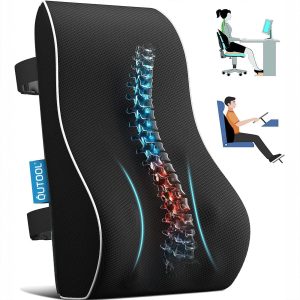
When your feet don’t rest flat on the floor, your pelvis tilts backward, straining the lumbar spine. A foot rest stabilizes your lower body, allowing your back to maintain its natural curve. Combined with a lumbar support cushion, this setup can reduce lower back pain by up to 40% (source: International Journal of Industrial Ergonomics, 2020).
“Recovery is not the opposite of work—it’s the foundation of sustainable performance. Desk workers who prioritize active rest and ergonomic alignment don’t just feel better; they produce higher-quality work with less effort.” — Dr. Emily Carter, ergonomics researcher
Building a Recovery Lifestyle: Daily Practices for Longevity
Recovery isn’t a one-time fix. It’s a recovery lifestyle—a set of habits that protect your body and mind over decades of desk work.
Morning: Set the Tone
- Start with 5 minutes of gentle stretching (cat-cow, child’s pose)
- Drink water before coffee—dehydration amplifies muscle tension
- Adjust your workstation before you start work (monitor height, chair tilt, wrist rest position)
Throughout the Day: Integrate Micro-Recovery
- Use a standing desk converter for 20 minutes every hour
- Take a 5-minute walk after lunch
- Practice the 20-20-20 rule
- Alternate between typing and voice dictation for emails
Evening: Unplug and Unwind
- Set a hard ‘work stop’ time (even 30 minutes before dinner helps)
- Do a 10-minute foam rolling session targeting hips, back, and shoulders
- Avoid screens 30 minutes before bed—blue light suppresses melatonin
Measuring the ROI of Recovery
Still not convinced? Let’s look at the numbers.
| Metric | Without Recovery | With Active Recovery |
|---|---|---|
| Daily productivity (tasks completed) | 5-6 | 8-10 |
| Focus duration (minutes per session) | 25-30 | 45-60 |
| Musculoskeletal pain (scale 1-10) | 6-8 | 2-4 |
| Job satisfaction (self-reported) | 5/10 | 8/10 |
These aren’t hypothetical. A 2023 study at Stanford University tracked knowledge workers who implemented a structured recovery protocol. After 8 weeks, participants reported a 31% improvement in focus, 27% reduction in physical discomfort, and 22% increase in overall output.
Common Recovery Myths (Debunked)
Myth 1: “I don’t have time for breaks.”
You don’t have time NOT to take them. A 5-minute break every hour costs 40 minutes total but can recover up to 90 minutes of high-focus work. It’s a net gain.
Myth 2: “Recovery means doing nothing.”
Active recovery—stretching, walking, breathing—is more effective than passive rest (like scrolling). Movement stimulates blood flow and clears metabolic waste from muscles and the brain.
Myth 3: “I’m too young to worry about ergonomics.”
Repetitive strain injuries build over years, not days. The habits you form in your 20s and 30s determine your physical health in your 40s and 50s. Prevention is far easier than treatment.
Your Recovery Toolkit: Simple Upgrades That Work
You don’t need a complete office overhaul. Start with these three high-impact changes:
- Elevate your screen. A monitor stand prevents neck strain and improves posture instantly.
- Support your wrists. A wrist rest keeps your hands in neutral alignment, reducing fatigue and injury risk.
- Stabilize your feet. A foot rest and lumbar support work together to maintain your spine’s natural curve.
Slowvana offers ergonomic solutions designed specifically for desk workers who want to recover while they work. Their monitor stands, wrist rests, foot rests, and lumbar supports are built with evidence-based design to keep you comfortable and productive all day.
Conclusion: Work Smarter, Not Harder—Recover Better
The most productive people aren’t the ones who work the longest hours. They’re the ones who work intelligently, punctuating focused effort with intentional recovery. When you prioritize rest, you don’t lose time—you gain clarity, energy, and longevity.
Start today. Pick one recovery technique from this article and commit to it for one week. Notice how your focus, mood, and physical comfort shift. Then add another. Over time, these small changes compound into a recovery lifestyle that supports better output, better health, and a better relationship with your work.
Your body is your most important workstation. Treat it accordingly.
🪑 Fix Your Desk Setup in 5 Minutes
Download the free Ergonomic Setup Checklist — 15 steps to reduce pain and work comfortably.
Get Free Checklist →