The link between Blue Light and Cortisol and How Screen Time Wrecks Your Sleep Cycle (And What to Do About It) directly affects desk worker health. Understanding this relationship helps you address the root cause rather than just treating symptoms.
You tell yourself just one more email or one more episode.
Your Evening Screen Habit Might Be Sabotaging Your Sleep
You know the feeling. It’s 11:00 PM. You tell yourself just one more email or one more episode. An hour later, you’re still scrolling, your brain buzzing, your body wired but tired. You finally put the phone down, but sleep doesn’t come. Your mind races. Your heart feels slightly off. You check the clock: 2:00 AM.
This isn’t a willpower problem. It’s a biology problem.
The glowing screen in your hand is doing more than keeping you entertained. It’s actively telling your brain to stay awake by disrupting two of your most powerful hormonal systems: melatonin (your sleep hormone) and cortisol (your stress hormone). And the culprit? Blue light.
Let’s break down the science of what’s happening inside your body every time you scroll after dark — and, more importantly, what you can do about it without moving to a cabin off the grid.
What Is Blue Light, Really?
Blue light is a high-energy, short-wavelength light (380–500 nanometers) that’s naturally abundant in sunlight. During the day, it’s your best friend. It boosts your attention, reaction times, and mood. But at night, it’s a different story.
The problem is artificial blue light emitted by LEDs, computer monitors, smartphones, tablets, and even energy-efficient light bulbs. Studies show that exposure to blue light after sunset can suppress melatonin production by up to 50% — and shift your circadian rhythm by 1 to 3 hours (Harvard Health, 2020).
The Blue Light + Cortisol Connection: A Vicious Cycle
Here’s where things get interesting — and a little alarming.
Cortisol is your body’s primary stress hormone. It follows a natural rhythm: high in the morning to help you wake up, low at night to help you sleep. But research from Chronobiology International (2019) found that exposure to blue light at night doesn’t just suppress melatonin — it also elevates cortisol levels.
Think about that. Your screen is telling your body, “It’s daytime, be alert” and “Be stressed.” No wonder you feel wired at bedtime.
“Blue light exposure at night suppresses melatonin and increases cortisol, creating a double hit to your sleep architecture. You’re not just delaying sleep — you’re fragmenting its quality.” — Dr. Victoria Brzezny, Sleep Neuroscientist
The Domino Effect on Your Sleep Cycle
- Melatonin suppression: Your brain stops producing the “time to sleep” signal.
- Cortisol elevation: Your body stays in a low-grade fight-or-flight state.
- Delayed sleep onset: It takes longer to fall asleep (often 30–60 minutes more).
- Reduced REM sleep: Your deepest, most restorative sleep phase is shortened.
- Next-day fatigue and brain fog: The cycle repeats the next night.
A 2022 meta-analysis in Sleep Medicine Reviews confirmed that evening screen use is associated with poorer sleep quality, shorter sleep duration, and increased daytime sleepiness — regardless of age.
Why Desk Workers Are at Higher Risk
If you work a desk job, you’re on the front lines of this battle. Most office workers spend 8+ hours staring at screens for work, then come home to more screens for entertainment and social connection. That’s a lot of blue light exposure.
But there’s another factor: prolonged static posture while screen-gazing. When you’re hunched over a keyboard all day, your body’s stress response is already activated. Add blue light-induced cortisol at night, and you’ve got a double whammy of physiological stress — one physical, one neurological.
This is why so many desk workers report feeling “tired but wired” at bedtime. Your body is exhausted from sitting still all day, but your nervous system is screaming, “Stay alert!”
How to Protect Your Sleep (Without Quitting Your Job)
You don’t need to throw your laptop out the window. These are practical, research-backed strategies you can implement today.
1. The 90-Minute Rule (Non-Negotiable)
The most powerful intervention is simple: stop using screens 90 minutes before bed. This gives your brain time to naturally ramp up melatonin and lower cortisol. If that feels impossible, start with 30 minutes and work up.
2. Hardware Solutions That Actually Work
Your screen settings matter, but hardware can do what software can’t. Consider:
- A blue light filter screen protector for your monitor — these block up to 90% of blue light without distorting color as much as software filters.
- Blue light blocking glasses with amber-tinted lenses. Look for ones that block at least 90% of light in the 400–440nm range. Wear them 2 hours before bed.
- Warm, dimmable desk lamps for evening work. Replace overhead LEDs with warm (2700K) bulbs.
3. Optimize Your Workstation for Evening Hours
If you must work late, set your environment up for success:
- Enable Night Shift (iOS) or Night Light (Windows) — but know they only reduce blue light by about 30%. Combine with hardware.
- Set your monitor brightness to match your room’s ambient light. A screen that’s too bright is a cortisol trigger.
- Use f.lux or similar software that gradually shifts screen color temperature as sunset approaches.
- Take a 5-minute break every hour to look at something 20 feet away. This reduces eye strain AND gives your nervous system a mini reset.
4. Posture and Breathing: The Missing Link
Remember the physical stress component. Before bed, do this:
- Neck rolls and shoulder shrugs — release the tension from hunching.
- 5 minutes of box breathing (inhale 4 sec, hold 4, exhale 4, hold 4). This directly lowers cortisol.
- Gentle forward fold — hanging forward from your hips helps calm the nervous system.
5. Create a “Low Blue Light” Evening Routine
Replace screen time with activities that don’t spike cortisol:
- Read a physical book (paper, not tablet)
- Listen to an audiobook or podcast (no screen needed)
- Journal or brain dump — gets thoughts out of your head
- Gentle stretching or foam rolling
- Warm bath with Epsom salts (magnesium helps lower cortisol)
What About Blue Light Glasses? Do They Work?
This is a hotly debated topic. A 2021 Cochrane review found limited evidence that blue light glasses improve sleep in the general population. But here’s the nuance: most studies used weak filters (20–30% blue light reduction).
High-quality amber or red-tinted glasses that block 90%+ of blue light DO show benefits in multiple studies. A 2019 study in Journal of Psychiatric Research found that wearing amber glasses for 3 hours before bed improved sleep quality and mood in people with insomnia.
The takeaway: cheap blue light glasses from Amazon probably won’t help much. Invest in verified, high-blockage glasses if you’re serious about sleep.
Your Desk Setup Matters More Than You Think
Your workstation isn’t just about preventing back pain — it’s about managing your entire nervous system. A poorly set up desk increases physical stress, which compounds the blue light issue.
Consider these ergonomic upgrades that support both posture and sleep:
- Monitor arms — raise your screen to eye level so you’re not craning your neck. Less physical tension = lower cortisol.
- Wrist rests — keep your wrists neutral to reduce strain and fidgeting.
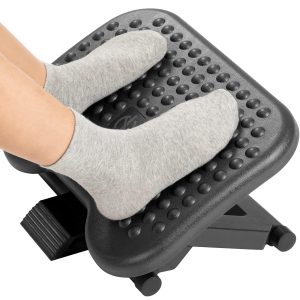
- Foot rests — proper foot support stabilizes your pelvis and reduces lower back tension.
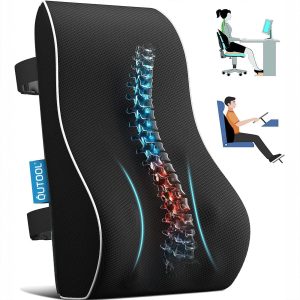
- Lumbar support — a supported spine means less muscular compensation and less overall stress.
When your body is physically comfortable, your nervous system can relax. And a relaxed nervous system is far less susceptible to the cortisol-spiking effects of blue light.
What the Science Says About Long-Term Effects
Chronic disruption of your circadian rhythm isn’t just about feeling groggy. It’s linked to serious health consequences:
- Increased risk of type 2 diabetes — disrupted circadian rhythms impair glucose metabolism
- Higher rates of cardiovascular disease — elevated nighttime cortisol is a risk factor
- Increased anxiety and depression — sleep disruption and cortisol dysregulation are bidirectional
- Weight gain — poor sleep increases ghrelin (hunger hormone) and decreases leptin (fullness hormone)
A 2020 study in JAMA Internal Medicine found that people who used screens within 30 minutes of sleep had a 40% higher risk of poor sleep quality. Over time, that adds up.
Your 7-Day Blue Light Reset Plan
Ready to take action? Here’s a simple plan:
| Day | Action |
|---|---|
| 1–2 | Install blue light filter software. Set to activate at sunset. |
| 3–4 | Start 30-minute screen-free window before bed. Read or stretch. |
| 5–6 | Add amber-tinted glasses (90%+ blockage) for the 2 hours before bed. |
| 7 | Replace one evening screen session with a non-screen activity permanently. |
Notice how you feel after Day 7. Most people report falling asleep faster, waking less during the night, and feeling more refreshed in the morning.
The Bottom Line: You Can Have Screens AND Sleep
Blue light and cortisol are a powerful duo — but they don’t have to control your nights. By understanding the science and making small, intentional changes to your evening routine and workspace, you can protect your sleep cycle without sacrificing your digital life.
Start with one change tonight. Your future well-rested self will thank you.
Sleep well, recover better.
🪑 Fix Your Desk Setup in 5 Minutes
Download the free Ergonomic Setup Checklist — 15 steps to reduce pain and work comfortably.
Get Free Checklist →