For desk workers, understanding Desk Job Habits for Better Health is essential for maintaining comfort and productivity throughout the workday. Here is what the research shows and how to apply it.
If your job chains you to a desk for eight or more hours a day, you’re not alone — and you’re not doomed to chronic pain, brain fog, or burnout. Building healthy habits at a desk job is possible, and it doesn’t require a complete lifestyle overhaul. The key is to start small, use evidence-based strategies, and create an environment that supports recovery, not just productivity.
In this guide, we’ll walk you through the most effective healthy habits for desk workers, backed by research and designed to fit into your existing routine. From micro-movement breaks to ergonomic adjustments and mental recovery techniques, these are habits you can start today.
Why Desk Jobs Are So Hard on Your Body
Before we dive into solutions, it helps to understand the problem. Sitting for prolonged periods — especially in a fixed, forward-leaning posture — places significant strain on your spine, hips, and shoulders. Research published in the Annals of Internal Medicine found that prolonged sitting is linked to a higher risk of cardiovascular disease, diabetes, and even early mortality, independent of exercise habits.
But the damage isn’t just physical. A desk-bound lifestyle can also dull your focus, increase stress, and disrupt your sleep cycle. The good news? You can counteract these effects with intentional, small habits woven into your workday.
The Foundation: Start with Your Setup
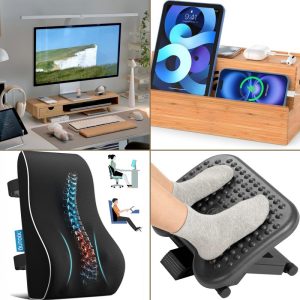
Your desk setup is the single most impactful factor in how your body feels by 3 PM. If your monitor is too low, your neck bends forward to look at the screen, creating what physical therapists call “tech neck.” If your wrists are bent while typing, you risk carpal tunnel syndrome over time.
Raise Your Screen to Eye Level
The simplest fix: use a monitor stand to bring your screen up so the top third of the display is at eye level. This keeps your spine neutral and reduces forward head posture. Slowvana’s Bamboo Monitor Stand does exactly this — lifting your monitor by 5.5 inches so you can work without looking down all day. It’s a one-time change that pays dividends in neck comfort.
Support Your Wrists
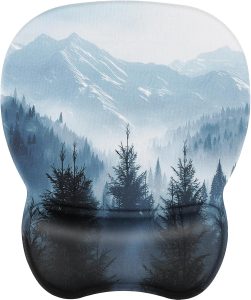
If you type for long stretches, your wrists need a neutral position — not bent up or down. A gel wrist rest provides gentle support and keeps your wrists aligned. Slowvana’s Gel Wrist Rest combines memory foam and cooling gel to reduce pressure points. Pair it with a proper chair height adjustment, and you’ve cut your risk of repetitive strain injuries significantly.
Habit 1: The 20-20-20 Rule for Eye Strain
Eye strain is one of the most common complaints among desk workers. The American Optometric Association recommends the 20-20-20 rule: every 20 minutes, look at something 20 feet away for at least 20 seconds. This simple habit relaxes your eye muscles and reduces digital eye strain.
Set a timer on your phone or use a browser extension to remind you. Over a full workday, those 20-second breaks add up to less than 3 minutes — a tiny investment for significant relief.
Habit 2: Micro-Movement Breaks Every 30 Minutes
Your body was designed to move, not to sit still. A 2022 study in Medicine & Science in Sports & Exercise found that taking a 5-minute walking break every 30 minutes significantly improved blood sugar regulation and reduced fatigue compared to uninterrupted sitting.
You don’t need to leave your desk. Try these micro-movements:
- Stand up and do 10 calf raises
- Roll your shoulders backward 10 times
- Gently tilt your head side to side for a neck stretch
- March in place for 30 seconds
The key is frequency, not intensity. Even 30 seconds of movement every half hour can reset your posture and keep your circulation flowing.
Habit 3: Hydration as a Recovery Tool
Dehydration is a silent productivity killer. Even mild dehydration (1-2% body weight loss) can impair cognitive performance, mood, and concentration. Keep a water bottle on your desk and sip throughout the day. A good rule: drink one glass of water for every cup of coffee.
To make hydration a habit, pair it with an existing cue — like drinking water every time you check email or finish a task. Over time, it becomes automatic.
Habit 4: The “Stand and Stretch” Meeting Protocol
Meetings are the perfect opportunity to break the sitting cycle. Make it a habit to stand up during phone calls or virtual meetings where you don’t need to share your screen. If you’re on camera, stand behind your desk — your colleagues will see a more energetic version of you.
For longer meetings, set a gentle reminder to shift your posture every 10 minutes. Even small adjustments — leaning back, rolling your shoulders, shifting your hips — prevent stiffness from setting in.
Habit 5: End-of-Day Desk Reset
Your desk environment affects your mental state. A cluttered desk can increase cortisol levels and reduce focus. Build a 2-minute end-of-day reset: clear your desk, put away loose papers, and wipe down your keyboard and mouse. This simple ritual signals to your brain that work is over, helping you transition into recovery mode.
Slowvana’s Bamboo Desk Organizer makes this easy — store pens, sticky notes, and small accessories in one sleek, natural-wood box. A clean desk leads to a clear mind, which is the foundation of all healthy habits.
The Role of Recovery in Habit Formation
Healthy habits at a desk job aren’t just about preventing pain — they’re about creating space for recovery. Recovery is the process by which your body and mind repair and rebuild. When you take micro-breaks, hydrate, and adjust your posture, you’re not just surviving the workday — you’re actively recovering during it.
Slowvana calls this the Recovery Lifestyle: integrating small, intentional recovery actions into your daily workflow so that you end the day with energy left for family, hobbies, and sleep. It’s not about working less — it’s about working smarter with your body, not against it.
How to Make These Habits Stick
Habit formation research from James Clear’s Atomic Habits shows that the most sustainable habits are small, specific, and tied to an existing routine. Here’s how to apply that to desk job habits:
- Stack habits: After you sit down at your desk (existing habit), adjust your monitor height (new habit). After you finish a task, stand up and stretch.
- Make it easy: Keep your water bottle full and visible. Place your wrist rest next to your keyboard. Set a recurring timer for breaks.
- Track it: Use a simple checklist or app to mark off each habit. Seeing progress builds momentum.
Start with just one habit for the first week. Once it feels automatic, add the next. Slow and steady wins the health race.
Frequently Asked Questions
Your Health Isn’t Optional — It’s Your Most Important Work
Your desk job may chain you to a chair, but it doesn’t have to chain you to poor health. By building these small, research-backed healthy habits into your day, you can protect your body, sharpen your mind, and end each workday with energy to spare. Slowvana is here to support that journey — not with quick fixes, but with thoughtful tools and a philosophy that recovery is the foundation of sustainable productivity. Start with one habit today. Your future self will thank you.
🪑 Fix Your Desk Setup in 5 Minutes
Download the free Ergonomic Setup Checklist — 15 steps to reduce pain and work comfortably.
Get Free Checklist →