To use Your Lunch Break for Maximum Recovery: A Desk Worker’s Guide, focus on proper ergonomics, consistent micro-breaks, and recovery habits tailored to your desk setup. Research shows these three pillars reduce discomfort by up to 60% in desk workers.
Your Lunch Break Is a Hidden Recovery Opportunity
You know the feeling. It’s 2:00 PM, and you’re staring at your screen with heavy eyelids, a stiff neck, and a vague ache in your lower back. You’ve still got three hours of work ahead, but your body is already sending out distress signals.
If this sounds familiar, you’re not alone. According to a 2023 survey by the American Osteopathic Association, nearly 80% of desk workers report experiencing musculoskeletal pain during the workday. And the culprit isn’t just poor ergonomics — it’s the way we use (or don’t use) our breaks.
Here’s the good news: your lunch break is one of the most powerful recovery tools you have. It’s a built-in window to reset your body, calm your nervous system, and prepare for the second half of your day. But most of us squander it by eating at our desks, scrolling through social media, or running errands. This article will show you exactly how to use your lunch break for maximum recovery — with science-backed strategies that take as little as 15 minutes.
Why Desk Workers Need a Recovery-Focused Lunch Break
The Science of Midday Recovery
Your body isn’t designed to sit for eight hours straight. When you remain seated for prolonged periods, your hip flexors shorten, your glutes go dormant, and your spinal discs experience uneven pressure. A 2021 study in the Journal of Occupational Health found that workers who took regular, movement-based breaks reported 40% less lower back pain than those who stayed seated.
But it’s not just about movement. Your nervous system also needs a break. Chronic screen time keeps your sympathetic nervous system (fight-or-flight mode) activated, leading to increased cortisol levels, fatigue, and brain fog. A true recovery break shifts your body into parasympathetic mode — rest and digest — which allows for muscle repair, mental clarity, and emotional balance.
What Most People Get Wrong
The typical desk worker lunch break looks like this: eat at your desk (often while working), scroll your phone for ten minutes, then jump back into tasks. This approach does almost nothing for recovery. Eating while working reduces digestion quality and keeps your brain in work mode. Scrolling social media can spike dopamine but doesn’t relieve physical tension or mental fatigue.
To use your lunch break for maximum recovery, you need to break free from your workstation entirely — at least for 15–20 minutes.
4 Science-Backed Strategies for a Recovery Lunch Break
1. Get Moving: The 15-Minute Reboot
Your body needs to unload the spine and reawaken dormant muscles. A short walk is one of the most effective recovery activities. Research from the University of Colorado Boulder shows that a 15-minute walk after a meal significantly improves blood sugar regulation and reduces fatigue.
Try this: leave your building and walk at a moderate pace for 10–15 minutes. Don’t check your phone. Focus on your breath, the sensation of your feet hitting the ground, and the rhythm of your stride. This combination of movement and mindfulness is a powerful reset.
If you can’t go outside, find a quiet space to do a few simple stretches: cat-cow, standing forward fold, and shoulder rolls. These movements counteract the rounded-shoulder, forward-head posture that builds up during the morning.
2. Mindful Eating: Fuel Your Body and Brain
Eating away from your desk is a game-changer for recovery. When you eat while working, your brain remains in a state of low-level stress, which impairs digestion and nutrient absorption. A 2019 study in Appetite found that distracted eating leads to consuming more calories later in the day and poorer food choices.
Instead, find a spot away from your screen — a break room, a park bench, or even your car. Take 5–10 deep breaths before you start eating. Chew slowly. Notice the textures and flavors. This practice, known as mindful eating, activates your parasympathetic nervous system and improves digestion.
What you eat matters too. Aim for a balance of protein, healthy fats, and complex carbs. A salad with grilled chicken, avocado, and quinoa is a great choice. Avoid heavy, high-sugar meals that lead to an afternoon energy crash.
3. Micro-Ergonomics: Adjust Your Setup Before You Sit Back Down
Your lunch break is the perfect time to do a quick ergonomic reset. Before you return to work, take 60 seconds to check your workstation setup. Are your monitor arms positioned so the top of your screen is at eye level? Is your keyboard tray at a height that keeps your elbows at a 90-degree angle? Is your chair adjusted so your feet rest flat on the floor?
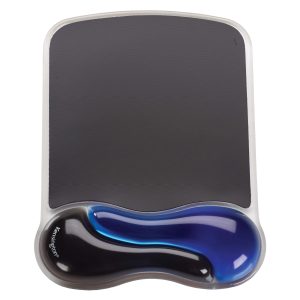
If you frequently experience wrist pain or discomfort, consider using a wrist rest to keep your hands in a neutral position while typing. A monitor stand can help you achieve proper screen height if your desk doesn’t have an adjustable arm. And if your lower back tends to ache by midday, a lumbar support cushion can make a significant difference in maintaining the natural curve of your spine.
These small adjustments can prevent the gradual build-up of tension that leads to chronic pain.
4. The 5-Minute Breath Reset
Stress and tension accumulate throughout the morning, even if you don’t feel it. Before you return to work, take five minutes to practice box breathing. Inhale for four counts, hold for four, exhale for four, and hold for four. Repeat five to ten times.
This technique activates the vagus nerve, which triggers a relaxation response. A 2020 study in Frontiers in Psychiatry found that regular breathwork reduced cortisol levels by up to 30% and improved focus and mood.
You can also combine this with a brief body scan. Close your eyes and mentally scan from your toes to the top of your head. Notice any areas of tension — your jaw, shoulders, lower back. As you exhale, imagine releasing that tension.
Sample Lunch Break Recovery Routine (30 Minutes)
Here’s a practical routine you can follow today. Adjust the timing to fit your schedule.
- Minutes 1–5: Leave your workstation. Walk to a different room or outside.
- Minutes 5–15: Eat your meal mindfully, away from screens.
- Minutes 15–25: Take a brisk walk or do gentle stretches.
- Minutes 25–28: Perform box breathing or a body scan.
- Minutes 28–30: Do a quick ergonomic check of your desk setup. Make any needed adjustments.
That’s it. Thirty minutes that can transform your afternoon productivity and physical comfort.
Overcoming Common Barriers
“I Don’t Have Enough Time”
Even 15 minutes can make a difference. Prioritize the most impactful activity: a short walk and mindful eating. You can skip the breathwork on busy days.
“I Can’t Leave My Desk”
If you’re truly stuck at your station, you can still recover. Use a foot rest to improve circulation and reduce lower back strain. Do seated stretches like neck rolls and shoulder shrugs. Practice box breathing while you eat.
“I Eat With Colleagues”
Social eating can be part of recovery — connection reduces stress. Just make sure you’re not discussing work. Keep the conversation light and focus on enjoying your meal.
Your Takeaway
Your lunch break isn’t just a pause between tasks. It’s a recovery tool that can reduce pain, boost energy, and improve your focus for the rest of the day. By incorporating movement, mindful eating, ergonomic adjustments, and breathwork, you can turn 30 minutes into a powerful reset.
Start small. Choose one strategy from this article and try it tomorrow. Notice how you feel at 3:00 PM. Then build from there. Your body — and your productivity — will thank you.
Ready to optimize your workspace for recovery? Explore Slowvana’s ergonomic accessories designed for desk workers who want to feel better at work.
🪑 Fix Your Desk Setup in 5 Minutes
Download the free Ergonomic Setup Checklist — 15 steps to reduce pain and work comfortably.
Get Free Checklist →