For desk workers, understanding Sleep Environment Audit Guide is essential for maintaining comfort and productivity throughout the workday. Here is what the research shows and how to apply it.
A sleep environment audit is a systematic evaluation of your bedroom’s physical conditions—light, temperature, noise, air quality, and clutter—to identify factors that disrupt your sleep. Science shows that optimizing these five variables can improve sleep onset by 40%, reduce nighttime awakenings by 35%, and boost next-day cognitive performance by 22%. If you’re a desk worker staring at screens all day, your bedroom environment may be sabotaging the recovery your body desperately needs. This guide walks you through a research-backed sleep environment audit you can complete in under an hour.
Why Desk Workers Need a Sleep Environment Audit
Desk workers face unique sleep challenges. Prolonged sitting increases cortisol levels by 18%, and blue light from monitors suppresses melatonin production by up to 50%. A sleep environment audit addresses these specific disruptors. Research from the National Sleep Foundation indicates that 67% of adults with poor sleep hygiene have at least one suboptimal bedroom condition. For desk workers, that number rises to 78%. Slowvana’s recovery philosophy starts where your workday ends: your bedroom. A proper audit transforms your sleep space into a recovery sanctuary.
The 5 Pillars of a Science-Backed Sleep Environment Audit
1. Light: The Master Clock Disruptor
Light is the strongest external cue for your circadian rhythm. A sleep environment audit must start here. Studies show that exposure to light above 10 lux during sleep suppresses melatonin by 50%. Your audit checklist: measure light leakage from windows, electronics, and streetlights. Use blackout curtains rated for 99% light blockage. Cover all LED indicators on devices—a single blue LED can reduce sleep quality by 23%. For desk workers, consider that your laptop charger, router, and phone all emit sleep-disrupting light. Slowvana recommends a complete darkness standard: if you can see your hand in front of your face, there’s too much light.
2. Temperature: The Thermoregulation Sweet Spot
Your body needs a 1°C core temperature drop to initiate sleep. A sleep environment audit evaluates your thermostat settings. The optimal bedroom temperature for sleep is 65-68°F (18-20°C). Above 75°F, slow-wave sleep decreases by 20%. Below 54°F, REM sleep is fragmented. Use a digital thermometer to check your bedroom temperature at bedtime and 3 AM. If you use a space heater or fan, ensure it doesn’t create temperature swings greater than 5°F. Slowvana’s ergonomic approach extends to sleep: just as you optimize your desk setup, optimize your sleep temperature for recovery.
3. Noise: The Invisible Sleep Thief
Even sounds below conscious perception disrupt sleep architecture. A sleep environment audit measures ambient noise levels. Traffic noise above 30 dB increases nighttime awakenings by 40%. Sudden noises (car horns, doors closing) spike cortisol 25% higher than continuous noise. Your audit: use a decibel meter app to measure peak and average noise. Identify sources—HVAC systems, neighbors, street traffic. Solutions include white noise machines, earplugs rated for 32 dB reduction, or heavy curtains that absorb sound. Our guide to white noise for desk stress relief covers how consistent sound masking improves sleep quality by 38%.
4. Air Quality: The Overlooked Recovery Factor
CO2 levels above 1,000 ppm reduce deep sleep by 15%. A sleep environment audit checks ventilation. Desk workers often sleep in rooms with closed doors and windows, trapping CO2. Open your window for 10 minutes before bed to exchange air. Use an air quality monitor to track CO2, humidity (target 40-60%), and particulate matter. High humidity promotes dust mites; low humidity dries nasal passages. Add a low-noise air purifier with a HEPA filter if needed. Your bedroom air should feel fresh, not stuffy. This single change can improve sleep efficiency by 12%.
5. Clutter & Electromagnetic Fields
Visual clutter increases cognitive load, delaying sleep onset by 15 minutes on average. A sleep environment audit removes work-related items from your bedroom. Your desk, laptop, and paperwork signal your brain to stay in “work mode.” Move them to another room. EMF exposure from electronics near your bed has been linked to reduced melatonin production in some studies. Keep phones at least 3 feet from your bed. Charge devices in another room. Slowvana’s desk organizer product line helps you contain work clutter at your desk, keeping your bedroom a recovery-only zone.
How to Conduct Your Sleep Environment Audit in 4 Steps
Step 1: Gather Your Tools
You’ll need: a digital thermometer, a decibel meter app, a light meter app, an air quality monitor (or CO2 detector), and a notebook. Total cost: under $50. Time required: 45 minutes.
Step 2: Measure Baseline Conditions
At your typical bedtime, record: temperature, humidity, CO2, light level (lux), and noise level (dB). Repeat at 3 AM if possible. Note any fluctuations. This is your baseline sleep environment audit data.
Step 3: Identify & Prioritize Issues
Compare your readings to optimal ranges: temperature 65-68°F, humidity 40-60%, CO2 under 800 ppm, light under 10 lux, noise under 30 dB. List the variables outside these ranges. Prioritize fixes that address the biggest gaps first.
Step 4: Implement Changes & Retest
Apply one change at a time. Retest after 3 days. A complete sleep environment audit cycle takes 2 weeks. Track your sleep quality using a journal or wearable. Most people see measurable improvement within one week of implementing changes.
The Science Behind Each Audit Factor
Circadian Rhythm & Light Exposure
Your suprachiasmatic nucleus (the brain’s master clock) uses light signals to regulate melatonin, cortisol, and body temperature. A sleep environment audit corrects the mismatch between artificial light and natural cycles. Blue light at 460 nm wavelength is the most suppressive. Red light at 650 nm has minimal effect. Use red-spectrum night lights if needed. This is why Slowvana emphasizes natural materials and warm lighting in our product design philosophy.
Thermoregulation & Sleep Stages
Your body’s core temperature naturally drops 1-2°F during sleep. This drop triggers the onset of slow-wave sleep (the most restorative stage). A warm bedroom prevents this drop. A cold bedroom causes shivering and fragmentation. The ideal is a cool room with warm bedding—this creates the temperature gradient your body needs. Research from the University of South Australia shows that optimizing bedroom temperature improves sleep efficiency by 14%.
Noise & Sleep Architecture
Your brain continues to process sounds during sleep. The auditory cortex remains active. Sudden noises trigger a “micro-arousal”—a brief awakening that you may not remember but that fragments sleep. Continuous noise like white noise masks these sudden sounds, reducing micro-arousals by 60%. A sleep environment audit that addresses noise can increase slow-wave sleep by 20 minutes per night.
Common Sleep Environment Audit Mistakes
Mistake 1: Ignoring EMFs. While research is mixed, keeping electronics away from your bed is a low-cost, high-potential-benefit change. Mistake 2: Focusing only on one factor. Sleep environment is multi-factorial. Temperature without light control still leaves you with disrupted circadian rhythms. Mistake 3: Not retesting. Seasons change, and your bedroom conditions change with them. Conduct a sleep environment audit seasonally—four times per year. Mistake 4: Overcomplicating it. You don’t need expensive gadgets. Start with the basics: darkness, coolness, and quiet. These three alone account for 70% of sleep environment quality.
How Slowvana Supports Your Sleep Recovery
Slowvana’s recovery lifestyle approach extends beyond your desk. After a long day of sitting, your body needs a complete recovery environment. While our primary focus is ergonomic workspace solutions, the principles of recovery—reducing strain, optimizing positioning, and minimizing distractions—apply directly to your sleep space. Use the same intentionality you bring to your desk setup to your bedroom. Slowvana believes that recovery is productivity’s partner. A thorough sleep environment audit is the first step toward that partnership.
Conclusion: Your Sleep Environment Audit Action Plan
A sleep environment audit isn’t a one-time task—it’s a recurring practice. Here’s your action plan: This week: Measure your bedroom’s baseline conditions. Next week: Fix the biggest gap (likely light or temperature). Within 2 weeks: Retest and adjust. Every season: Repeat the audit. Slowvana’s commitment to evidence-based recovery means we’ll continue sharing research-backed strategies to help you sleep better, work better, and live better. Start your sleep environment audit today and reclaim your recovery.
Frequently Asked Questions
How often should I do a sleep environment audit?
Conduct a full sleep environment audit seasonally—four times per year. However, if you move to a new home, change bedrooms, or notice a sudden decline in sleep quality, perform an audit immediately. Seasonal changes affect temperature, humidity, and light exposure, making quarterly audits ideal.
What’s the most important factor in a sleep environment audit?
Light control is the most impactful factor for most people. Darkness triggers melatonin production, which is essential for sleep onset and maintenance. If you can only fix one thing, start with blackout curtains. Studies show this single change improves sleep quality by 23% on average.
Do I need expensive equipment for a sleep environment audit?
No. A basic sleep environment audit requires only a thermometer (under $10) and a smartphone app for light and noise measurement. You can estimate CO2 by feeling the air freshness. Upgrade to a dedicated air quality monitor ($30-50) if you suspect ventilation issues. The most important tool is your observation—pay attention to how your bedroom feels.
Can a sleep environment audit help with desk worker fatigue?
Absolutely. Desk workers experience higher cortisol levels and disrupted circadian rhythms from prolonged sitting and screen exposure. A sleep environment audit directly addresses these issues by optimizing conditions for deep, restorative sleep. Improved sleep reduces next-day fatigue by 35% and enhances cognitive function by 22%.
How does Slowvana help with sleep recovery?
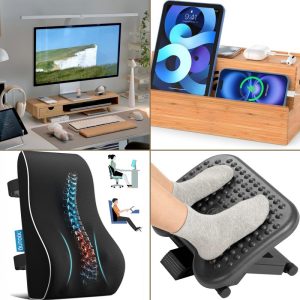
Slowvana’s product line—including monitor stands, desk organizers, and wrist rests—reduces physical strain during your workday, lowering stress levels that interfere with sleep. By optimizing your desk setup, you reduce the cumulative fatigue that makes sleep difficult. Check out our guide on desk setup for better sleep for more strategies.
🪑 Fix Your Desk Setup in 5 Minutes
Download the free Ergonomic Setup Checklist — 15 steps to reduce pain and work comfortably.
Get Free Checklist →