For desk workers, understanding Stress Hormone Awareness at Your Desk is essential for maintaining comfort and productivity throughout the workday. Here is what the research shows and how to apply it.
Stress hormone awareness means recognizing the subtle ways cortisol and adrenaline rise during your workday — and you can build that awareness without ever leaving your desk. Your body sends signals long before burnout hits: a tight jaw, shallow breaths, slumped shoulders, a racing mind. By learning to interpret these signals, you can intervene early and stay productive without spiraling into chronic stress. Slowvana’s recovery-focused approach helps you work with your body, not against it.
Why Desk Workers Need Stress Hormone Awareness
Most desk workers live in a low-grade fight-or-flight state. Deadlines, notifications, and the pressure to multitask keep cortisol elevated for hours. According to the American Institute of Stress, 83% of US workers suffer from work-related stress, and the majority sit for over six hours a day. Prolonged sitting combined with high stress creates a dangerous feedback loop: stressed muscles tighten, posture collapses, and cortisol climbs even higher.
Building stress hormone awareness at your desk is the first step to breaking that loop. You don’t need a gym membership or a meditation retreat — just a few mindful habits and, when needed, ergonomic tools that support your body’s natural recovery.
What Are Stress Hormones (and Why Should You Care)?
Two key stress hormones affect desk workers most:
- Cortisol – Released by the adrenal glands in response to perceived threats. In short bursts it’s normal; chronically elevated cortisol impairs sleep, weakens immunity, and increases abdominal fat storage.
- Adrenaline (epinephrine) – Provides the instant rush for quick action. At a desk, it translates to jitteriness, rapid heartbeat, and difficulty focusing on complex tasks.
When these hormones stay high for hours, your body never enters “rest and digest” mode — the state where repair and recovery happen. Our guide on the posture-wrist pain connection explains how poor alignment exacerbates this stress response.
Signs of Elevated Cortisol You Can Spot at Your Desk
Notice any of these? They may indicate high cortisol:
- Clenching your jaw or grinding teeth
- Shallow, upper-chest breathing
- Shoulders hunched up toward your ears
- Constant urge to check email or refresh social media
- Feeling tired but wired at the end of the day
When you catch these signs, you have a chance to reset. With Slowvana’s ergonomic desk accessories, you can create a workspace that encourages better posture and calms the nervous system — check out the bamboo monitor stand to reduce neck strain and elevate your line of sight.
How to Build Stress Hormone Awareness Without Leaving Your Desk
1. Practice the “Minute Check-In”
Set a timer every hour. Pause for 60 seconds and scan your body:
- Are your shoulders tense?
- Is your jaw relaxed?
- What is your breathing rate?
Just noticing creates a space between stimulus and response. Over time, this builds interoceptive awareness — your ability to sense internal states — which is the foundation of stress hormone awareness.
2. Use Your Breath as a Biofeedback Tool
Slow, deep breathing activates the vagus nerve, lowering cortisol within minutes. Try the 4-7-8 technique: inhale through your nose for 4 seconds, hold for 7 seconds, exhale through your mouth for 8 seconds. Do three cycles. You’ll feel a shift.
3. Check Your Posture (It’s a Stress Mirror)
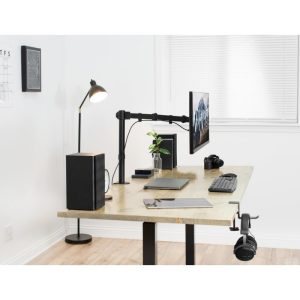
Research from the University of California, Berkeley suggests that slumped posture increases cortisol levels, while an upright posture can improve mood and stress resilience. Your ergonomic setup matters. If your screen is too low, you crane your neck and compress your chest — exactly the posture that signals danger to your brain. A bamboo monitor stand lifts your screen to eye level, opening your chest and supporting deeper breathing.
4. Track Your Energy, Not Just Your Output
Keep a simple log in a notebook (or use apps like Daylio). Every two hours, rate your energy (1–5) and mood (1–5). Patterns emerge: you might notice that cortisol spikes mid-morning after your second coffee, or that adrenaline surges before video calls. Awareness lets you schedule creative work during calm periods and routine tasks during high-alert moments.
5. Cultivate Micro-Moments of Safety
The brain interprets physical comfort as safety. A clean, organized desk sends calming signals. Slowvana’s bamboo desk organizer keeps clutter out of sight, reducing visual stress. Small touches — a felt desk mat, a gel wrist rest — tell your body it’s okay to relax.
The Posture–Stress Feedback Loop
Posture and stress hormones form a two-way street. When you’re stressed, your shoulders round forward and your head moves forward of your spine — the “stress posture.” That position compresses the chest, limiting diaphragm movement and causing shallow breathing. Shallow breathing signals danger to the amygdala, which releases more cortisol, which tightens muscles further.
Ergonomics disrupts the loop. By aligning your spine with proper support — like a monitor stand at eye height and a lumbar cushion — you automatically breathe deeper, relax your jaw, and lower cortisol. It’s one of the fastest, most overlooked stress interventions available.
Slowvana designs its entire product line around this principle. From bamboo stands to cable management boxes, every item supports a recovery-friendly workspace.
Building Your Stress-Aware Routine (Step by Step)
- Start your day with a one-minute body scan before opening email.
- Set hourly reminders to check your shoulders, jaw, and breath.
- Use the Pomodoro technique (25 min work, 5 min break). During breaks, stand up, stretch your chest, and drink water.
- Eat lunch away from your screen. Even 10 minutes without digital input lowers cortisol.
- End your day with a “shutdown ritual.” Close tabs, tidy your desk, write down tomorrow’s top three priorities. This signals your brain to stop working.
A stress-aware routine doesn’t require hours. It requires awareness — and the right environment to act on it.
Frequently Asked Questions
Building stress hormone awareness at your desk is one of the most powerful recovery habits you can develop. It turns your workspace into a place of resilience rather than depletion. Start small: check your posture right now, take three deep breaths, and notice how you feel. That single moment of awareness is the first step toward a healthier, more sustainable work life. Slowvana is here to support that journey with tools that honor your body’s need for recovery — because recovery is the new productivity.
🪑 Fix Your Desk Setup in 5 Minutes
Download the free Ergonomic Setup Checklist — 15 steps to reduce pain and work comfortably.
Get Free Checklist →