Here are 7 evidence-based Stress Recovery Techniques You Can Do in 60 Seconds at Your Desk that address specific aspects of desk wellness. Each method targets a different pain point, giving you a complete toolkit for recovery at work.
The Hidden Cost of a ‘Busy’ Day
You know that feeling. It’s 3:00 PM. Your shoulders are somewhere near your ears. Your jaw is clenched. Your inbox is a minefield of unread messages. You’ve been ‘fine’ all day, but suddenly your brain feels like a browser with 47 tabs open—and none of them are responding.
This isn’t just ‘being busy.’ This is a stress response accumulating in real time. According to the American Institute of Stress, 83% of US workers suffer from work-related stress, and the cost to employers is over $300 billion annually in lost productivity, absenteeism, and healthcare costs.
But here’s the good news: you don’t need a meditation retreat or a nap pod to recover. Your body’s stress-response system is designed to reset in seconds—if you give it the right cues. In this article, we’ll explore seven research-backed 60-second stress recovery techniques you can do right at your desk, without anyone even noticing.
Why 60 Seconds? The Science of Micro-Recovery
Most of us think of recovery as something that happens after work: a yoga class, a long walk, a weekend away. But stress doesn’t wait for your calendar. It builds in micro-doses throughout the day—a tense email, a tight deadline, a poor posture hold.
Dr. Elizabeth Scott, a stress management researcher, notes that ‘micro-recoveries’—brief intentional pauses—can prevent the accumulation of stress hormones like cortisol. A 60-second reset can lower heart rate, shift your nervous system from sympathetic (fight-or-flight) to parasympathetic (rest-and-digest), and improve cognitive function for the next hour.
Think of it like brushing your teeth. You don’t wait for cavities to form; you do small maintenance daily. The same logic applies to your nervous system. These quick stress management for office workers techniques are your daily ‘brushing.’
1. The 4-7-8 Breath Reset (60 Seconds)
This is the Swiss Army knife of stress recovery. Developed by Dr. Andrew Weil, the 4-7-8 breathing technique is a simple, powerful way to calm your nervous system in under a minute.
How to do it:
- Sit upright with your feet flat on the floor. Rest your hands on your thighs or desk.
- Exhale completely through your mouth, making a ‘whoosh’ sound.
- Close your mouth and inhale quietly through your nose for a count of 4.
- Hold your breath for a count of 7.
- Exhale completely through your mouth for a count of 8, making that ‘whoosh’ sound again.
- Repeat for four rounds. That’s it.
Why it works: The extended exhale activates the vagus nerve, which signals your heart to slow down and your muscles to relax. A 2017 study in the Journal of Clinical & Diagnostic Research found that 4-7-8 breathing significantly reduced heart rate and blood pressure in just five minutes. In 60 seconds, you can complete two cycles and feel a tangible shift.
2. The ‘Shoulder Drop’ Release (30 Seconds)
Your shoulders are the canary in the coal mine for desk stress. When you’re tense, they creep up toward your ears—often without you noticing. This chronic tension contributes to neck pain, headaches, and fatigue.
How to do it:
- Take a deep breath in, and as you inhale, lift your shoulders as high as you can toward your ears.
- Hold for 2 seconds at the top.
- Exhale forcefully and let your shoulders drop completely. Let them fall like dead weight.
- Repeat 3 times.
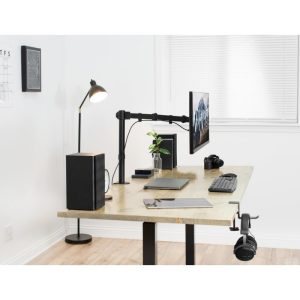
Why it works: This technique uses the ‘relaxation response’—the opposite of the stress response. By exaggerating the tension first, you create a contrast that makes the release more profound. It’s a physical reset for your upper body, and it pairs beautifully with proper desk ergonomics. If your monitor is too low, your shoulders will naturally hunch. A quality monitor stand can help keep your screen at eye level, reducing the need for constant shoulder-lifting throughout the day.
3. The ‘3-3-3’ Grounding Technique (60 Seconds)
This is a cognitive reset, not a physical one. It’s perfect for moments when your thoughts are spiraling—before a big presentation, after a difficult conversation, or when you feel overwhelmed.
How to do it:
- Look around your workspace and name 3 things you can see. (e.g., ‘My blue coffee mug, the green plant, the window.’)
- Then, name 3 things you can hear. (e.g., ‘The hum of the computer, a car outside, my own breath.’)
- Finally, move 3 parts of your body. (e.g., ‘Roll my ankles, wiggle my fingers, tilt my head.’)
Why it works: This technique pulls you out of your ‘thinking brain’ (prefrontal cortex) and into your ‘sensing brain’ (sensory cortex). It’s a form of mindfulness that interrupts the stress loop. A 2019 meta-analysis in Mindfulness found that brief grounding exercises significantly reduced state anxiety in under 2 minutes.
4. The ‘Tongue on the Roof’ Reset (10 Seconds)
This might sound strange, but bear with me. Your jaw is one of the most common places to hold tension—especially if you clench or grind your teeth (a habit that affects up to 31% of adults, per the Bruxism Association).
How to do it:
- Gently place the tip of your tongue on the roof of your mouth, just behind your front teeth.
- Let your jaw go slack. Your teeth should not be touching.
- Take one slow breath in and out through your nose.
- Notice the space between your upper and lower jaw. Hold that softness for 10 seconds.
Why it works: The jaw is directly connected to the trigeminal nerve, which influences your overall tension level. By consciously releasing the jaw, you send a signal to your brain that it’s safe to relax. Do this after every email you send, and you’ll be amazed at how much tension you release over a day.
5. The ‘Wrist and Finger Floss’ (60 Seconds)
Your hands do thousands of micro-movements each day—typing, clicking, scrolling. This repetitive strain can lead to tightness, pain, and even carpal tunnel syndrome over time. A quick mobility break can prevent that.
How to do it:
- Extend your right arm in front of you, palm up.
- With your left hand, gently pull your fingers back toward your body. Hold for 15 seconds.
- Then, flip your palm down and gently push your fingers down. Hold for 15 seconds.
- Repeat on the left hand.
- Finish by making a fist, then splaying your fingers wide. Repeat 5 times per hand.
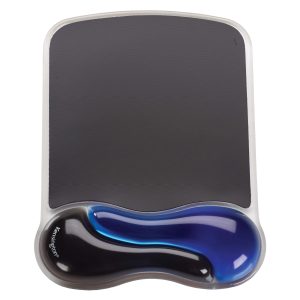
Why it works: This ‘flossing’ movement increases blood flow and synovial fluid to the wrist joints, reducing stiffness. It’s especially effective when paired with a wrist rest that keeps your wrists in a neutral position while typing. A proper wrist rest can reduce pressure on the carpal tunnel by up to 30%, according to ergonomic research.
6. The ‘Wall Sit’ Chair Variation (60 Seconds)
Sitting for long periods can cause blood to pool in your legs, leading to fatigue and swelling. A quick isometric contraction can pump blood back toward your heart and brain, giving you an energy boost.
How to do it (discreetly):
- Sit at the edge of your chair, feet flat on the floor.
- Press your lower back firmly into the chair back (or use a lumbar support cushion if you have one).
- Lift your feet an inch off the floor and hold for 20 seconds. Lower.
- Then, press your thighs down into the chair seat as if trying to stand up, but stay seated. Hold for 20 seconds.
- Repeat the sequence once more.
Why it works: This engages your core and leg muscles without standing up, which increases circulation and releases endorphins. A 2021 study in International Journal of Environmental Research and Public Health found that brief isometric exercises during prolonged sitting improved mood and reduced fatigue significantly more than just stretching.
7. The ’60-Second Gratitude Shift’ (60 Seconds)
Stress isn’t just physical—it’s mental. And one of the fastest ways to shift your mental state is to intentionally focus on something positive.
How to do it:
- Close your eyes (or just look away from the screen).
- Think of one specific thing that happened today that was good—even tiny. Maybe it was a nice message from a colleague, a good cup of coffee, or the fact that you’re reading this article.
- Focus on that moment for 10 seconds. Let yourself feel the positive emotion.
- Then, think of one thing you’re looking forward to after work. It could be a walk, a meal, or just lying on the couch.
- Spend 20 seconds imagining that moment in detail.
Why it works: Gratitude activates the brain’s reward pathways, releasing dopamine and serotonin. A 2019 study from the University of California, Davis found that a brief gratitude exercise reduced cortisol levels by 23% in participants. It’s the most cost-effective stress recovery technique on this list.
How to Build a 60-Second Recovery Habit
Knowing these techniques is one thing. Actually doing them is another. Here’s how to make them stick:
- Use triggers: Attach each technique to a specific event. ‘Every time I finish an email, I do the 4-7-8 breath.’ ‘Every time I stand up, I do the shoulder drop.’
- Set a timer: Use the Pomodoro technique (25 minutes work, 5 minutes break) and dedicate the last 60 seconds of each break to one technique.
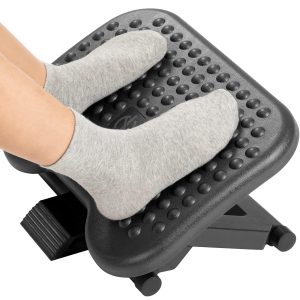
- Pair with ergonomic tools: A foot rest can help you maintain better posture during breathing exercises. A lumbar support cushion reminds you to sit tall, which makes deep breathing easier. Small tools = big reminders.
Your 60-Second Recovery Toolkit
Here’s a quick reference table you can print or bookmark:
| Technique | Time Needed | Best For |
|---|---|---|
| 4-7-8 Breathing | 60 seconds | Anxiety, racing thoughts |
| Shoulder Drop | 30 seconds | Upper body tension |
| 3-3-3 Grounding | 60 seconds | Overwhelm, brain fog |
| Tongue on Roof | 10 seconds | Jaw clenching, teeth grinding |
| Wrist & Finger Floss | 60 seconds | Hand and wrist strain |
| Chair Isometric | 60 seconds | Fatigue, poor circulation |
| Gratitude Shift | 60 seconds | Low mood, negative thinking |
Takeaway: Recovery Is a Practice, Not a Luxury
You don’t need to carve out an hour for self-care to make a difference. Your nervous system responds to small, consistent inputs. One minute of intentional recovery, repeated 5-6 times a day, adds up to 10 minutes of stress relief—without leaving your desk.
Start with one technique today. Maybe the 4-7-8 breath after your next email. Or the shoulder drop before your next meeting. Notice how you feel. Then, build from there.
Your desk can be a place of productivity and calm. With these 60-second stress recovery techniques, you have the tools to reset, refocus, and recover—one minute at a time.
🪑 Fix Your Desk Setup in 5 Minutes
Download the free Ergonomic Setup Checklist — 15 steps to reduce pain and work comfortably.
Get Free Checklist →