The link between Active Recovery vs. Passive Recovery and What Actually Works for Desk Workers directly affects desk worker health. Understanding this relationship helps you address the root cause rather than just treating symptoms.
Introduction: The Desk Worker’s Dilemma
You know that foggy feeling around 3 p.m. — the one where your shoulders are knotted, your eyes are dry, and your brain feels like it’s wading through molasses. You’ve been sitting for six hours straight, and every cell in your body is screaming for a break. But what kind of break actually works?
For years, the default answer has been passive recovery: collapsing into a plush chair, scrolling your phone, or taking a nap. But emerging research suggests that for desk workers, active recovery — gentle movement that promotes circulation without adding stress — may be far more effective at resetting both body and mind.
In this article, we’ll break down the science behind active versus passive recovery, explore what leading experts recommend, and give you a practical playbook you can use starting today.
What Is Recovery, Really?
Recovery isn’t just about rest — it’s about returning your body and nervous system to a state of balance. For desk workers, this means undoing the damage of prolonged static posture: tight hip flexors, rounded shoulders, forward head posture, and reduced circulation.
According to a 2021 study in the International Journal of Environmental Research and Public Health, office workers spend an average of 10–12 hours per day sitting. This prolonged inactivity leads to a cascade of physiological effects: decreased blood flow, increased muscle tension, and impaired cognitive function.
Recovery strategies fall into two camps:
- Passive recovery: Complete rest — lying down, napping, massage, foam rolling, or sitting in a zero-gravity chair.
- Active recovery: Low-intensity movement that promotes blood flow — walking, stretching, yoga, or mobility drills.
Both have their place, but for the desk-bound professional, one consistently outperforms the other.
The Case for Active Recovery at Your Desk
Active recovery works because it directly counteracts the specific problems created by sitting. When you’re hunched over a keyboard for hours, your body enters a state of muscular holding patterns. Blood pools in your lower extremities, your hip flexors shorten, and your diaphragm compresses, making shallow breathing the new normal.
Active recovery — even just 5 minutes of walking or gentle stretching — stimulates the lymphatic system, increases circulation, and resets your posture. A 2019 study from the University of Sydney found that taking a 5-minute walk every hour reduced fatigue by 30% and improved concentration by 25% among desk workers.
Micro-Movements: The Desk Worker’s Secret Weapon
You don’t need a gym membership or a yoga mat. The most effective active recovery strategies for desk workers are micro-movements you can do in your chair or standing at your desk:
- Neck nods and chin tucks — counter forward head posture
- Seated cat-cow stretches — mobilize the spine
- Ankle pumps and knee lifts — improve circulation
- Shoulder rolls and chest openers — release upper body tension
These movements take less than 60 seconds and can be done without anyone noticing. But their cumulative effect is profound: reduced stiffness, fewer headaches, and a clearer mind.
“The best recovery is the one you actually do. For desk workers, that usually means integrating small movements into your workflow rather than waiting for a full rest period.” — Dr. Kelly Starrett, author of Deskbound
The Case for Passive Recovery: When Rest Is Best
Passive recovery isn’t the enemy — it’s just often overused or misapplied. There are clear scenarios where passive recovery is superior:
- After intense physical exertion — like a heavy workout or long commute
- During illness or sleep deprivation — when your body needs to conserve energy
- For acute muscle spasms or injuries — when movement could worsen the problem
For desk workers, passive recovery shines in specific moments: a 10-minute power nap to combat an afternoon slump, or a 15-minute session with a foam roller to release a tight IT band.
However, relying solely on passive recovery — like sinking into a beanbag chair for hours — can actually reinforce the negative effects of sitting. Your muscles don’t relearn proper activation patterns; they just relax into dysfunction.
The Passive Recovery Trap
Many desk workers fall into what we call the passive recovery trap: after a long day of sitting, they come home and sit on the couch. Their body never gets the signal to reset. The result? Chronic stiffness, poor sleep quality, and a growing sense of fatigue that no amount of rest seems to fix.
A 2022 review in Sports Medicine noted that while passive recovery is effective for immediate muscle relaxation, it doesn’t improve long-term recovery outcomes for sedentary populations. Active recovery, on the other hand, showed sustained benefits for both physical and cognitive performance.
How to Combine Both for Maximum Benefit
The smartest approach is a hybrid strategy that uses both active and passive recovery at the right times. Here’s a framework designed specifically for desk workers:
Morning: Active Reset (5 minutes)
Before you even open your laptop, do 5 minutes of active recovery. This primes your nervous system for the day ahead.
- Cat-cow stretches (30 seconds)
- Standing forward fold with head release (30 seconds)
- Arm circles and shoulder rolls (30 seconds)
- Walking in place or gentle lunges (2 minutes)
Mid-Morning: Passive Micro-Break (2 minutes)
After 90 minutes of focused work, take a true passive break. Close your eyes, rest your hands in your lap, and breathe deeply for 2 minutes. This resets your cortisol levels and prevents decision fatigue.
Lunch Break: Active Recovery (10 minutes)
Use your lunch break for movement — not more screen time. A 10-minute walk outside is the gold standard. If weather is poor, walk laps around your home or office.
Research from Stanford University found that walking boosts creative output by 60%. That’s active recovery paying dividends for your work.
Afternoon: Active + Passive Combo (5 minutes)
When the 3 p.m. slump hits, don’t reach for caffeine. Instead, do 3 minutes of active recovery (seated twists, neck rolls, ankle pumps) followed by 2 minutes of passive recovery (eyes closed, deep breathing). This combination has been shown to increase energy more effectively than a 20-minute nap.
End of Day: Passive Recovery (15 minutes)
After work, give yourself permission for true passive recovery. Lie on the floor with your legs up the wall (a restorative yoga pose), use a foam roller for your back, or sit in a supportive zero-gravity chair. This signals to your body that the work day is over and it’s time to release.
Tools That Support Both Types of Recovery
Your workspace setup can either encourage or hinder recovery. Here are a few evidence-backed tools that support both active and passive recovery:
For Active Recovery
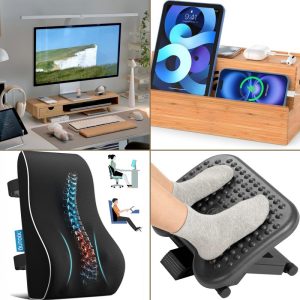
- Adjustable monitor stand — allows you to alternate between sitting and standing throughout the day. Standing for just 15 minutes per hour increases calorie burn and reduces postural stress.
- Wrist rest with proper support — encourages micro-movements in the wrists and hands, reducing strain from repetitive typing.
- Foot rest — promotes better leg circulation and allows for gentle ankle pumps and knee lifts while seated.
For Passive Recovery
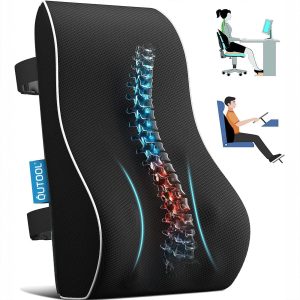
- Lumbar support cushion — maintains spinal alignment during passive seated rest, preventing slouching.
- Ergonomic chair with recline feature — allows you to lean back and relax without losing support.
- Eye mask and noise-canceling headphones — facilitate quick passive recovery breaks even in a busy environment.
The key is to choose tools that don’t lock you into one position. The best ergonomic products are those that facilitate movement rather than restrict it.
What the Research Says About Recovery Frequency
How often should you recover? The answer depends on the type of work you do, but general guidelines from ergonomics experts suggest:
- Every 30 minutes: Stand up or change position for 1 minute
- Every 60 minutes: Take a 5-minute active recovery break
- Every 2 hours: Take a 10-minute break that includes both active and passive elements
A 2020 study in Applied Ergonomics found that workers who followed this schedule reported 40% less musculoskeletal discomfort and 20% higher productivity compared to those who took longer but less frequent breaks.
Common Mistakes Desk Workers Make
Even with the best intentions, many desk workers sabotage their recovery efforts. Here are the top three mistakes:
1. Treating Recovery as Optional
Recovery isn’t a luxury — it’s a biological necessity. When you skip breaks, your body accumulates stress that eventually manifests as pain or burnout.
2. Confusing Passive Recovery with Laziness
Passive recovery is not laziness. It’s a deliberate strategy for nervous system reset. But it needs to be paired with active recovery to be effective.
3. Ignoring the Mental Component
Recovery isn’t just physical. Mental recovery — disconnecting from work thoughts, practicing mindfulness, or simply staring out a window — is equally important. A 2018 study from Harvard Business Review found that workers who took true mental breaks (no email, no Slack) reported 35% lower stress levels.
Your 7-Day Recovery Challenge
Ready to put this into practice? Try this 7-day challenge:
- Day 1: Do 5 minutes of active recovery every hour
- Day 2: Add 2 minutes of passive recovery after lunch
- Day 3: Walk for 10 minutes during your lunch break
- Day 4: Do a 5-minute active + passive combo at 3 p.m.
- Day 5: End your workday with 15 minutes of passive recovery
- Day 6: Reflect — what felt good? What was hard?
- Day 7: Create your own personalized recovery routine
By the end of the week, you’ll have a clear sense of what works for your body and schedule.
Final Takeaway: Recovery Is a Skill, Not a Break
The debate between active and passive recovery isn’t about choosing one over the other — it’s about knowing when to use each tool. For desk workers, active recovery is the underutilized secret weapon that can transform your workday. But passive recovery has its place too, especially for deep reset and nervous system regulation.
The most successful desk workers don’t wait until they’re in pain to recover. They build recovery into their workflow as a non-negotiable practice. Start small, experiment, and pay attention to how your body responds.
Your desk can be a place of productivity and recovery. The choice is yours.
Explore Slowvana’s collection of ergonomic tools — including adjustable monitor stands, supportive wrist rests, and lumbar cushions — designed to support both active and passive recovery at your desk.
🪑 Fix Your Desk Setup in 5 Minutes
Download the free Ergonomic Setup Checklist — 15 steps to reduce pain and work comfortably.
Get Free Checklist →