The link between Blue Light and Sleep and Do Blue Light Glasses Actually Work? directly affects desk worker health. Understanding this relationship helps you address the root cause rather than just treating symptoms.
Introduction: The Glowing Screen Before Bed
It’s 11:00 PM. You’re finishing one last email, scrolling through social media, or catching up on a show. Your bedroom is dark except for the soft glow of your laptop or phone. You finally close your eyes, but sleep doesn’t come. You toss, turn, and stare at the ceiling. Sound familiar?
If you’re a desk worker, this nightly struggle is all too common. The culprit? Blue light from screens. But here’s the real question: Do blue light glasses actually work for sleep? Or are they just another wellness trend?
Let’s cut through the marketing noise and look at the science. We’ll explore how blue light affects your sleep, whether those amber-tinted glasses are worth your money, and what else you can do to protect your circadian rhythm—all without quitting your job or living like a digital hermit.
What Is Blue Light and Why Should You Care?
Blue light is a high-energy, short-wavelength light that’s naturally present in sunlight. During the day, it’s actually beneficial—it boosts attention, reaction times, and mood. The problem starts at night.
When you stare at a screen after sunset, your eyes are flooded with artificial blue light. This tricks your brain into thinking it’s still daytime. Your pineal gland, which produces melatonin (the sleep hormone), gets confused and slows production. Result: you feel alert when you should be winding down.
According to a 2017 study in Chronobiology International, evening exposure to blue light significantly suppresses melatonin levels and shifts circadian rhythms. The effect is especially pronounced in people who work on computers all day and then continue using screens at night.
Do Blue Light Glasses Actually Work for Sleep?
This is the million-dollar question. The short answer: Yes, but with caveats.
Blue light blocking glasses (often with amber or orange-tinted lenses) filter out the specific wavelengths that disrupt melatonin production. Multiple studies have shown they can improve sleep quality when used consistently in the evening.
A 2019 randomized controlled trial published in Journal of Psychiatric Research found that participants who wore blue light blocking glasses for three hours before bed experienced significant improvements in sleep quality and mood compared to a control group. Another study from Ophthalmic and Physiological Optics reported that amber-tinted lenses increased evening melatonin levels by nearly 58%.
But here’s the catch: blue light glasses aren’t a magic bullet. They work best as part of a broader sleep hygiene routine. If you wear them while doom-scrolling until 2 AM, don’t expect miracles.
What the Research Really Says
Let’s break down the evidence:
- Melatonin protection: Studies consistently show blue light glasses help maintain natural melatonin production in the evening.
- Sleep onset: Many users report falling asleep faster, though individual results vary.
- Sleep quality: Objective measures (like actigraphy) show modest improvements in sleep efficiency.
- Mood and alertness: Better sleep often translates to better daytime focus and less fatigue.
However, skeptics point out that the effect size is relatively small compared to simply reducing screen time. A 2021 Cochrane Review concluded that while blue light glasses may help, the quality of evidence is moderate at best. Translation: they’re not a substitute for good sleep habits, but they can be a helpful tool.
Who Benefits Most from Blue Light Glasses?
Not everyone needs blue light glasses. They’re most useful for:
- Desk workers who spend 8+ hours on screens and then continue at home.
- Night owls who naturally feel more alert in the evening.
- People with irregular sleep schedules (shift workers, remote workers across time zones).
- Those already practicing good sleep hygiene but still struggling.
If you’re someone who naturally winds down without screens and sleeps like a baby, you probably don’t need them. But for the rest of us glued to our laptops, they can be a game-changer.
5 Evidence-Based Ways to Reduce Blue Light Exposure at Night
Blue light glasses are just one piece of the puzzle. Here’s a complete approach for desk workers who want better sleep:
1. Use Blue Light Blocking Glasses (Strategically)
Wear them 2-3 hours before bed. Look for glasses that block at least 90% of blue light in the 400-500nm range. Amber or orange-tinted lenses are most effective. Clear lenses with blue light coating? They’re better than nothing, but don’t expect the same impact.
Pro tip: Keep a pair at your desk and another by your bedside. If you’re working late, put them on before you dive into that last task.
2. Enable Night Mode on All Devices
Every modern device has a built-in blue light filter—use it. On Windows, it’s called Night Light. On Mac, it’s Night Shift. On phones, look for “Night Mode” or “Blue Light Filter.” Set it to turn on automatically at sunset.
While these settings reduce blue light, they don’t eliminate it entirely. Think of them as a helpful step, not a complete solution.
3. Optimize Your Workspace Lighting
Your environment matters. Harsh overhead lights and bright screens create a double whammy of blue light exposure. Consider these ergonomic adjustments:
- Use warm, dimmable desk lamps instead of overhead fluorescents.
- Position your monitor to avoid glare from windows.
- Consider a matte screen filter for your monitor.
- Add a foot rest to improve your posture—surprisingly, better alignment reduces eye strain too.
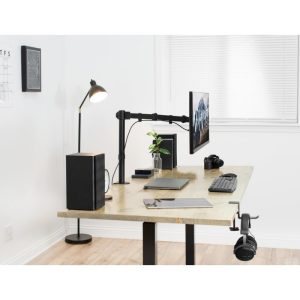
If you’re looking for a simple upgrade, a monitor stand can help position your screen at the right height, reducing the angle of light entering your eyes.
4. Create a Screen-Free Wind-Down Routine
This is the hardest but most effective change. Aim for 30-60 minutes of screen-free time before bed. Read a physical book, take a warm bath, do gentle stretches, or practice deep breathing.
Your brain needs time to transition from “work mode” to “rest mode.” Screens—even with blue light glasses—keep your brain engaged.
5. Support Your Circadian Rhythm During the Day
Your sleep cycle isn’t just about nighttime. What you do during the day matters too:
- Get natural sunlight exposure in the morning (within 30 minutes of waking).
- Take short walks outside during lunch breaks.
- Exercise regularly—but not too close to bedtime.
- Avoid caffeine after 2 PM.
When your daytime rhythms are strong, your body naturally produces melatonin at the right time—and blue light has less power to disrupt it.
Do You Need Blue Light Glasses? A Practical Decision Guide
Still unsure? Ask yourself these questions:
- Do you use screens for more than 2 hours after sunset?
- Do you have trouble falling asleep or staying asleep?
- Do you wake up feeling tired even after 7-8 hours in bed?
- Have you tried reducing screen time but found it impossible (because, work)?
If you answered yes to three or more, blue light glasses are worth a try. They’re relatively inexpensive (compared to a sleep study or new mattress) and have no side effects.
But remember: they’re a tool, not a cure. Pair them with the other strategies above for the best results.
The Bottom Line: Do They Work?
Yes, blue light glasses can help improve sleep—especially for desk workers who can’t avoid evening screens. The science shows they protect melatonin production and may help you fall asleep faster. But they work best when combined with good sleep hygiene, proper workspace ergonomics, and consistent routines.
Don’t expect them to fix chronic insomnia or undo years of poor sleep habits. Think of them as one supportive layer in your recovery lifestyle.
And if you’re looking to optimize your entire desk setup, consider the small changes that add up: a monitor stand to reduce eye and neck strain, a wrist rest for comfortable typing, and a lumbar support cushion for better posture. Each piece contributes to less physical stress—and less stress means better sleep.
“The best sleep aid is a consistent routine. Blue light glasses are just the safety net for those nights when screens are unavoidable.” — Dr. Sarah Chen, Sleep Researcher
Frequently Asked Questions
Can blue light glasses help with eye strain?
They may reduce glare and visual discomfort, but the evidence for digital eye strain is mixed. For dry eyes and fatigue, try the 20-20-20 rule: every 20 minutes, look at something 20 feet away for 20 seconds.
Are clear blue light lenses effective?
Not really. Clear lenses block only about 10-20% of blue light. For sleep benefits, you need amber or orange lenses that block 90% or more.
How long before bed should I wear them?
Ideally, 2-3 hours before you plan to sleep. Consistency matters more than duration.
Can I just use night mode instead?
Night mode helps, but it doesn’t eliminate blue light entirely. For maximum effect, combine night mode with blue light glasses and dim ambient lighting.
Do blue light glasses help with headaches?
Some people report fewer screen-related headaches, but research is limited. If you suffer from migraines triggered by light, they may be worth trying.
Your Next Step
You don’t need to overhaul your entire life tonight. Start small:
- Try wearing blue light glasses for 2 hours before bed for one week.
- Enable night mode on all devices.
- Dim your workspace lighting in the evening.
Track your sleep quality and energy levels. If you notice a difference, great. If not, experiment with other strategies. Your sleep is worth the effort.
And while you’re optimizing your evening routine, don’t forget your daytime setup. A healthier workspace—with proper ergonomic support—reduces the physical stress that can also keep you awake at night. Explore Slowvana’s recovery-focused desk accessories to build a workspace that supports your entire well-being.
🎯 Free: 5-Minute Ergonomic Desk Setup Checklist
You just read about fixing your desk setup. Now put it into action. Our 15-step checklist covers monitor height, keyboard position, chair setup, and more — all in under 5 minutes.
🪑 Fix Your Desk Setup in 5 Minutes
Download the free Ergonomic Setup Checklist — 15 steps to reduce pain and work comfortably.
Get Free Checklist →