For desk workers, understanding How Late-Night Screen Time Affects Your Sleep Recovery (And What to Do About It) is essential for maintaining comfort and productivity throughout the workday. Here is what the research shows and how to apply it.
Introduction: The Hidden Cost of Late-Night Scrolling
You finally shut your laptop after a long day of back-to-back meetings, spreadsheets, and Slack pings. The house is quiet. Your brain, however, is still buzzing. So you pick up your phone to “wind down” — a quick scroll through Instagram, a few headlines, maybe one more email. Before you know it, it’s 11:30 PM, and your eyes feel heavy, but your mind won’t shut off.
Sound familiar? You’re not alone. A 2023 survey by the National Sleep Foundation found that nearly 70% of adults use some form of screen-based device within 30 minutes of trying to sleep. And for desk workers, whose eyes are already strained from 8+ hours of screen exposure, this habit carries a hidden cost: poor sleep recovery.
Sleep isn’t just rest — it’s your body’s primary recovery mechanism. It’s when your muscles repair, your brain consolidates memories, and your nervous system resets. When late-night screen time interferes, you don’t just feel groggy the next day. You sabotage your recovery, increase fatigue, and compromise your focus, mood, and long-term health.
In this article, we’ll explore the science behind how screens disrupt sleep, the specific impact on desk workers, and actionable strategies — including ergonomic adjustments and screen hygiene — to protect your sleep recovery starting tonight.
The Science of Screen Light and Your Sleep Cycle
To understand why late-night screen time is so disruptive, we need to look at your body’s internal clock: the circadian rhythm. This 24-hour cycle regulates when you feel alert and when you feel sleepy, largely in response to light exposure.
Blue Light: The Circadian Disruptor
Electronic screens — phones, laptops, tablets, monitors — emit a high concentration of blue light, a short-wavelength light that mimics daylight. When your eyes detect blue light after sunset, your brain interprets it as a signal that it’s still daytime. In response, the pineal gland reduces production of melatonin, the hormone that tells your body it’s time to sleep.
A landmark study published in Proceedings of the National Academy of Sciences (2014) found that reading on a light-emitting device before bed, compared to reading a printed book, led to:
- Delayed melatonin onset by 1.5 hours
- Reduced melatonin secretion by 55%
- Significantly less REM sleep the following night
Even dim light from a phone screen can be enough to suppress melatonin. The result? You fall asleep later, sleep less deeply, and wake up feeling less restored.
More Than Just Light: Mental Stimulation
It’s not only the light. The content you consume — work emails, social media arguments, news headlines — keeps your brain in a state of cognitive arousal. This activates the sympathetic nervous system (your “fight or flight” response), raising heart rate and cortisol levels at a time when your body should be shifting into parasympathetic “rest and digest” mode.
For desk workers, this is a double hit. Your brain has already been in high-demand mode all day. Late-night screens prevent the necessary neural wind-down, leaving you in a state of “tired but wired” that makes falling asleep feel like a battle.
How Poor Sleep Recovery Impacts Desk Workers
You might think, “I’ll just catch up on sleep over the weekend.” But the effects of poor sleep recovery aren’t just about total hours. They’re about quality and consistency.
1. Increased Fatigue and Brain Fog
When you don’t get enough deep sleep, your brain doesn’t properly clear out metabolic waste products (like beta-amyloid) that accumulate during the day. This contributes to brain fog, slower reaction times, and difficulty concentrating — exactly what you don’t need when you’re trying to focus on complex tasks at work.
2. Poor Posture and Increased Pain
Sleep is when your muscles and connective tissues repair. Without adequate recovery, desk workers are more prone to neck pain, shoulder stiffness, and lower back tightness. A study in the Journal of Occupational Rehabilitation (2021) found that poor sleep quality was a strong predictor of chronic musculoskeletal pain among office workers.
When you’re tired, you’re also more likely to slouch, hunch over your keyboard, or skip microbreaks — creating a vicious cycle of poor ergonomics and more pain.
3. Mood and Emotional Resilience
Sleep deprivation directly impacts the prefrontal cortex, the part of your brain responsible for emotional regulation. This makes you more irritable, reactive, and prone to stress. Over time, chronic sleep disruption is linked to increased risk of anxiety and depression.
“Sleep is the single most effective thing we can do to reset our brain and body health each day.” — Dr. Matthew Walker, author of Why We Sleep
Practical Strategies to Protect Your Sleep Recovery
The good news: you don’t have to give up screens entirely. Small, intentional changes can dramatically improve your sleep quality and, by extension, your daytime recovery and performance.
1. Create a Digital Sunset (60-90 Minutes Before Bed)
The most effective strategy is to stop using screens at least 60 minutes before you plan to sleep. This gives your brain time to produce melatonin and shift into a relaxed state.
Instead of scrolling, try:
- Reading a physical book or Kindle (without backlight)
- Gentle stretching or foam rolling
- Listening to a podcast or audiobook
- Writing in a journal to offload racing thoughts
If you absolutely must use a device, enable night mode or a blue-light filter (like f.lux or Apple’s Night Shift) at least 2 hours before bed. While not a perfect solution, it reduces some of the melatonin suppression.
2. Optimize Your Workstation for Evening Comfort
Desk workers often carry screen habits from the office into the bedroom. But your workspace setup also plays a role in how easily you transition to sleep.
Consider these ergonomic adjustments:
- Monitor height: A poorly positioned monitor forces you to lean forward, straining your neck and eyes. Use a monitor stand to raise your screen to eye level, reducing fatigue that lingers into the evening.
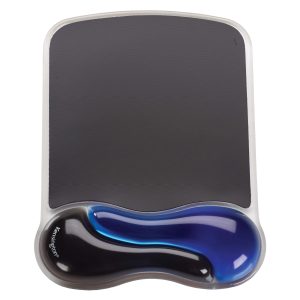
- Wrist support: If you’re working late, a wrist rest can prevent wrist strain and carpal tunnel symptoms that make it harder to relax at night.
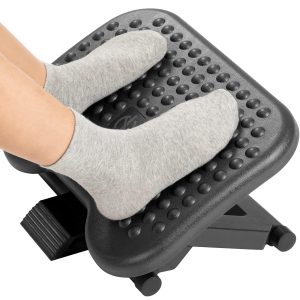
- Foot support: A foot rest encourages better sitting posture, reducing lower back tension that can interfere with sleep quality.
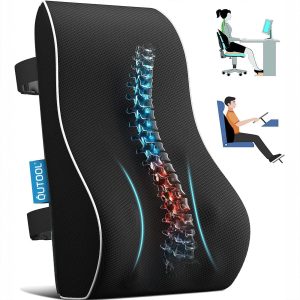
- Lumbar support: A lumbar support cushion helps maintain the natural curve of your spine, preventing the kind of back pain that keeps you tossing and turning.
When your body feels physically comfortable at the end of the day, it’s easier to let go of tension and drift into restorative sleep.
3. Dim the Lights and Adjust Your Environment
Ambient lighting matters just as much as screen brightness. Overhead lights, especially cool-white LEDs, also emit blue light. In the evening, switch to warm, dimmable lamps or salt lamps. The goal is to create a “cave-like” environment that signals to your brain that it’s time to wind down.
Also, consider the temperature of your bedroom. The ideal sleep temperature is around 65°F (18°C). A cooler room helps your body drop its core temperature, which is necessary for sleep onset.
4. Use Blue-Light Blocking Glasses (If You Must Work Late)
For those nights when you genuinely need to finish a task, blue-light blocking glasses with amber-tinted lenses can help. A 2021 meta-analysis in Chronobiology International found that wearing blue-blocking glasses in the evening significantly improved sleep quality and reduced sleep onset latency.
Pair them with dark mode on all your devices, and reduce screen brightness to the lowest comfortable level.
5. Build a Wind-Down Routine That Works for You
Consistency is key. Your body thrives on predictable cues. A wind-down routine signals to your nervous system that it’s safe to relax.
Try this simple sequence 30 minutes before bed:
- Turn off screens (or switch to audio-only content).
- Do a 5-minute body scan — notice tension in your shoulders, jaw, and lower back, and consciously release it.
- Stretch — gentle neck rolls, cat-cow stretches, and seated forward folds help release the physical tension of sitting all day.
- Breathe — 4-7-8 breathing (inhale for 4 seconds, hold for 7, exhale for 8) activates the parasympathetic nervous system.
Over time, this routine becomes a powerful trigger for sleep, overriding the alerting effects of late-night screens.
What About Weekend Catch-Up Sleep?
Many desk workers rely on weekends to “recover” from sleep debt. While catching up can help, it’s not a complete fix. Research shows that social jetlag — shifting your sleep schedule by 2+ hours on weekends — can disrupt your circadian rhythm just as much as screens do.
Instead, aim for consistent bedtimes and wake times within a 1-hour window, even on weekends. This stabilizes your internal clock and improves the quality of your sleep recovery.
Conclusion: Small Changes, Big Recovery
Late-night screen time is one of the most common — and most overlooked — barriers to sleep recovery for desk workers. The blue light, mental stimulation, and poor ergonomic habits combine to create a perfect storm of fatigue, pain, and reduced performance.
But you don’t need a complete digital detox. Start with one change tonight: set a digital sunset 30 minutes before bed. Pair it with a comfortable workspace that supports your body throughout the day — a proper monitor height, wrist support, and good posture. Your sleep recovery, your focus, and your overall well-being will thank you.
For more tools to support your recovery at work, explore Slowvana’s ergonomic solutions — designed to help desk workers feel better, sit smarter, and rest deeper.
🎯 Free: 5-Minute Ergonomic Desk Setup Checklist
You just read about fixing your desk setup. Now put it into action. Our 15-step checklist covers monitor height, keyboard position, chair setup, and more — all in under 5 minutes.
🪑 Fix Your Desk Setup in 5 Minutes
Download the free Ergonomic Setup Checklist — 15 steps to reduce pain and work comfortably.
Get Free Checklist →